Carthage, Roman Mosaics and Mediterranean Light
Tunisia is the northernmost country in Africa, a Mediterranean nation known for the ruins of ancient Carthage, superb Roman mosaics, sunlit beaches and the gateway to the Sahara. Phoenician, Roman, Arab, Ottoman and French chapters are all visible on a short journey. Carthage, the ancient rival of Rome, and the Medina of Tunis were both inscribed by UNESCO in 1979, and the same year saw the Amphitheatre of El Jem, one of the largest Roman amphitheatres ever built, join the list. Tunisia packs a great deal of history into a compact country, and most sites are an easy drive apart.
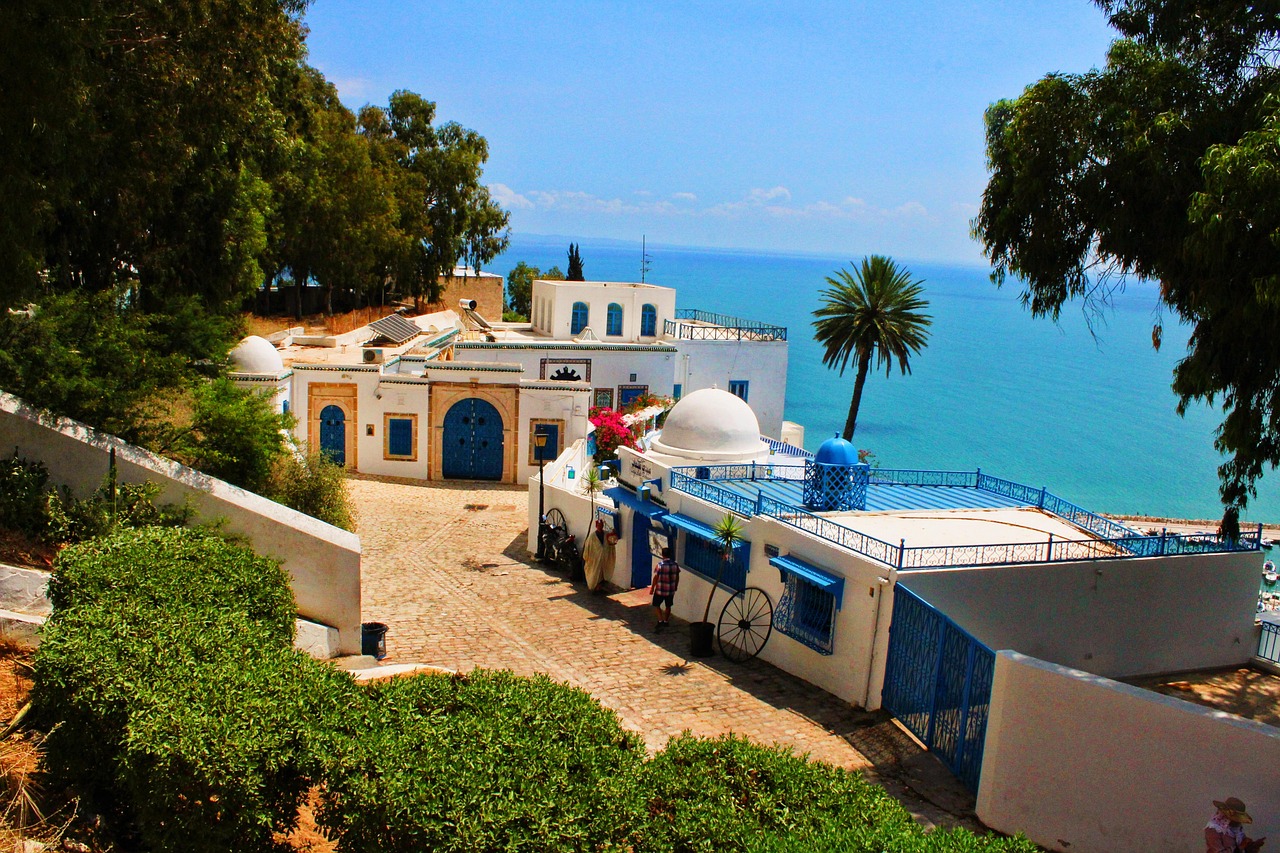
The Bardo Museum in Tunis holds one of the world's great collections of Roman mosaics, and the capital's medina is a handsome maze of covered souks, mosques and merchant houses. Just along the coast, Sidi Bou Said, a hilltop village of white walls and blue shutters, looks out over the Gulf of Tunis, and its cafes serve mint tea and fried doughnuts with views to match. Tunisia lies close to Malta and Sicily, and combines naturally with a wider Mediterranean itinerary for travellers who love ancient ports.
Kairouan, Dougga and the Road South to the Sahara
Beyond the capital, Tunisia unfolds in layers. Kairouan, inscribed by UNESCO in 1988, is one of the holiest cities in Islam and has a Great Mosque dating back to the seventh century. Dougga, inscribed in 1997, is among the best-preserved Roman towns in North Africa, with a theatre, temples and a capitol rising above olive fields. Sousse and its walled medina add a lively coastal chapter, and Hammamet, with its fort and jasmine-scented streets, has long been a resort favourite for beach holidays with a cultural edge.
Further south, the landscape turns to desert. Douz is known as the gateway to the Sahara, with camel treks and dune camps, while the great salt lake of Chott el Djerid shimmers near Tozeur. Around Matmata and Tataouine, hilltop villages and underground dwellings gave film-makers the setting for the planet Tatooine in Star Wars, a detail many fans love to follow. The island of Djerba, with its white-washed villages, pottery workshops and long beaches, completes a varied offer, and a hotel group can use it to show how one country serves families, couples and culture seekers.
Olive Oil, Harissa and the Best Months to Go
Tunisian cuisine is bold and generous. Harissa, the fiery chilli paste, flavours everything from couscous to grilled fish, while brik, a thin pastry parcel filled with egg and tuna, is a classic starter. Olive groves cover large areas of the country and the oil is central to the table, and dates from the southern oases are served with mint tea. Tunisia's pastry shops offer honey-soaked sweets and nut-filled treats, and the seafood in coastal towns is excellent, with fresh grilled fish served at simple harbour tables.
The best months are spring and autumn, when days are warm and walking among ruins is a pleasure, though the coast stays inviting well into the summer and winter days are mild. Direct flights from the UK take about three hours to Tunis, Monastir and Enfidha, and Djerba is also served by seasonal services. A name like DiscoverTunisia.co.uk offers partners a clean, quotable home for the story. For longer routes, Tunisia pairs easily with neighbouring Morocco and with Italy across the sea.
Hammamet Resorts, Tunis Palaces and Djerba Villas
Tunisia's stays are organised around its coastline. Hammamet and Yasmine Hammamet are the classic beach-resort bases, with long sands, golf and thalassotherapy hotels, while Sousse and Port El Kantaoui add a marina, a walled medina and family-friendly resorts. Monastir is quieter, with its seaside ribat. Around Tunis, La Marsa and Gammarth are the polished coastal addresses, with sea-view hotels and seafood restaurants, and Sidi Bou Said offers a few small guesthouses for couples who want blue shutters and sunset views. Tabarka, in the north-west, suits divers and walkers, with its coral coast and cork-oak forests.
Djerba is the villa and island choice, with a long beach strip at Midoun, whitewashed boutique hotels in the villages and quiet spa retreats for adults. In the south, Tozeur and Douz have desert hotels set among date palms, some in traditional ksar style, and tented camps near Ksar Ghilane put guests on the edge of the dunes. Golfers will find well-regarded courses at Hammamet, Monastir and Djerba, and history lovers will like the town houses in the medinas of Tunis and Kairouan. A booking platform can show these as coast, island and desert stays, so each traveller finds the right fit.
Brik, Lablabi and the Festival of Carthage
Tunisian food goes well beyond harissa. Lablabi, a chickpea soup served with bread, egg and olive oil, is a breakfast favourite, ojja, spicy tomato with eggs and merguez sausage, comes bubbling in a pan, and fricassé, a small fried bun filled with tuna and olives, is the street snack of choice. Couscous with fish or lamb is a weekend tradition, while makroud, semolina pastries filled with dates, and bambalouni doughnuts sweeten the day. Mint tea with pine nuts and strong coffee flavoured with orange blossom water are served with generosity, and Tunisian olive oil, citrus and dates from Tozeur are prized across the Mediterranean.
Craft and music add colour. Nabeul is the home of pottery and orange blossom water, Kairouan is known for wool carpets, Djerba's Guellala potters work in the old way, and Sidi Bou Said is lined with painted birdcages. The Festival of Carthage, held in the Roman theatre each summer, brings concerts and dance under the stars, while the International Festival of the Sahara in Douz celebrates desert traditions in winter. Spring brings orange blossom to Cap Bon, autumn the date harvest in the oases, and mild winters suit the south. Tunisia is also known for malouf, its Andalusian-rooted classical music, which is performed in the old medina houses, and the same Maghreb thread links neatly with Morocco.
Thalassotherapy, Golf and Star Wars Landscapes
Tunisia is one of the Mediterranean's leading centres for thalassotherapy, with seawater treatments, spa cures and wellness weeks at resorts in Hammamet, Sousse, Djerba and Tabarka. Golf is another pillar, with sea-view courses and good winter sunshine, and divers can explore the coral reefs off Tabarka. Active travellers can try quad biking and 4x4 journeys in the Sahara, camel treks from Douz, or a night at Ksar Ghilane's hot springs. Photographers love the oasis villages of Chebika, Tamerza and Mides, with their canyons and waterfalls, and the salt-flat sunrise at Chott el Djerid is a celebrated spectacle.
Day trips expand any stay. From Tunis, visitors reach Carthage, Sidi Bou Said, Utica and Bulla Regia, a Roman town with underground houses, while the Cap Bon peninsula offers beaches and citrus groves. From Hammamet and Sousse, the El Jem amphitheatre and Kairouan are excellent full days. In the south, the ksour of Tataouine and the cave dwellings of Matmata fascinate film fans. A route that combines coast, culture and desert makes a wonderfully varied week, and links well with Cairo, Sardinia and Spain for a wider Mediterranean itinerary, with each stop only a short flight apart.
Planning your stay
Tunisia is compact. Tunis has the medina, the Bardo Museum and the ruins of Carthage on its coast, while the beach resorts around Hammamet, Sousse and the island of Djerba draw the most UK holidaymakers. Further south the landscape turns to salt lakes and the edge of the Sahara.
Tunisia is a short hop from Malta and Sicily, and it sits in the same group as Cairo, Casablanca and Morocco. Many visitors treat it as a beach holiday first, with one or two day trips to Carthage, the medina or a Roman site such as El Djem, rather than as a touring holiday.
When to go
Spring and autumn are the most comfortable seasons for sightseeing, and the beaches suit late spring to early autumn. Summer is hot, particularly inland and in the south, so plan desert trips for the cooler months.
Direct flights from the UK to Tunisian airports take roughly three to four hours depending on the airport, with schedules varying by season. Check with your airline or tour operator for the airport that serves your resort.
Entry rules
The Foreign, Commonwealth and Development Office says your passport should be valid for the duration of your stay. You can visit without a visa for up to 90 days, and border officials will stamp your passport on arrival and check the length of your stay on departure.
On arrival, officials may ask for your contact details, onward or return tickets and proof of a hotel booking or other accommodation. A small number of visitors have been denied entry or delayed for not providing enough evidence of accommodation, so keep your booking details to hand. Make sure your passport is not damaged or torn.
Before you travel
Entry requirements and official travel guidance are updated regularly, so check the latest position with your government before booking. The sources we used are listed at the foot of this page.
Why Tunisia matters to the industry
Tunisia is a price-sensitive, repeat-visit market where travellers compare resorts and want clear visitor answers. DiscoverTunisia.co.uk lets a resort or hotel group, tourist board or airline publish them, and our AI platform carries them to searchers.
See the wider destination guides for comparison.
Questions travellers ask about Tunisia
Do UK citizens need a visa for Tunisia?
No. British visitors may stay in Tunisia for up to 90 days visa-free. Your passport should be valid for your stay, and you may be asked for onward tickets and proof of accommodation.
When is the best time to visit Tunisia?
Spring and autumn are the most comfortable for sightseeing. Summer suits the beaches but is hot inland.
What is Tunisia best known for?
Tunisia is best known for ancient Carthage, Roman sites such as El Jem and Dougga, the blue-and-white village of Sidi Bou Said, Mediterranean beaches at Hammamet and Djerba, and the Sahara gateway of Douz. Harissa and olive oil are its signature flavours.
How long is the flight from the UK to Tunisia?
Direct flights from the UK to Tunis and the coastal airports of Monastir and Enfidha take about three hours, depending on the departure airport. Djerba is served by seasonal services, making Tunisia a practical choice for a week of sun and history.
Where should families stay in Tunisia?
Hammamet, Sousse, Port El Kantaoui and Djerba are the main family bases, with long beaches, resort pools, kids' clubs and easy day trips. Djerba is especially relaxed, with calm shallow bays and villages to explore on bike or camel.
What can I do in Tunisia besides the beach?
Try thalassotherapy and spa weeks, golf, camel treks from Douz, 4x4 journeys across the Sahara, and day trips to Carthage, El Jem and Kairouan. Craft lovers can visit pottery workshops in Nabeul and Guellala.
In the Visit Travel Group portfolio: DiscoverTunisia.co.uk.