Morocco's Atlantic Capital of Style and Commerce
Casablanca is the largest city in Morocco, an Atlantic port and commercial capital best known for the monumental Hassan II Mosque and for a downtown full of Art Deco and Mauresque architecture. Its name means white house in Spanish, a nod to the pale buildings that once marked the harbour. The city grew rapidly through the twentieth century and today feels confident, cosmopolitan and busy, with broad boulevards, tram lines and a restaurant scene that mixes Moroccan, French and Mediterranean influences. Visitors who arrive expecting only a transit stop often stay longer once they see the light on the ocean front.
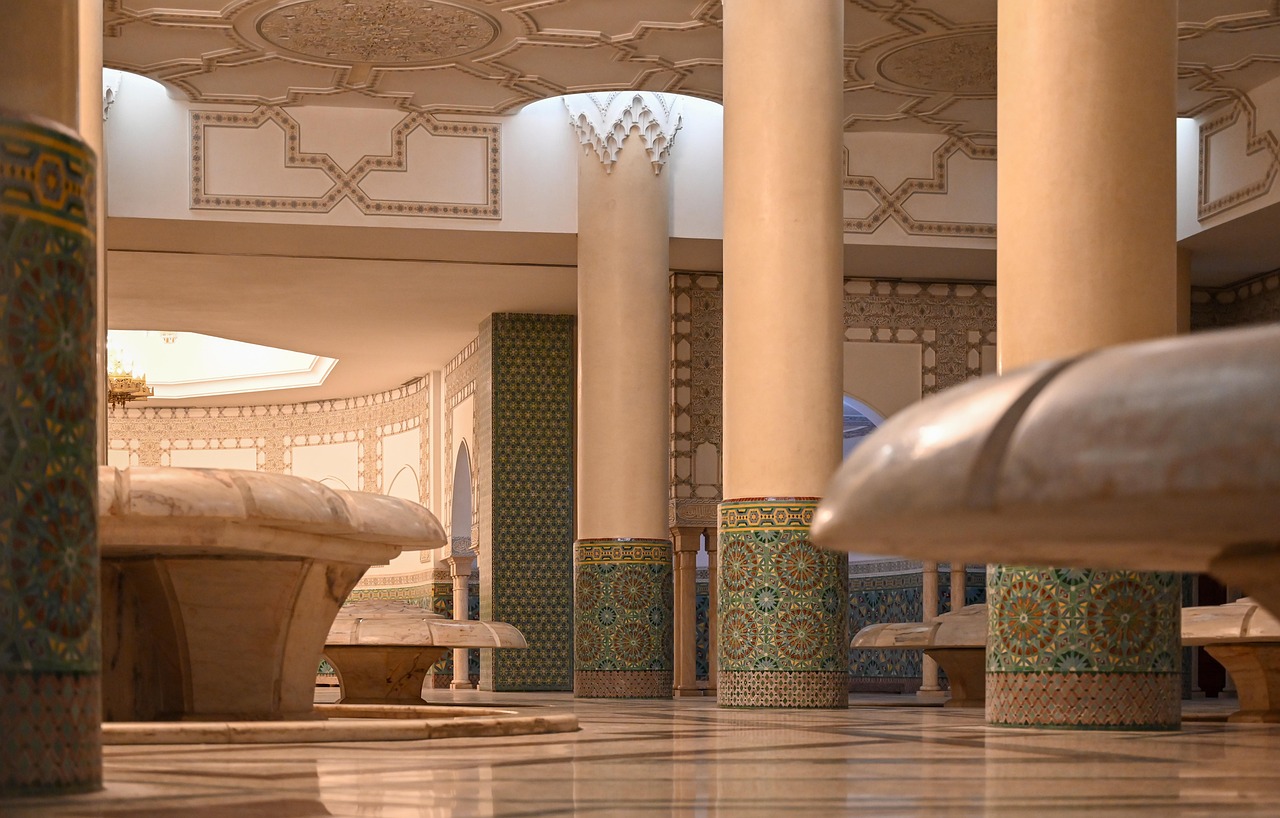
The Hassan II Mosque, completed in 1993, stands on a promontory over the sea and has one of the tallest minarets in the world, at about 200 metres. Its hall, carved cedar ceilings and glass floor panels over the water make it one of the most photographed religious buildings in Africa, and guided visits are open to non-Muslims. Nearby, the old medina, the Habous quarter and the Place Mohammed V show the city's layered history. Within Morocco, Morocco as a whole is an easy next chapter, while the wider Mediterranean is linked through Spain and Malaga.
Art Deco Boulevards and the Ain Diab Corniche
Casablanca's streets reward a slow walk. The city holds one of the richest collections of Art Deco and Mauresque buildings in Africa, with striking facades around Boulevard Mohammed V, Place des Nations Unies and the Cathedral of the Sacred Heart, a white 1930s landmark now used for cultural events. The Habous quarter, built in the 1930s, offers arcaded lanes, bookshops and pastry stalls selling almond sweets. Cafes spill onto pavements, and the city's mix of old Maghreb and French influence gives each neighbourhood its own tempo.
The Corniche at Ain Diab is the seafront playground, with beach clubs, seafood restaurants and cafes along the Atlantic. Grilled sardines, calamari, prawns and fresh fish are the local specialities, usually followed by mint tea. The film Casablanca made the name famous worldwide, and a recreated Rick's Cafe has become an evening favourite. A hotel group can find plenty to work with here, from business-led city stays to resort-style rooms along the coast, all within a short taxi ride of one another.
Gateway to Marrakech, Rabat and the Coast
Casablanca is Morocco's main gateway. Mohammed V International Airport, the country's busiest, connects with London and many other European cities, and a train link runs between the airport and the city. A fast rail service links Casablanca with Rabat, the capital, and onward to Tangier, while Marrakech and Fes are easily reached by train or road. Many travellers combine a night or two in the city with a longer circuit through the imperial cities, the Atlas mountains and the Sahara, and the city makes a natural start and end point.
Spring and autumn bring the mildest weather, with sunny days that suit walking, while summer days by the Atlantic stay pleasantly breezy. Day trips to the walled coastal town of Essaouira, to El Jadida with its Portuguese cistern, or to the imperial city of Rabat add depth to a stay. Combining Morocco with southern Europe is also easy: the Algarve and Madeira are a short flight away. A name like VisitCasablanca.co.uk offers partners one clear home for that story.
Corniche Resorts, Medina Stays and Anfa Calm
Casablanca offers several distinct places to stay. Ain Diab, the Atlantic corniche, is the beach address, with seafront hotels, beach clubs and a promenade made for sunset walks, and it suits couples and families who want sea air in a big city. Anfa and Maarif are the polished residential districts, with leafy avenues, boutiques and golf nearby, favoured by business travellers and longer stays. Downtown around Place Mohammed V puts guests among the Art Deco facades and cafes, perfect for architecture lovers, while Habous and the old medina have small guesthouses for travellers who like atmosphere over amenities.
Style of stay is varied. Heritage-minded visitors can choose a restored townhouse with a courtyard, while those wanting resort comforts will find pools, spas and sea views along the coast towards Dar Bouazza, where villas and beach houses suit larger groups. Luxury travellers will appreciate grand city hotels with hammams and terraces over the ocean, and families will like the space of seafront apartments. A short taxi or tram ride links each area with the others, so a traveller can sleep by the Atlantic and spend the day in the city. Many guests pair a stay here with Tunisia or Andalusia on a Maghreb and Iberian loop.
Mint Tea, Zellige Tiles and Atlantic Seafood
Casablanca's table draws on the whole of Morocco. Harira, a tomato and lentil soup, opens evening meals in the month of Ramadan, and pastilla, tagines and couscous appear alongside the daily catch from the central market, where grilled sea bream, prawns and sardines are cooked to order. Msemen pancakes with honey make a joyful breakfast, almond sweets such as gazelle horns and chebakia fill pastry-shop windows, and sweet mint tea is poured with ceremony. The city's coffee culture is lively too, with cafes serving strong espresso and orange juice squeezed to order, a nod to its French-influenced habits.
Craft is everywhere. Zellige mosaic tiles, carved cedar, Berber rugs, brass lanterns and leather babouche slippers are all made and sold in the Habous quarter and the medina. Culture runs from the Villa des Arts gallery to the Museum of Moroccan Judaism, and the Hassan II Mosque's guided visits show the best of modern Moroccan craft. Music has a strong place: gnawa rhythms, Andalusian orchestras and the Jazzablanca festival, which fills venues with international and local artists. Spring and autumn are the easiest seasons for walking, with Ramadan evenings, summer beach days and the cool winter months each offering a different Casablanca.
Rabat, Oualidia and Golf Along the Atlantic
Casablanca is a very good base for active days. Golf is a highlight, with the historic Royal Golf d'Anfa within the city and the celebrated courses of Rabat a short train ride away. Surfers head to Dar Bouazza and the coast, while cyclists and joggers enjoy the corniche promenade. Wellness fans can book a traditional hammam with black soap and argan oil massage, a ritual that many hotels offer. Families enjoy the beaches, the Morocco Mall waterfront and the aquarium. Food walks through the Habous quarter, cooking classes with market visits and Art Deco architecture tours give shorter stays plenty of themes.
Day trips are easy. Rabat, the capital, has the Hassan Tower, the blue and white Kasbah of the Udayas and a medina, with the city inscribed by UNESCO in 2012. El Jadida, with its Portuguese city inscribed in 2004, lies along the coast, and the lagoon at Oualidia is loved for oysters and birdlife. Marrakech is reached by train in a little over two hours. A booking platform can package these as a coast circuit or an imperial loop. Wider journeys can continue to the Canary Islands, Spain or Porto, all short flights away.
Planning your stay
Casablanca is a working city of broad boulevards, art deco buildings and a long Atlantic corniche. The Hassan II Mosque on the waterfront is the landmark most visitors come for, and the old medina, the Habous quarter and the beachfront district of Ain Diab add contrast. It is usually a stop on a wider Morocco itinerary, rather than a stay of a week. Business travellers, family visitors and people changing flights make up much of its traffic, so the city rewards a clear plan: choose a hotel near where your meetings or sightseeing will be, and allow generous time for the airport.
Most UK visitors combine it with other Moroccan cities. Our Morocco guide covers the wider country, and the city sits in the same African group as Cairo, Tunisia, Rwanda and the Eastern Cape.
When to go
Spring and autumn are generally the most comfortable months, with warm days and cooler evenings off the Atlantic. Summer is warm on the coast and much hotter inland, and winter brings cooler, wetter weather.
British Airways flies non-stop from Heathrow in about 3 hours 30 minutes, so a long weekend is realistic. Mohammed V International Airport is the country's main gateway and many connecting itineraries to other African cities pass through it.
Entry rules
The Foreign, Commonwealth and Development Office says your passport must have an expiry date at least three months after you arrive, and must not be damaged, because Moroccan authorities have denied entry to some travellers with damaged passports. You can visit without a visa for up to 90 days for tourism. Border officials should stamp your passport on entry, and some travellers have had difficulty leaving without an entry stamp.
You need a polio vaccination certificate only if you are coming from a polio-affected country.
Practical tips
Use official taxis or ride-hailing apps, agree fares in advance and keep valuables out of sight. Dress modestly when visiting the mosque and religious sites, and check opening hours before you go.
If you plan to drive, remember that city traffic is dense and road manners differ from the UK, so many visitors prefer taxis or trains for longer trips.
Before you travel
Entry requirements and official travel guidance are updated regularly, so check the latest position with your government before booking. The sources we used are listed at the foot of this page.
Why Casablanca matters to the industry
Casablanca is a business and transit hub with strong search demand for flights, hotels and airport connections. An airline, hotel group or tourist board using VisitCasablanca.co.uk can explain airport transfers, city hotels and entry rules in one place, and our AI platform passes those answers on to travellers.
See our other destination guides for comparison, or the OTA page on how booking platforms use destination content.
Questions travellers ask about Casablanca
Do UK citizens need a visa for Morocco?
Not for tourism: Morocco lets British visitors stay up to 90 days without a visa. Your passport must be valid for at least three months after arrival and must not be damaged.
How long is the flight from London to Casablanca?
About 3 hours 30 minutes non-stop with British Airways from Heathrow. Check schedules with your airline.
What is the best time to visit Casablanca?
Spring and autumn are generally the most comfortable. Summer can be hot and winter cooler and wetter.
What is Casablanca best known for?
Casablanca is best known for the Hassan II Mosque, one of the largest in the world, its Art Deco downtown, the Atlantic corniche at Ain Diab and the 1942 film that carries its name. It is also Morocco's main commercial city and air gateway.
How do I get from Casablanca to Marrakech?
Fast and comfortable trains connect Casablanca with Marrakech in a little over two hours, and the road journey is also straightforward. Many visitors travel on from Casablanca to Marrakech, Fes or the coast within the same trip.
Which area of Casablanca is best for a seaside stay?
Ain Diab on the Corniche is the beach district, with seafront hotels, beach clubs and restaurants. It suits couples and families who want the Atlantic on the doorstep while keeping the downtown Art Deco district and the Hassan II Mosque a short taxi ride away.
What food should I try in Casablanca?
Try grilled fresh fish and sardines from the central market, harira soup, pastilla, tagines and couscous, followed by almond pastries and sweet mint tea. Msemen pancakes with honey make a lovely breakfast, and many cafes serve excellent coffee and fresh orange juice.
In the Visit Travel Group portfolio: VisitCasablanca.co.uk.