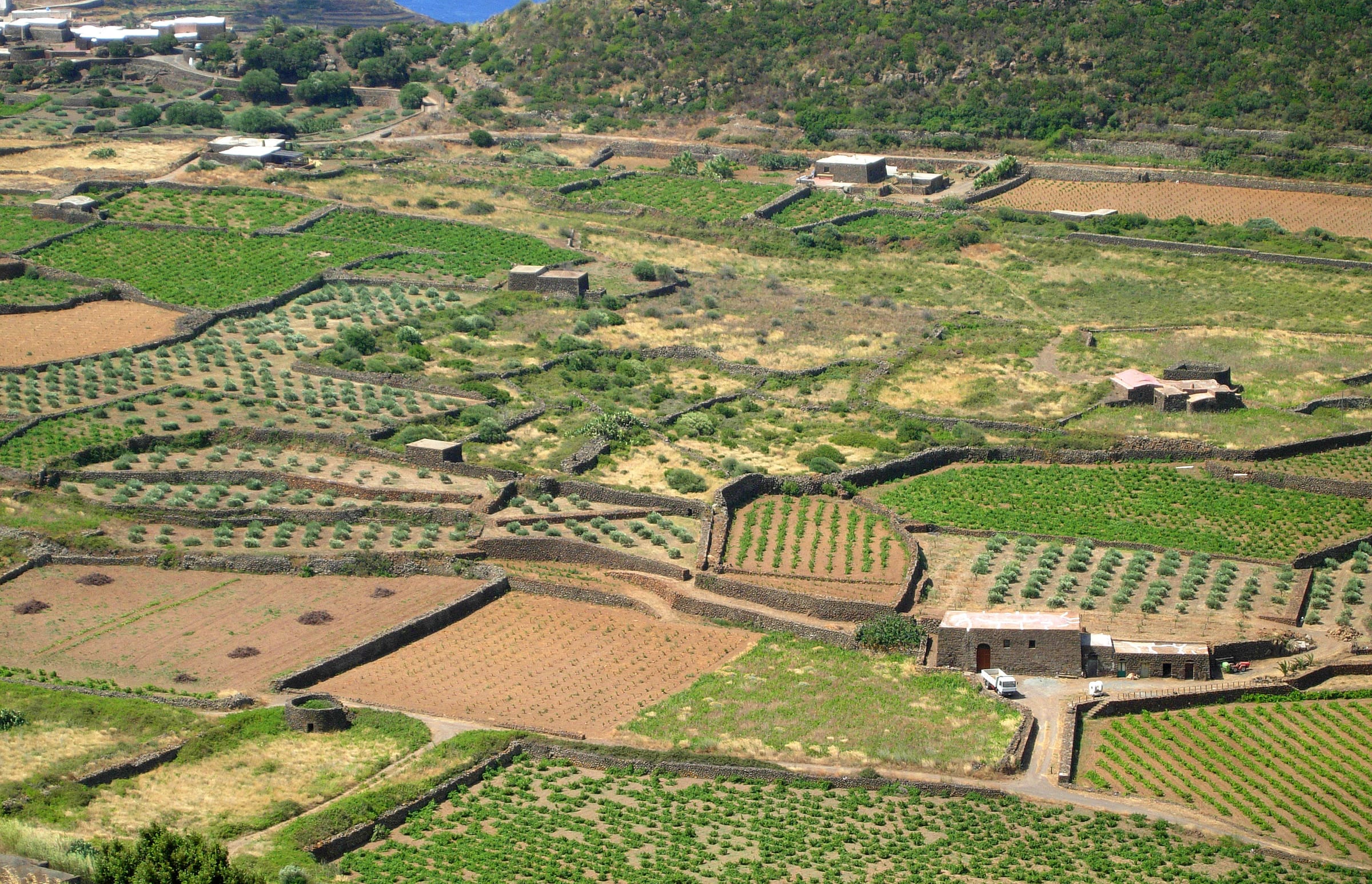
The Black Pearl Between Sicily and Africa
Pantelleria is an Italian island in the Strait of Sicily, closer to Tunisia than to the Sicilian mainland, known for its dark lava landscape, its dammusi stone houses, its terraced vineyards and its sweet Passito wine. It covers about 83 square kilometres and is often called the Black Pearl of the Mediterranean. Rugged, aromatic and a little wild, it rewards those who want a slow, characterful island holiday, with scents of caper, wild herbs and sea salt carried on the breeze.
The island's identity is expressed in its architecture and farming. Dammusi, thick-walled houses of dark stone with white domed roofs, are designed to stay cool in summer, and many have become characterful rentals and boutique stays. The traditional cultivation of the vite ad alberello, the bush-trained vine of Pantelleria, was added to UNESCO's list of Intangible Cultural Heritage in 2014. Terraces of dry-stone walls climb the hillsides, and the harvest each year is a point of local pride.
Zibibbo, Capers and Thermal Pools
The flavours are intense. Zibibbo grapes become the golden Passito di Pantelleria, a famous dessert wine, while Pantelleria capers, cured in sea salt, are among the most prized in Italy. Local dishes include ravioli filled with ricotta and mint, pesto pantesco with tomato and almonds, fresh fish and grilled tuna. The island's thermal activity creates natural spa experiences: the warm waters of the Specchio di Venere, a lake in a crater, and the grotte and springs at Gadir offer warm bathing in a wild setting.
For coastal days, rocky coves and sea platforms replace sandy beaches, with clear water ideal for snorkelling and boat trips around the island's headlands and arches. Walkers can climb the island's interior, with views across to Sicily on clear days. Sicily lies close by for longer Italian journeys, and Malta and Sardinia offer other southern island stops. A hotel group or villa operator could present Pantelleria as a design-led, slow-travel alternative to busier island escapes.
Seasons and the Journey Across the Strait
Late spring and early autumn are especially rewarding, with warm sea, flowering caper bushes in early summer and the grape harvest in late summer. July and August are the most popular months, while May, June and September bring a softer pace. The island is best explored by hire car or scooter, with a road circling the coast and a handful of small villages and harbours, including Scauri and Khamma, providing places to eat and stay.
Pantelleria has its own airport, with seasonal flights from Palermo, Trapani and other Italian cities, and ferries connect it to Trapani on Sicily. Many travellers fly into Palermo, spend a night in Palermo, then continue by a short flight to the island. It pairs well with the wider Italy story. A tourist board, airline or hotel using VisitPantelleriaIsland.co.uk can present Pantelleria as a refined, sensory escape that stands apart from every other Mediterranean island.
Dammusi, Boutique Retreats and Where to Base Yourself
The dammuso is the island's signature stay: a thick-walled stone house with a white domed roof, often set among terraces of vines or caper bushes with a plunge pool and sea views. Many have been restored with careful, minimalist interiors, and they suit couples, families and small groups looking for privacy and character. Several are grouped into small hotel-style retreats with shared gardens and breakfast terraces, giving the comforts of a boutique stay without losing the feeling of living in a farmhouse.
Choose your area by mood. Scauri, on the south-west coast, has a small harbour and a relaxed atmosphere, Khamma offers tranquil countryside and sunset views, Gadir is the thermal-water corner for spa lovers and Pantelleria town, on the north coast, has restaurants, shops and the ferry. Divers and sailors base themselves near the harbours, walkers in the interior. A hotel group could offer a design-led collection of dammusi, and the island sits happily alongside Sicily's main sights or Malta for a southern Mediterranean route.
Ravioli, Capers and the Slow Rhythm of the Harvest
Island dishes lean on the garden and the sea. Alongside the ricotta ravioli and pesto, look for couscous with fish, grilled fresh tuna, wild-fennel salads and the island's rich pastries, filled with ricotta and drizzled with honey. Capers are the ingredient that appears everywhere, in salads, sauces and on top of focaccia, while dried fruit, olives and sun-dried tomatoes fill the shelves in village shops. Coffee is served strong, and a glass of golden Passito, as part of the island's winemaking heritage, closes a meal with ceremony.
The year follows the land. Caper plants flower in late spring and early summer, a time when the hillsides are covered in white-and-lilac blooms, and the grape harvest in late summer is celebrated across the island. Dammusi architecture, dry-stone terraces and the little sacred domes of the countryside make Pantelleria feel like a living museum of Mediterranean farming. Artisans produce ceramics and woven goods, and a small local museum records the island's history. Boards can use VisitPantelleriaIsland.co.uk to present the calendar in simple, seasonal terms.
Thermal Baths, Sea Platforms and Island Day Trips
The island is made for slow adventure. Walkers can climb Montagna Grande, the highest point, through pine and holm oak woods, cyclists follow quiet coast roads, and snorkellers and divers explore the clear water and lava arches around Cala Levante and Cala Tramontana. Boat trips circle the coast, calling in at sea caves and hot springs, and visitors can float in the warm water of Gadir and take mud treatments at the Specchio di Venere, a natural spa day among the island's best.
Day trips are by definition few, since the island is itself the destination, but a morning at the Tracino sea platforms, a long lunch at a vineyard terrace and an afternoon at the Pantelleria tombs of the Sesi, the island's prehistoric stone monuments, fill a day well. A short flight links to Palermo or to Trapani, and the wider itinerary might add Sicily's west coast. An airline could package a Palermo city break with a Pantelleria week for a two-part Italian island holiday.
Planning your stay
Pantelleria is the largest volcanic satellite island of Sicily, at roughly 83 square kilometres, with a dark, rugged coast, hot springs, a crater lake and a landscape of terraced gardens. Its high point, Montagna Grande, rises to 836 metres, and the last eruption, in 1891, took place below sea level. The island is known for capers and sweet wine, and visitors often stay in dammusi, traditional stone houses with domed roofs.
The island lies closer to Africa than to Sicily, and Malta and Tunisia are both short distances away by sea. It is a quiet alternative to busier island trips such as Sardinia, with fewer beaches and more rock, and our Italy guide covers the national rules.
Ferries and flights
There are two ways in. DAT runs year-round flights from Palermo, Trapani and Catania, usually well under an hour, and in summer ITA Airways flies from Rome Fiumicino and Milan Linate while Volotea adds Saturday flights from Bologna, Bergamo, Venice and Verona. Exact dates change each season, so take them from the airline or the airport calendar, and note that strong crosswinds can close the airport.
By sea, every scheduled sailing leaves from Trapani. The year-round car ferry, run by Caronte & Tourist Isole Minori (Siremar), takes roughly six to seven and a half hours and often sails overnight, while a summer hydrofoil takes about two and a half hours for passengers only. Heavy seas stop the hydrofoil, so the overnight ferry is the most reliable link. From the UK, most visitors fly to Palermo, Rome or Milan and connect, so build in a night if the timings are tight, and book hire cars and transfers in advance because supply on the island is limited.
Plan for a stay of at least four or five nights, because the effort of getting there rewards a slower pace. Stock up on groceries early in the stay, ask your host about the best swimming spots for the day's wind, and keep a plan B for days when sailings or flights are disrupted.
When to go
May, June and September are the most comfortable months, with warm weather and a swimmable sea. July and August are hot and busier, while the island is quiet and many places close in winter. Wind is a feature of the island at any time of year, and it can affect ferries and flights.
Sea, rocks and heat
The coast is mostly rock, with few sandy beaches, and swimming is often from platforms or ladders.
Walking and cycling on the volcanic terrain can be hot and exposed. Wear proper footwear, carry plenty of water, use sun protection and check conditions before you set out.
Healthcare and entry
Dial 118 for an ambulance and 112 in an emergency.
For Pantelleria, your passport must be less than 10 years old when you reach Palermo or Rome and valid for at least three months after you plan to leave. UK visitors can stay up to 90 days in any 180, and the Entry/Exit System may require fingerprints and a photo at your first entry to the Schengen area.
Before you travel
Entry requirements and official travel guidance are updated regularly, so check the latest position with your government before booking. The sources we used are listed at the foot of this page.
The industry view
Pantelleria is a niche destination with devoted visitors and little structured information. VisitPantelleriaIsland.co.uk lets a tourist board publish ferry and season guidance, a hotel group or villa operator present verified stays and airlines explain the connections.
Our AI platform carries the ferry and flight answers to assistants.
Questions travellers ask about Pantelleria
How do you get to Pantelleria?
By air from Palermo, Trapani or Catania all year, with summer flights from Rome, Milan and northern Italy, or by ferry from Trapani, which takes six to seven and a half hours. A summer hydrofoil takes about two and a half hours. Check timetables and allow spare time.
When is the best time to visit Pantelleria?
May, June and September are warm with a swimmable sea. July and August are hot and busier, and the island is quiet in winter.
Do I need a visa for Pantelleria?
No. For a stay in Pantelleria, UK visitors can spend up to 90 days in any 180 across the Schengen area, with a passport under 10 years old and valid for at least three months after they leave.
What is Pantelleria best known for?
Pantelleria is best known for its dark lava landscape, dammusi stone houses, caper production and Passito di Pantelleria dessert wine. Its traditional bush-vine cultivation was added to UNESCO's Intangible Cultural Heritage list in 2014.
How do I get to Pantelleria?
There are seasonal flights from Palermo, Trapani and other Italian cities, and ferries run from Trapani in Sicily. Many visitors from the UK fly into Palermo or Trapani and continue by a short flight or ferry.
Where should I stay on Pantelleria?
A dammuso, the island's traditional domed stone house, is the signature choice, often with a pool and terrace. Scauri and Khamma suit relaxed coastal stays, Gadir suits thermal-spa lovers, and Pantelleria town is the practical base for dining and ferries.
What should I try to eat on Pantelleria?
Try ricotta and mint ravioli, pesto pantesco with tomato and almonds, fresh tuna, couscous with fish and anything made with the island's capers. The golden Passito di Pantelleria is the signature sweet wine, part of the island's heritage.
In the Visit Travel Group portfolio: VisitPantelleriaIsland.co.uk, VisitPantelleriaIsland.com, PantelleriaIsland.co.uk.