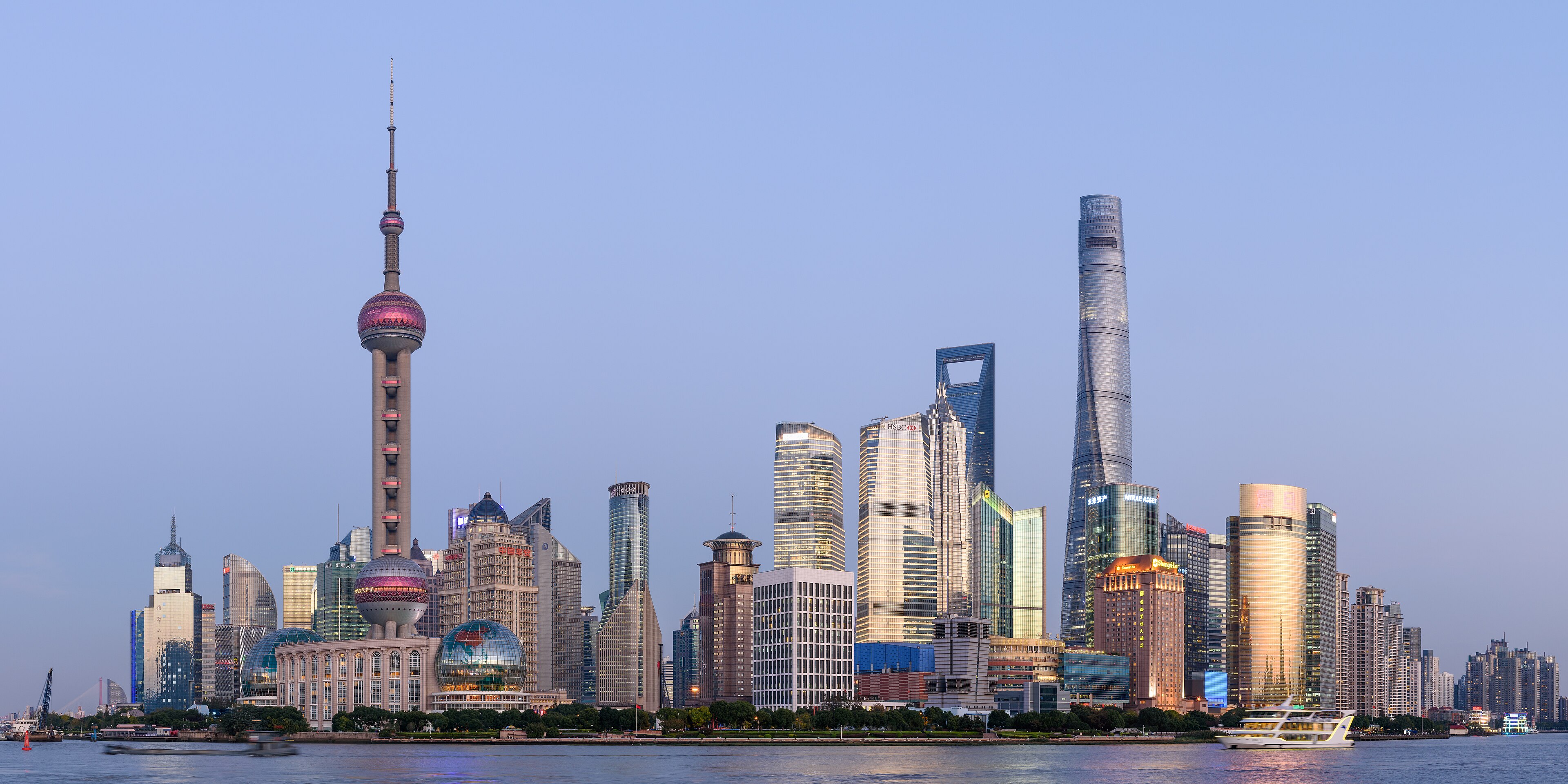
The Bund, Pudong and a City That Never Stands Still
Shanghai is the largest city in China, a global port and financial centre on the Huangpu River, known for the Art Deco waterfront of the Bund, the futuristic skyline of Pudong and a culture that mixes Chinese tradition with international style. The city grew rapidly in the nineteenth and twentieth centuries as a trading hub, and its architecture still tells that story, with grand banks and hotels facing the water. Across the river, the Oriental Pearl Tower and the 632-metre Shanghai Tower, completed in 2015, give the skyline its modern signature, best seen from a river cruise at dusk.
The old city adds a gentler pace. Yu Garden, a Ming-dynasty classical garden, offers pavilions, ponds and rockeries beside a busy bazaar, while the former French Concession is a district of plane-tree avenues, boutiques, cafes and Art Deco apartments. Xintiandi and Tianzifang blend renovated lane houses with bars and galleries. Visitors often pair Shanghai with China more widely, or with the nearby cities of Shenzhen and Seoul, while Japan is a short flight across the East China Sea.
Xiaolongbao, Water Towns and Day Trips
Shanghai's cuisine is a joy. Xiaolongbao, the soup dumplings steamed in bamboo baskets, are the city's signature dish, along with shengjianbao, pan-fried buns, and hongshao rou, red-braised pork belly. Shanghainese cooking leans towards the sweet and savoury, with fresh river fish, hairy crab in autumn and rice cakes. Teahouses, tasting menus and night markets all find a place, and the city's restaurants range from street stalls to some of the most elegant dining rooms in Asia, giving food lovers countless reasons to extend their stay.
Beyond the city, history and gardens are within easy reach. Zhujiajiao, a canal town with stone bridges, is a day trip from the centre, while Suzhou, known for its Classical Gardens inscribed by UNESCO in 1997, and Hangzhou, with West Lake inscribed in 2011, are reachable by high-speed train in well under two hours. A airline building an Asian route can present Shanghai as a city that offers culture, shopping and food in a single stay, and the Pudong maglev train links the airport with the city in minutes.
Spring and Autumn in the Paris of the East
Shanghai is sometimes nicknamed the Paris of the East, and its seasons suit the comparison. Spring, from March to May, brings cherry blossom, mild days and gardens in bloom, while autumn, from September to November, offers clear skies, comfortable temperatures and hairy crab season. Winter is cool and quiet, with a good calendar of exhibitions, and Chinese New Year brings lanterns and festival lights to Yu Garden. The city has an excellent metro, taxis and ride-hailing, so even a first visit feels easy, and walking along the Bund at night is among the great urban pleasures of Asia.
Shanghai has two major airports, Pudong and Hongqiao, with long-haul services from Europe and Asia, and a name like VisitShanghai.co.uk gives hotels and airlines a clear home for the story. The city is a strong gateway for onward journeys to Osaka, Singapore and Thailand, and its high-speed rail network reaches Beijing and many other cities, so a visit can easily grow into a broader journey through China.
Bund Grandeur, French Concession Boutiques and Pudong
Shanghai's districts each have a distinct stay. The Bund and the Huangpu waterfront hold grand historic hotels with Art Deco lobbies and river views, ideal for couples and anyone who wants the skyline at the window. People's Square and Nanjing Road suit first-time visitors, with the Shanghai Museum, shopping streets and metro lines close by. The former French Concession, with its plane-tree avenues, is the favourite of boutique-hotel lovers, with converted villas, cafes and independent shops within a stroll. Xintiandi and Jing'an add luxury towers, spas and high-end dining, popular with business travellers and longer stays.
Pudong's Lujiazui is the futuristic address, with sky-high hotels, rooftop bars and views back across the river to the Bund. Families often choose Pudong for the science museum, the Disney resort and the airport link by maglev. The West Bund, along the river, has become a cultural district of museums and galleries, with design hotels opening beside it. Water-town guesthouses in Zhujiajiao suit those who want a quiet night among canals. A booking platform can organise these areas by mood, from Art Deco romance to skyline luxury, so that every guest can choose their Shanghai. Many travellers pair the city with Bangkok or the Philippines for a warm-weather second stop.
Longjing Tea, Silk Qipao and Shanghai's Cultural Calendar
Beyond soup dumplings, Shanghai's table is a long conversation. Scallion oil noodles, lion's head meatballs, braised eel, crab-roe dishes in autumn and sweet rice cakes appear on family menus, while breakfast stalls serve soy milk, fried dough sticks and rice balls. Teahouses pour Longjing from nearby Hangzhou, and the city's coffee scene is among the most lively in Asia. Craft traditions include silk, embroidery and the tailored qipao, a dress style that first flourished in the 1920s and 1930s, and tailors in the French Concession still make it by hand. Antique markets and design shops are good places to find keepsakes.
Culture runs from the classical to the contemporary. The Shanghai Museum in People's Square is known for ancient bronzes and ceramics, the Power Station of Art and the West Bund museums show modern work, and the Shanghai Grand Theatre stages opera and ballet. Acrobatic shows and jazz in historic hotels are evening favourites. The Shanghai International Film Festival comes in June, the Lantern Festival lights Yu Garden after Chinese New Year, and Mid-Autumn brings mooncakes and moonlit river walks. Spring brings blossom, summer is lively with night markets and river cruises, autumn offers clear skies and crab season, and winter is calm, perfect for museums and long lunches.
River Cruises, Cycling and Water-Town Days
Shanghai rewards active and curious travellers. Evening cruises on the Huangpu pass the Bund and Pudong skyline, and daytime ferries across the river are a delight for the price of a few coins. Cycling is easy along the riverside paths of the West Bund and Century Park, and the former French Concession is ideal on foot, with walking tours of Art Deco buildings and lane-house alleys. Chongming Island, a large river-delta island, has wetlands, birdlife and bike routes. Tai chi in the parks at dawn, cooking classes and tea ceremonies give a taste of local life, while Shanghai Disney Resort is a magnet for families.
Day trips bring in ancient China. Wuzhen, Tongli and Zhujiajiao are canal towns of stone bridges and lantern-lit teahouses, Suzhou's gardens and silk museums are under an hour by train, and Hangzhou's West Lake offers boat rides and tea plantations. Nanjing, with its city walls and Ming tombs, is also reachable by high-speed train. A stay can be built around gardens, food, design or family fun, with a canal-town night as a gentle finale. Shanghai connects well with Dubai, Australia and Hawaii on long-haul routes, and it makes a polished gateway to the wider story of China.
Planning your stay
Shanghai is a city of contrasts. The Bund has the colonial-era waterfront, Pudong across the river has the modern skyline, the former French Concession has tree-lined streets, cafes and boutiques, and Yu Garden and the old city have traditional lanes. High-speed trains reach nearby cities for day trips, and the metro covers most areas.
Shanghai pairs naturally with Shenzhen and wider China, and with Seoul, Osaka and Japan on an East Asia itinerary, since all are within a short flight.
When to go
Spring and autumn are generally the most comfortable seasons, with milder temperatures and less humidity. Summer is hot and humid, and winter is cold and damp.
British Airways quotes about 11 hours 45 minutes for its non-stop flight from London, and a one-stop itinerary takes longer, so check schedules with your airline. Build in time at immigration at the major airports. Hotels near a metro station save time in a city this large, and it is sensible to download offline maps and set up payment apps before you land, so that you can pay for your first taxi or train ticket without delay.
Entry rules
Until 31 December 2026 you can enter China visa free for stays of up to 30 days for business, tourism, family or friend visits or transit, if you hold a standard British passport with the nationality 'British citizen'.
For any other reason, including paid work, long-term assignments, journalism or study, or for a stay longer than 30 days, you must apply for a visa before you travel. Immigration authorities may collect biometric data, and you may have to pass medical screening on arrival.
Payments, internet and money
Virtual private networks need to be licensed by the Chinese government, so make sure you stay informed and follow Chinese law. Set up your payment and map apps before you travel, and keep some cash as a back-up.
Before you travel
Entry requirements and official travel guidance are updated regularly, so check the latest position with your government before booking. The sources we used are listed at the foot of this page.
Why Shanghai matters to the industry
Shanghai is a business and leisure hub where travellers need clear answers on visas, payments and rules. With VisitShanghai.co.uk, an airline, hotel group or tourist board can lay out visa-free dates, payment apps and VPN rules, and our AI platform hands them to people searching for Shanghai.
Our other destination guides show how China's cities compare, and the OTA page explains how booking platforms use this kind of content.
Questions travellers ask about Shanghai
Do UK citizens need a visa for China?
Until 31 December 2026, standard British passport holders can enter visa free for up to 30 days for business, tourism, family visits or transit. For other purposes or longer stays you need a visa in advance.
How do I pay in Shanghai?
Smartphone payment apps such as WeChat and Alipay are almost universal. Cards are not always accepted outside major cities, so carry some cash as a back-up.
What is Shanghai best known for?
Shanghai is best known for the Bund waterfront with its Art Deco buildings, the Pudong skyline including the Oriental Pearl Tower and Shanghai Tower, Yu Garden, the French Concession and xiaolongbao soup dumplings. It is China's most international city.
What are the best day trips from Shanghai?
Suzhou, with its UNESCO-listed classical gardens, and Hangzhou, home to West Lake, are both reachable by high-speed train in well under two hours. Zhujiajiao, a canal town with stone bridges, is an easy half-day trip by road.
Which area of Shanghai is best for a first stay?
The Bund and People's Square put you close to the waterfront, museums and shopping, while the former French Concession offers boutique hotels, cafes and leafy walks. Pudong suits skyline views and families, and Jing'an and Xintiandi suit luxury travellers.
What should I do in Shanghai on a rainy day?
Visit the Shanghai Museum, the Power Station of Art or the West Bund galleries, enjoy a tea ceremony, take a cooking class or settle into a dumpling restaurant. The city's covered shopping streets and cafes make wet days easy.
In the Visit Travel Group portfolio: VisitShanghai.co.uk.