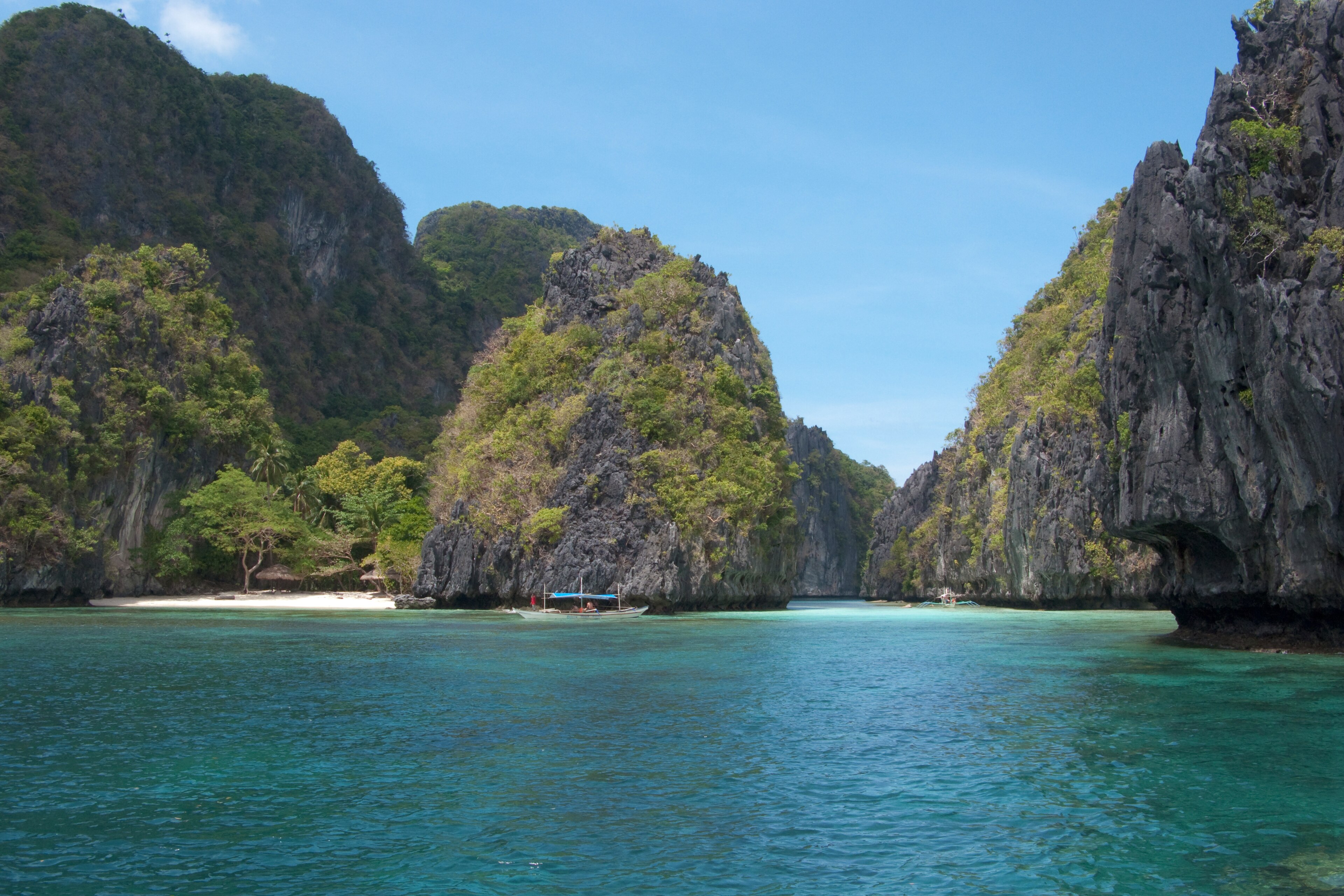
More Than Seven Thousand Islands to Choose From
The Philippines is an archipelago nation in Southeast Asia, made up of more than 7,000 islands and known for white-sand beaches, turquoise lagoons, rice terraces, centuries-old churches and one of the warmest welcomes in Asia. The country is generally divided into three main island groups, Luzon in the north, the Visayas in the centre and Mindanao in the south, with Manila, the capital, on Luzon. English is widely spoken alongside Filipino, which makes travelling here refreshingly easy, and the cultural mix of Malay, Spanish and American influences gives the country a flavour all its own.
Palawan is the star for many visitors. El Nido and Coron offer limestone cliffs, secluded lagoons and clear water ideal for island-hopping and snorkelling, while the Puerto Princesa Subterranean River National Park, inscribed by UNESCO in 1999, takes visitors by boat into a cave system that runs to the sea. Boracay's White Beach is among the best-known in the country, with a long sweep of powder-soft sand. For travellers comparing Asian island holidays, Thailand and the Phi Phi Islands offer a different but complementary experience.
Cebu, Bohol, Banaue and Siargao
The Visayas add variety. Cebu is known for its beaches, diving and the dramatic Kawasan Falls, and its Sinulog festival, each January, fills the streets with drums, dance and colour. Bohol is home to the Chocolate Hills, a landscape of grassy domes that turn brown in the dry season, and to the tarsier, one of the world's smallest primates. Heritage lovers can visit Vigan, a Spanish colonial town of cobbled streets and horse-drawn carriages, inscribed by UNESCO in 1999, or the Banaue Rice Terraces in the northern mountains, carved by hand over many generations.
Adventure and surf follow. Siargao, an island off Mindanao, is known for Cloud 9, a celebrated surf break, and for palm-lined lagoons and a relaxed island atmosphere, while Donsol and Oslob are known for whale shark encounters. Filipino food is a delight: adobo, sinigang, lechon and halo-halo, a colourful iced dessert, appear on every table. A hotel group or resort operator will find a huge range of stories here, from boutique island lodges to beachfront resorts, and Singapore offers an easy regional stopover.
Dry Season, Island Flights and Connections
The dry season from November to May is the best time for most beaches, with sunny days and calm seas, and the cooler months of December to February are particularly comfortable. Local festivals add colour throughout the year: Ati-Atihan in Kalibo in January, Sinulog in Cebu and the Pahiyas harvest festival in May. Many visitors plan around two or three islands, since domestic flights, fast ferries and small planes link the main destinations, and a typical trip combines Manila with Palawan or Cebu and a beach stay.
Manila's Ninoy Aquino International Airport is the main gateway, with most UK travellers connecting through hubs such as Doha or Dubai, while Cebu and Clark also receive international flights. A name like ThePhilippines.co.uk offers airlines and resorts a single, quotable home for the story. For a longer Asian itinerary, combine the Philippines with Japan, or follow the Pacific towards Hawaii and Australia for a journey across island worlds.
Island Resorts, Eco Lodges and Manila Stays
The Philippines offers an island stay for every taste. In Palawan, El Nido's Bacuit Bay has private-island resorts and cliff-side cottages for honeymooners, while Coron has boutique hotels facing the lagoons and wrecks. Boracay's White Beach is divided into three stations: Station 1 is quieter and upmarket, Station 2 is the lively centre and Station 3 is relaxed and family-friendly. Siargao's General Luna is the surfers' base, with palm-fringed guesthouses and cafes, and Panglao in Bohol has long beaches and resort pools that suit families and groups after a day with the tarsiers and the Chocolate Hills.
Cebu's Mactan Island has beach resorts a short drive from the airport, and Moalboal and Malapascua suit divers. Dumaguete and Apo Island offer quiet reef-side lodges. In the north, Vigan has heritage inns in restored Spanish houses and Banaue has homestays beside the rice terraces. Manila's stay choices include Makati and Bonifacio Global City for modern hotels, and Intramuros for heritage. Luxury travellers will find private-island retreats, while backpackers will find simple beachfront huts. A booking platform can build island-hopping itineraries that combine a city night, a reef lodge and a beach resort in one smooth plan.
Kare-Kare, Barako Coffee and Festival Colour
Filipino cuisine goes far beyond adobo. Kare-kare, a rich peanut stew with oxtail and vegetables, sinigang, a sour tamarind soup, and sisig, sizzling chopped pork, are household favourites, while lumpia spring rolls and pancit noodles appear at every celebration. Dessert is a joy: turon, banana spring rolls with caramel, ube sweets in vivid purple, and buko pie from Laguna. Calamansi juice, fresh coconut and Batangas barako coffee refresh the day, and Guimaras mangoes are celebrated across Asia. Seafood is superb on the islands, with grilled tuna, blue crab and fresh kinilaw, the Filipino ceviche, served at beachside tables.
Crafts and festivals give the year its rhythm. Banig woven mats, piña cloth, Ifugao woodcarvings and T'boli textiles are lovely souvenirs. The baroque churches of the Philippines were inscribed by UNESCO in 1993, and the Las Piñas Bamboo Organ is a rare musical treasure. Panagbenga, the flower festival in Baguio, blooms in February, Holy Week is celebrated across the islands, Kadayawan in Davao is held in August and MassKara in Bacolod in October. Christmas begins early, with parols, star lanterns, lighting up the streets from September, and Pampanga hosts a giant lantern festival in December. The warm dry months suit beaches, and the green months suit waterfalls and quiet stays.
Island Hopping, Diving and Rice Terrace Treks
Adventure is easy to find. In El Nido, the island-hopping tours known as A, B, C and D visit hidden lagoons and beaches, while in Coron, Kayangan Lake and the Twin Lagoon are highlights. Divers love Tubbataha Reefs, inscribed by UNESCO in 1993 and reached by liveaboard from March to June, Apo Island for turtles, Moalboal for sardine shoals and Malapascua for thresher sharks. Hikers can climb Mount Pulag above the clouds, trek to Batad's terraces near Banaue or tackle the island trails of Siargao. Cebu's canyoneering and Kawasan Falls add a splash of excitement, and Siargao's Sugba Lagoon is perfect for paddle-boarding.
Day trips and add-ons make the islands easy to link. From Cebu, a fast ferry reaches Bohol in about two hours, and from Manila, Tagaytay and Taal Lake are an easy drive. Vigan and the northern Ilocos coast fit well with a Luzon loop. A stay can be built around diving, surfing, heritage or family beach time, with two or three island bases. The Philippines pairs well with Bangkok, Seoul or Shanghai on a regional route, and with Australia or Fiji for a longer Pacific journey, with plenty of domestic flights joining the pieces.
Planning your stay
Most first visits combine Manila with island regions. Palawan has lagoons and limestone cliffs, Cebu and Bohol have diving, waterfalls and the Chocolate Hills, Boracay is known for its white-sand beach, and Siargao is a surf island. Domestic flights and ferries link them, so allow time for weather delays.
The Philippines sits near Thailand, Bangkok, the Phi Phi Islands and Singapore, and many UK travellers use one of those hubs to connect. It is a long journey from the UK, usually with one stop in a Gulf or Asian hub.
When to go
The drier months, generally from around November to May, are the most popular for beaches and diving, although conditions vary by island.
Island hopping depends on small boats and short flights, so travel light, keep important documents in a waterproof bag, and confirm transfers a day ahead. Many resorts and dive operators will advise on sea conditions and can rearrange excursions when weather closes ports, so book through providers with clear cancellation terms.
Entry rules and forms
The Foreign, Commonwealth and Development Office says your passport must have an expiry date at least six months after you arrive. You can visit for tourism or business for up to 30 days without a visa, and you can apply for an extension while you are in the country.
You must have a QR code showing you have registered on the e-travel system within the 72 hours before arrival, which is free, and some airlines will not let you board without it. Most UK visitors are also expected to have proof of return or onward travel, which airlines and immigration officers may ask to see.
Before you travel
Entry requirements and official travel guidance are updated regularly, so check the latest position with your government before booking. The sources we used are listed at the foot of this page.
Why the Philippines matters to the industry
The Philippines is a large, diverse market with high interest from UK visitors seeking islands and diving, and clear visitor guidance builds trust. ThePhilippines.co.uk lets a tourist board, resort or hotel group or airline publish it, and our AI platform carries it to searchers.
Compare other destination guides or read our OTA page on how booking platforms use destination content.
Questions travellers ask about The Philippines
Do UK citizens need a visa for the Philippines?
No, for up to 30 days for tourism or business. You must register on the e-travel system and show the QR code within 72 hours before arrival, and your passport needs six months' validity.
Do I need proof of onward travel?
Most UK visitors are expected to have proof of return or onward travel, which immigration officials and airlines may ask for.
What is the Philippines best known for?
The Philippines is best known for its beaches and islands, including Palawan, Boracay, Cebu and Siargao, as well as limestone lagoons, rice terraces, whale shark encounters and warm hospitality. English is widely spoken, which makes travel simple.
When is the best time to visit the Philippines?
The dry season from November to May suits most beach and island destinations, with December to February the most comfortable. Festival lovers can also time a trip around Sinulog in Cebu or Ati-Atihan in Kalibo, both held in January.
Which Philippine island is best for a first visit?
Palawan is a favourite for lagoons and limestone cliffs, Boracay for easy beach days, Cebu and Bohol for variety and Siargao for surf. A first visit often pairs Manila with one beach island and one culture stop such as Vigan.
What food should I try in the Philippines?
Try kare-kare, sinigang, sisig, lumpia, pancit and fresh kinilaw, followed by halo-halo, turon or ube sweets. Look for calamansi juice, buko pie and barako coffee, and seek out local mangoes in season.
In the Visit Travel Group portfolio: ThePhilippines.co.uk, ThePhilippines.uk, VisitPhilippines.co.uk, ILoveThePhilippines.co.uk, Philippines.co.uk, Philippines.uk.