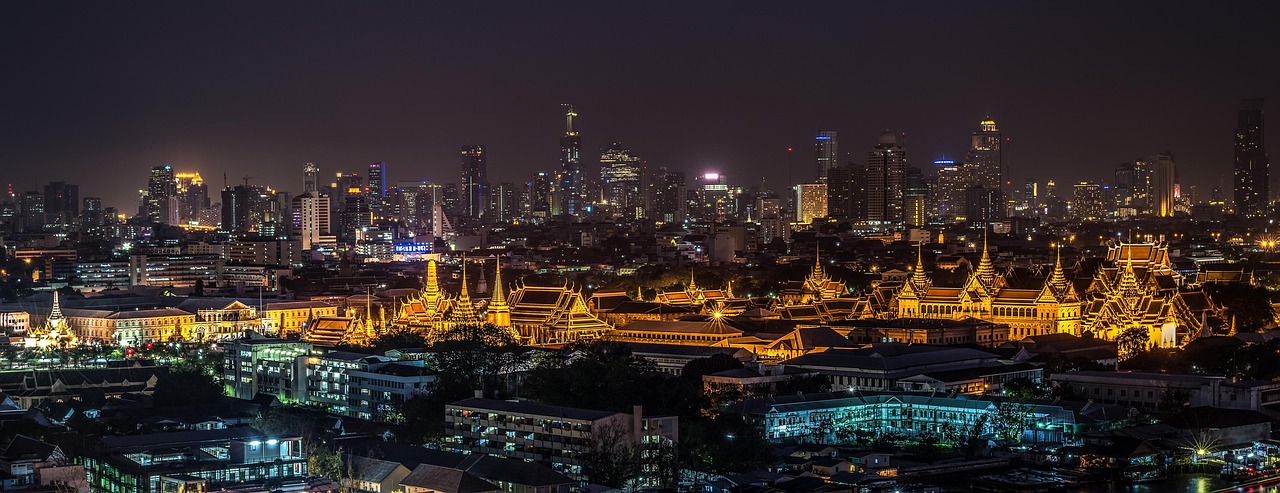
The City of Angels on the Chao Phraya
Bangkok is the capital and largest city of Thailand, a river city of gilded temples, floating markets, skyscrapers and some of the best street food on earth. It became the royal capital in 1782 under King Rama I, and its formal Thai name, Krung Thep Maha Nakhon, begins with the words City of Angels. The Chao Phraya river runs through the centre, and its ferries, long-tail boats and rice barges give visitors a lively, low-level view of the city. Beyond the river, canals known as khlongs thread the old Thonburi side, where wooden houses still stand over the water.
The Grand Palace, built from 1782, is the city's defining landmark, with spired halls, mural-covered cloisters and the Temple of the Emerald Buddha. Nearby Wat Pho houses the great Reclining Buddha, some 46 metres long, and is also the birthplace of traditional Thai massage. Across the river, Wat Arun rises in porcelain-studded spires, glowing at sunset. Many travellers combine the city with Thailand beaches and with the Phi Phi Islands, while others link Bangkok with Singapore on a wider Southeast Asian journey.
Yaowarat Street Food, Markets and Skytrain Nights
Bangkok eats at every hour. Yaowarat, the Chinatown district, comes alive after dark with stalls selling grilled seafood, roast duck, noodles and sweet desserts, while neighbourhood restaurants serve tom yum, green curry and pad thai at their best. Chatuchak Weekend Market, one of the largest markets in the world, sells everything from antiques to clothing across thousands of stalls, and the floating markets at Damnoen Saduak and Amphawa add a traditional touch. Cooking classes, often beginning with a market tour, are among the most popular activities with visitors.
The modern city is easy to navigate, thanks to the BTS Skytrain and MRT metro, which glide past shopping centres, parks and riverside districts. Jim Thompson House, a collection of traditional teak houses, shows the elegance of Thai design, while Lumphini Park offers a green escape, with tai chi at dawn. Hotels line the river, in Sukhumvit and around Silom, and a hotel group can offer guests everything from riverside heritage suites to rooftop skyline views. Beyond Thailand, Japan and Seoul make popular onward stops.
Cool Season, Connections and Day Trips
The cool season from November to February is the most pleasant time to visit, with sunny skies and lower humidity that make temple visits and river walks easy. Late April brings Songkran, the Thai new year, when the whole city celebrates with water festivals, and November's Loy Krathong sees floating lights set adrift on the river. Day trips include the ancient capital of Ayutthaya, a UNESCO site inscribed in 1991, reachable by train or river cruise, and the Kanchanaburi region, home to the bridge over the River Kwai.
Bangkok is a leading Asian hub. Suvarnabhumi Airport is served by direct flights from London, taking around 11 to 12 hours, and offers onward connections to Phuket, Krabi, Chiang Mai and across Asia, while Don Mueang handles many regional services. A name like Bangkok.co.uk gives partners a single, quotable home for the story. From the capital, a journey to the Philippines or Shanghai is just a few hours, which makes Bangkok a perfect base for a multi-country holiday.
Riverside Heritage, Sukhumvit Towers and Old Town
Bangkok's neighbourhoods each offer a different stay. Along the Chao Phraya, grand riverside hotels with gardens and ferry piers suit couples and culture seekers who want river views and heritage. Charoen Krung and Yaowarat offer shophouse boutiques beside Chinatown's food stalls, while Rattanakosin, the old royal district, puts guests a short walk from the Grand Palace and Wat Pho. Banglamphu and the Khao San area serve young and budget travellers. Across the river, Thonburi has a quiet canal-side atmosphere and homestays among teak houses, ideal for travellers who want a gentler pace than the central districts.
Sukhumvit is the family and business favourite, with Skytrain stations, malls, parks and restaurants within a few minutes of each other. Siam and Ratchaprasong are the shoppers' addresses, with luxury towers beside the big malls, while Silom and Sathorn mix rooftop pools, serviced apartments and easy access to Lumphini Park. Long-stay families often choose serviced apartments in Sukhumvit and Sathorn. Luxury travellers can pick grand heritage hotels with spas, and design lovers will find converted warehouses and boutique towers. A booking platform can map these districts by mood, from riverside calm to skyline energy, so guests can pick the right Bangkok.
Pad Krapow, Khlong Life and the Bangkok Year
Beyond Chinatown, Bangkok's food is an everyday joy. Pad kra pao, stir-fried holy basil with chilli, garlic and a fried egg over rice, is the city's much-loved lunch, khao man gai, poached chicken rice, is a simple masterpiece, and boat noodles are served in tiny bowls along the canals. Mango with sticky rice cools the afternoons, Thai iced tea and fresh coconut are on every corner, and independent coffee roasters have made the city's cafes a draw. Baan Bu, a craftsmen's village, still hammers monks' alms bowls by hand, and Jim Thompson silk remains an elegant souvenir.
Culture is easy to find. The National Museum holds the kingdom's treasures, Museum Siam makes Thai history playful, and Khon masked dance and classical music are performed in the city's theatres. Muay Thai is on show at the big stadiums, and the Bangkok Art Biennale brings contemporary art to temples and warehouses. Yaowarat lights up for Chinese New Year and the autumn Vegetarian Festival, Songkran splashes through April, and Loy Krathong sends floating lights down the river in November. The cool season suits sightseeing, the hot months suit air-conditioned museums and malls, and the green season brings short, dramatic afternoon showers followed by fresh evenings.
Cycling Bang Krachao, Floating Markets and Temple Trips
Bangkok is full of activity ideas beyond the temples. Bang Krachao, the green lung across the river, is a peaceful island for cycling through mangroves and orchards, and long-tail boats explore the quiet khlongs of Thonburi. Cooking classes with market visits, Muay Thai lessons, spa mornings and rooftop sunsets are favourites, and the river express boat is a lovely way to see the skyline for a few baht. Families enjoy the aquarium, science museum and Lumphini Park, while sports fans can see a boxing night. Evening dinner cruises on the Chao Phraya, with temples floodlit along the banks, are among the city's most romantic moments.
Day trips are plentiful. Ayutthaya and Kanchanaburi are classic history trips, Erawan National Park offers seven-tier waterfalls, and Khao Yai National Park, inscribed by UNESCO in 2005, is the nearest big wildlife park. Beach days are close, too: Koh Samet, Pattaya and Hua Hin are all within a few hours. A stay can easily combine city, history and sea, and travellers can extend a journey to Osaka, the Maldives or Australia, or fly on to Dubai for a stopover, making Bangkok the best first chapter for a multi-country holiday.
Planning your stay
Bangkok is a sprawling city best understood by its districts. The old town around the Grand Palace and Wat Pho holds the royal and temple sights, Chinatown has street food and markets, and Sukhumvit has the hotels, malls and nightlife. The Chao Phraya River is the quickest way to see the old city, with ferries stopping at the main temples.
Many UK visitors use Bangkok as a gateway to Thailand and the islands, for example the Phi Phi Islands, and to the wider region, including Singapore and the Philippines. Allow two to four nights, and expect to use the Skytrain, metro and taxis rather than walking in the heat.
When to go
November to February is the coolest and driest period, and the most popular. March to May is extremely hot, and the rainy season from roughly June to October brings heavy downpours that can flood streets.
Carry a light waterproof and expect afternoon storms. Air quality can also be poor in the dry months, so check forecasts if you have a respiratory condition. Book hotels near a Skytrain or metro station if you can, because traffic in the city is slow and a short journey by road can take an hour or more at rush hour.
Entry rules
According to the Foreign, Commonwealth and Development Office, UK visitors are visa exempt for 30 days from 15 September 2026, with a limit of two entries a year, and your passport should have at least six months' validity.
A nonstop flight from London to Suvarnabhumi Airport takes roughly 11 to 12 hours.
Before you travel
Entry requirements and official travel guidance are updated regularly, so check the latest position with your government before booking. The sources we used are listed at the foot of this page.
Why Bangkok matters to the industry
Bangkok is one of the busiest hub airports and most searched city names in Asia. Bangkok.co.uk lets a airline, hotel group or tourist board publish clear, current guidance on arrival steps, seasons and rules, and our AI platform carries it to searchers.
See our other destination guides for comparison, or our OTA page on how booking platforms use destination content.
Questions travellers ask about Bangkok
What is the best time to visit Bangkok?
November to February is the coolest and driest. March to May is very hot, and the rainy season from June to October can bring flooding.
What is Bangkok best known for?
Bangkok is best known for the Grand Palace, Wat Pho's Reclining Buddha, Wat Arun on the Chao Phraya, floating markets, Chinatown street food and its role as the gateway to Thailand and Southeast Asia. Its mix of old temples and modern skyline is a highlight.
How long is the flight from the UK to Bangkok?
Direct flights from London to Bangkok take around 11 to 12 hours. The city is also well connected through Gulf and Asian hubs, with onward flights to Phuket, Krabi, Chiang Mai and the Gulf islands.
Which area of Bangkok is best for first-time visitors?
Riverside and Rattanakosin put you close to the Grand Palace and temples, while Sukhumvit and Siam offer Skytrain access, shopping and restaurants. Families and business travellers often prefer Sukhumvit, and culture seekers love the old town and the river.
What should I do in Bangkok on a rainy day?
Visit the National Museum, Museum Siam or Jim Thompson House, take a cooking class, enjoy a Thai massage or spend an afternoon in the city's air-conditioned malls and cafes. Showers are usually short, so evenings are still lovely.
In the Visit Travel Group portfolio: Bangkok.co.uk.