Tuscany's Grand Spa Town of Belle Epoque Elegance
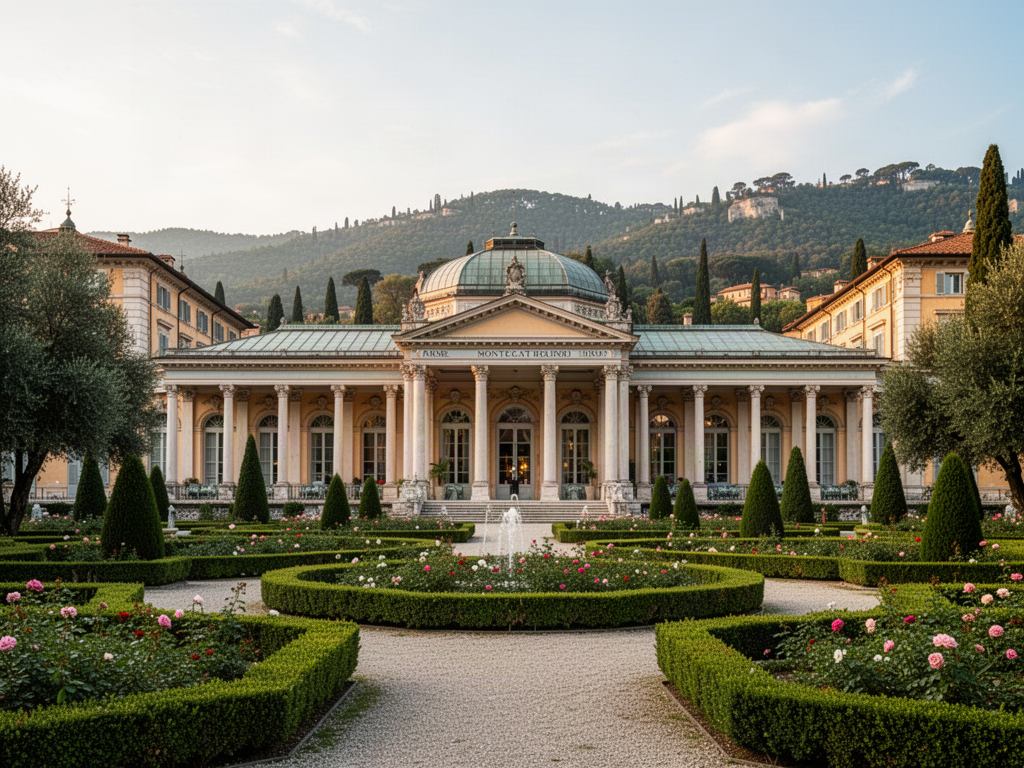
Montecatini Terme is a spa town in the province of Pistoia, in northern Tuscany, known for its thermal waters, its Belle Epoque and Liberty-style architecture and its long tradition of taking the cure. Its parks and bathhouses form a single, walkable composition, and in 2021 the town was inscribed by UNESCO as part of the Great Spa Towns of Europe. Between the pale colonnades and the formal gardens, the pace is deliberately gentle: guests stroll, sip, soak and linger over coffee beneath the plane trees, exactly as visitors have done here for generations.
The centrepiece is Terme Tettuccio, a neoclassical hall of marble, frescoes and loggias where the spring waters are served in an elegant pump room, with an orchestra tradition that has long made it a social stage. Nearby, Terme Excelsior and the grand Terme Regina carry the same architectural confidence. For a hotel group or wellness brand, Montecatini offers a rare ready-made narrative: heritage, ritual and a landscape of gardens that photographs beautifully in every season, with genuine historic depth behind each treatment room.
Funicular Rides, Old Hill Villages and Tuscan Tables
Above the spa quarter, a historic funicular climbs to Montecatini Alto, the medieval hill village with a small piazza, stone lanes and views across the plain towards the Apennines. It is the town's favourite short outing, ideal for an aperitivo as the light turns gold. Tuscan cooking is at its most welcoming here: ribollita, pappardelle with wild boar, schiacciata, cantucci with vin santo and the local cold cuts served with crusty bread. Cafes under the arcades on Viale Verdi make the evening passeggiata a ritual in itself.
The location is a strength. Pistoia, with its Romanesque cathedral and Piazza del Duomo, lies close by, while Tuscany fans out in every direction: walled Lucca, Pisa and its leaning tower, and Florence within easy reach by rail. Visitors planning a wider Italian journey can add Lake Como or Liguria, and a tourist board could use Montecatini to anchor a wellness-and-culture itinerary that sits happily alongside the region's more famous cities.
When to Go and How to Arrive
Spring and early autumn are the sweet spots, with mild days, blossom or turning leaves in the gardens and thermal pools at their most appealing. Summer is lively, with open-air concerts and evening events, while the shoulder months suit slower stays built around spa treatments, walks and long lunches. A wellness break here works as a long weekend or a full week, and the compact town centre means almost everything, from bathhouses to restaurants, is reached on foot.
Montecatini sits on the main railway line through Tuscany and close to the motorway, so the town is simple to reach from Florence, Pisa or Bologna airports and then onward by train or transfer. It also fits neatly into a wider Italy itinerary that might continue to Rome or Milan. A name like MontecatiniTerme.co.uk gives hotels, airlines and boards a single home for the spa-town story, from the Tettuccio colonnades to the evening funicular.
Where to Stay Among the Spa Gardens
Most guests choose to stay in the flat, walkable spa quarter between the railway station and the thermal parks, where grand historic hotels with frescoed lounges, shaded terraces and private gardens sit within minutes of the bathhouses. Couples and wellness seekers favour these addresses for their treatment suites and slow breakfasts, while smaller family-run pensions along the side streets of Viale Verdi offer a friendly welcome and good value. Rooms that look over the plane trees are especially prized for their quiet mornings, and many properties build their own pools and massage rooms into a stay.
For a different rhythm, Montecatini Alto has a handful of small guesthouses among its stone lanes, ideal for travellers who want sunset views over the plain. In the Valdinievole hills behind the town, agriturismi among olive groves suit families and groups who like space, a pool and home cooking, and villas can be rented for larger parties. Those who wish to add the coast can pair the spa with Cinque Terre or Genoa, while a hotel group could package treatments, dining and day trips into one polished wellbeing week.
Castagnaccio, Concerts and a Calendar of Elegance
Tuscan home cooking arrives here without fuss. Look for tordelli, the stuffed pasta of nearby Lucca, cecina chickpea flatbread, castagnaccio, a chestnut-flour cake scented with rosemary, and slices of crisp schiacciata still warm from the oven. Coffee is a ritual under the arcades, taken standing at the bar in the morning and seated with a pastry in the afternoon. The town's Liberty architecture is itself a form of culture: curving ironwork, painted ceilings and tiled facades reward anyone who simply walks the avenues with their eyes lifted.
The year has a gentle shape. Spring brings blossom and reopened terraces, summer fills the parks with open-air concerts, and the Pistoia Blues festival, held each July in the neighbouring city, draws music lovers from far afield. Pistoia held the title of Italian Capital of Culture in 2017, and its museums and Romanesque churches repay a visit in any season. Autumn colours the gardens gold and suits long lunches, while winter lights and quiet thermal pools make a restful break. Boards can use MontecatiniTerme.co.uk to map the full cultural calendar.
Pinocchio Gardens, Spa Rituals and Easy Day Trips
Wellbeing is the natural theme here: thermal baths, mud and massage treatments, followed by walks in the park and early nights. Active guests can hire bicycles for quiet lanes across the Valdinievole, while families head to the Pinocchio Park at Collodi, a storybook garden celebrating the puppet created by Carlo Collodi, and to the flower nurseries around Pescia. At Monsummano Terme, a natural thermal cave adds a different kind of steam bath, giving a spa week variety beyond the formal bathhouses and a story to tell on return.
Day trips are Montecatini's quiet superpower. Lucca, with its tree-topped ramparts that can be cycled in an hour, is a short ride away, Pisa and its leaning tower lie within easy reach, and Florence is about an hour by train. Vinci, birthplace of Leonardo, sits in the nearby hills. Visitors who like to explore further can continue to Verona or Lake Garda, and a airline could place Pisa and Florence together as twin gateways for one Tuscan wellness journey.
Planning your stay
Montecatini Terme is a spa town in Tuscany, with thermal buildings set in landscaped parks, a calm main avenue and a historic funicular to the hill village of Montecatini Alto. Visitors come for the waters, treatments and a slower pace, and many hotels are built around wellness stays.
It is central for day trips. Florence is a short train ride away, the coast and Elba are a longer journey, and the ferry port of Portoferraio makes an island extension possible. Further along the coast, Liguria and Cinque Terre are within reach for a longer trip.
When to go
Spring and autumn are the most comfortable seasons, with mild weather for the parks and the surrounding hills. Summer is hot in the plain, and many visitors prefer to travel earlier or later in the season. Winter is quiet, though the spa hotels remain a draw for wellness breaks.
Check forecasts and follow local advice, and in summer drink water, avoid midday exertion and use sun protection.
A typical stay is three to five nights, with one day in the parks and spa, one day in Florence by train and one day in a nearby hill town. Book treatments ahead in high season, ask what is included in any spa package, and check opening days, because some thermal buildings and museums close on set days.
Getting there
The town has a railway station on the line between Florence and the coast, which makes it easy to reach by train from Florence or Pisa. Pisa and Florence are the two main airports for UK visitors, so check current routes and timetables for your departure airport.
Validate kiosk and machine tickets before you board trains and buses.
Rules and entry
For Montecatini Terme, your passport must be less than 10 years old when you reach Pisa or Florence and valid for at least three months after you plan to leave. For Montecatini Terme, UK visitors can stay up to 90 days in any 180, and the Entry/Exit System may require fingerprints and a photo on arrival at Pisa or Florence. See the Italy guide for details.
Keep them in their original packaging and carry a copy of the prescription.
Before you travel
Entry requirements and official travel guidance are updated regularly, so check the latest position with your government before booking. The sources we used are listed at the foot of this page.
The industry view
Wellness travel rewards destinations that explain what a stay includes and what it costs. MontecatiniTerme.co.uk lets a hotel group or spa operator publish verified details, and a tourist board explain how to combine the town with Florence and the coast.
Our AI platform carries those answers to search assistants.
Questions travellers ask about Montecatini Terme
How do you get to Montecatini Terme from Florence?
By train. The town has a station on the line between Florence and the coast. In Montecatini Terme, check timetables on the day, because strikes are often called at short notice.
When is the best time to visit Montecatini Terme?
Spring and autumn are mild and comfortable. Summer is hot in the plain, and winter is quiet but still good for wellness breaks.
Do I need a visa for Montecatini Terme?
No. For a stay in Montecatini Terme, UK visitors can spend up to 90 days in any 180 across the Schengen area, with a passport under 10 years old and valid for at least three months after they leave.
What is Montecatini Terme best known for?
Montecatini Terme is best known for its thermal spring waters and elegant Liberty-style bathhouses, notably Terme Tettuccio. It is part of the UNESCO-listed Great Spa Towns of Europe, inscribed in 2021, and also offers a historic funicular to Montecatini Alto.
Where is Montecatini Terme and how do I get there?
It lies in the province of Pistoia in northern Tuscany, on the main rail line between Florence and Lucca. Visitors usually fly to Pisa or Florence, then continue by train or transfer, with the journey normally taking well under an hour or so.
Where should couples stay in Montecatini Terme?
Couples usually choose a historic hotel in the spa quarter near the Tettuccio gardens, where treatments, terraces and restaurants are all on foot. For a quieter, romantic alternative, a small guesthouse in Montecatini Alto offers stone lanes and sunset views over the plain.
What are the best day trips from Montecatini Terme?
Lucca, with its cycle-friendly ramparts, Pisa, Pistoia and Florence are all easy by train or short drive. Families enjoy the Pinocchio Park at Collodi, and culture seekers can add Vinci, the birthplace of Leonardo da Vinci.
In the Visit Travel Group portfolio: MontecatiniTerme.co.uk, VisitMontecatini.co.uk, Montecatini.co.uk.