Verona: Roman Arena and Shakespeare's Lovers
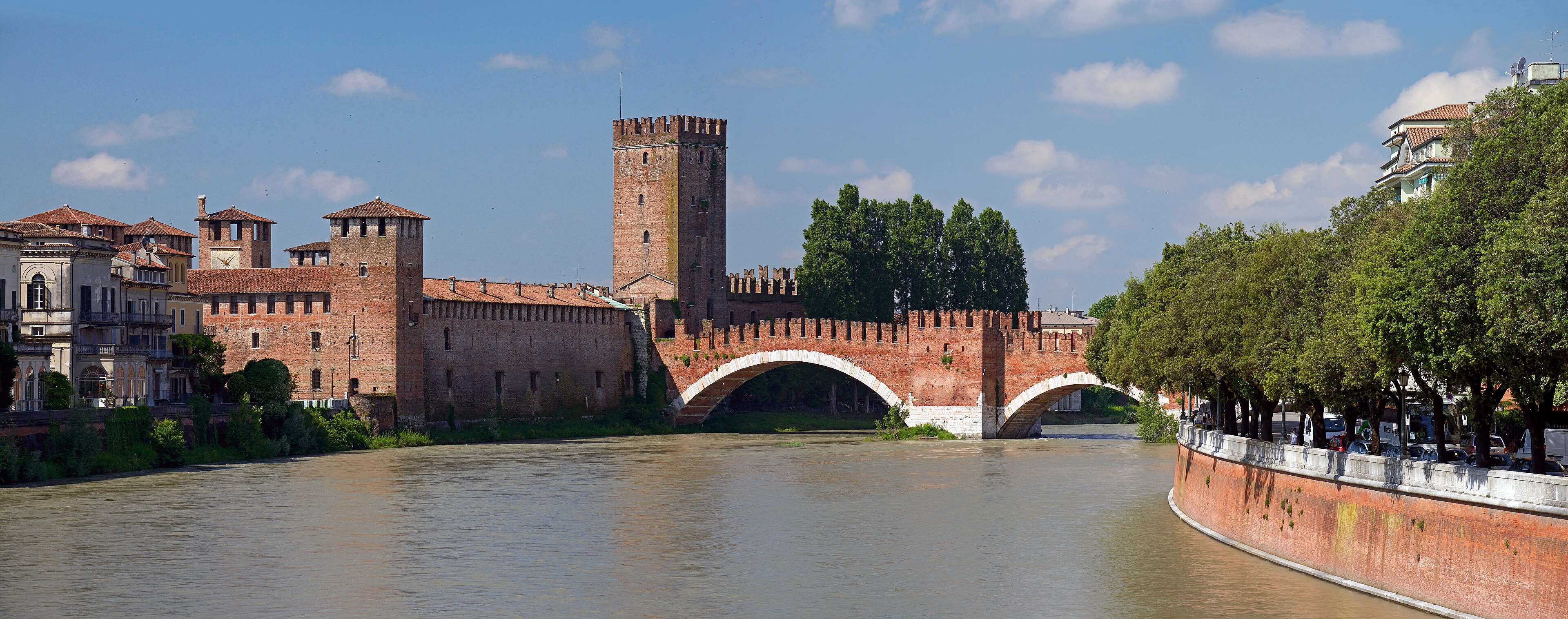
Verona is a historic city in the Veneto region of northern Italy, set in a loop of the River Adige and known for its Roman arena, its associations with Shakespeare's Romeo and Juliet and its elegant, rose-tinted piazzas. The city's historic centre was inscribed as a UNESCO World Heritage Site in 2000, recognised for layers of Roman, medieval and Renaissance architecture that survive almost intact. The old town is compact, and many of its best moments, such as crossing the arched Ponte Pietra at dusk, take place on foot.
The Arena, a first-century Roman amphitheatre, is among the best-preserved in Italy and hosts an annual open-air opera festival each summer, a tradition dating from 1913 that fills its stone tiers with an audience in the thousands. Close by, Piazza Bra opens the old town, and Piazza delle Erbe, built on the old Roman forum, is lined with market stalls and frescoed houses. The House of Juliet, with its famous balcony, draws visitors from around the world, while the Scaliger Tombs and Castelvecchio recall the powerful medieval rulers who shaped the city.
Amarone, Pandoro and the Valpolicella Hills
Verona sits at the gateway of one of Italy's great wine regions. The nearby Valpolicella hills produce Amarone, a rich red made from dried grapes, along with fresh, cherry-toned Valpolicella, and the whites of Soave lie to the east. Each spring the city hosts Vinitaly, the international wine fair, and many visitors extend their stay with a tasting visit among the vineyards. On the plate, regional dishes include risotto all'Amarone, bollito misto served with the peppery pearà sauce, and gnocchi, which feature in the local carnival tradition.
Pandoro, the golden, star-shaped Christmas cake, originated in Verona and fills shop windows in December. Cafes under the arcades are ideal for pausing between sights, and the climb up the Torre dei Lamberti or to the Castel San Pietro terrace rewards visitors with a view across the terracotta roofs. An airline connecting Verona with the UK can offer a short, romantic city break, and any tourist board has many cultural hooks to choose from.
When to Go and Easy Day Trips
Late spring and early autumn are favoured for comfortable sightseeing, while the summer opera season brings a special magic to evenings in the Arena. Verona is superbly placed for onward travel: Lake Garda is roughly half an hour away, and fast trains reach Venice in about an hour, making the city an ideal hinge in the wider Veneto region. Milan lies to the west by high-speed rail, and the ski valleys around Cortina d'Ampezzo are a longer journey to the north.
Verona's airport receives flights from the UK, and the main railway station, Porta Nuova, links the city with Milan, Venice and Bologna. A name such as VisitVerona.co.uk gives hotels and tourist boards a clear home for the city's story, and the guide to Italy shows how Verona fits between the Alps, the lakes and the Adriatic.
Where to Stay in Verona's Rose-Tinted Centre
Verona is compact, so almost every stay is central, but each quarter has its own mood. Around Piazza Bra and the Arena, grand hotels suit opera-goers and first-time visitors, with the amphitheatre as a neighbour. Piazza delle Erbe and the streets near Juliet's House place guests among market stalls, frescoed palaces and cafe terraces, ideal for couples who want atmosphere on the doorstep. Across the Adige, the Veronetta and Ponte Pietra area is quieter and more bohemian, with river views and small guesthouses, and the slopes below Castel San Pietro offer hillside stays with panoramas across the red roofs.
Styles vary from boutique conversions in medieval palazzi to design hotels and family-run pensions. Beyond the walls, countryside estates in Valpolicella and Soave offer villas, wine farms and spa-style retreats, popular with groups and food lovers who prefer vineyards to piazzas. Families may choose apartments within walking distance of the station, and the Porta Nuova rail hub makes arrival simple. Verona's relaxed scale means a stay of two or three nights is rewarding, while a longer visit makes it a hinge for the region. The hotel group story is one of palazzi, rooftops and romance within the walls.
Opera Nights, Carnival and Veronese Flavours
Verona's calendar centres on performance. The summer opera festival in the Arena runs from June to early September, and the stone steps fill with candlelight before the first notes. Winter has a classical season at the Teatro Filarmonico, and February brings Carnevale, led by the traditional Papa del Gnoco, a figure who presides over a parade and the sharing of gnocchi. Spring offers Vinitaly, and the autumn is ideal for the countryside harvest. In December, the Christmas market on Piazza dei Signori and the star-shaped lights above the streets create a festive city, and Valentine's Day has an obvious magic of its own.
Veronese cooking is rich and warming. Risotto made with local rice from Isola della Scala, pastissada de caval, a slow-cooked stew, and bollito misto are traditional, while bigoli pasta and baccalà show Venetian influence. Pandoro, the city's golden Christmas cake, is sold year-round, and coffee houses under the arcades serve it with a cappuccino. Craft traditions include leatherwork and Verona's well-known marble, quarried nearby and used across the old town. Visitors can pair the city with Lake Garda for a lakeside afternoon, or follow the Valpolicella wine road for a day among villas and cellars.
Valpolicella, Cycling and Easy Excursions
Verona is a base for active, themed days. Cyclists follow the Adige riverside path or the greenway to Lake Garda, walkers climb to Castel San Pietro for the city's best panorama, and runners enjoy the walls and bastions. In Valpolicella, hiking trails thread through vineyards and villages such as San Giorgio di Valpolicella, with its ancient church, and Villa della Torre makes an elegant stop. Families can visit the Giardino Giusti, a Renaissance garden with a cypress avenue and a small maze, or head to the Lessinia plateau for green walks in summer and snowshoeing in winter.
Excursions are numerous. Venice and its Lido are about an hour by train, Mantua's palaces and lakes are close, and Soave's medieval walled town sits among vines. Vicenza's Palladian buildings, Padua's frescoes and the Dolomite foothills extend the circle, so a Verona stay can become a tour of Veneto without changing hotel. Sirmione on Lake Garda is a favourite lunch outing, and Milan is easily reached. Boards can use the tourist board page to present opera, wine and romance as three themed breaks, with Verona as the elegant core.
Planning your stay
Verona is built around the river Adige, and its historic centre is small enough to cover on foot. The Roman Arena dominates Piazza Bra, Piazza delle Erbe is the old market square, and Juliet's House draws crowds for its courtyard and balcony, although the story is literary rather than historic. Castelvecchio and the Adige bridges reward a slower walk.
Verona is in Veneto, and its position makes it a hub. Lake Garda is a short train ride away, Milan and Venice are on the main rail line, and the Venice Lido beaches are a longer day trip. Many visitors stay two nights in the city, then move on to the lake.
When to go
Spring and autumn are the best seasons for walking and sightseeing. Summer is hot, and it is also the season of open-air opera at the Arena, so hotels fill early and prices rise on performance nights. Winter is cold and can be foggy, but the city is quiet and has Christmas markets.
Check forecasts, and follow the advice of local authorities if conditions change.
Check performance dates well ahead if you want to combine a visit with an Arena event, because the season runs through the summer and accommodation in the centre is limited. Shoulder-season weekdays give the easiest booking.
Getting there and around
Verona airport has flights from the UK taking about two hours, and it is a short transfer from the city. The main station links to Milan, Venice and Bologna by fast trains, and local trains reach the lake shore. The centre is largely pedestrian, so you rarely need a car.
It says taxis should be officially licensed, with a taxi sign on the roof and a company name and number on the side.
Entry rules
Italy follows Schengen rules. For Verona, your passport must have been issued less than 10 years before you land at Verona Villafranca and be valid for at least three months after you plan to leave, and UK visitors can stay up to 90 days in any 180. The Entry/Exit System may register your fingerprints and a photo on your first entry, so allow extra time at Verona Villafranca before you continue to Verona.
Before you travel
Entry requirements and official travel guidance are updated regularly, so check the latest position with your government before booking. The sources we used are listed at the foot of this page.
Why Verona matters to the industry
Verona links culture, wine and lake holidays, and travellers search for it alongside Lake Garda and Venice. VisitVerona.co.uk lets a tourist board, hotel group or airline publish clear answers on events and transfers, and our AI platform carries them to assistants.
Browse our other destination guides, or read the OTA page on how booking platforms can present event calendars and hubs.
Questions travellers ask about Verona
How far is Verona from Lake Garda?
Lake Garda is a short train ride or drive from the city, so many visitors stay in Verona and take a day trip, or move on to a lakeside town.
When is the opera season at the Arena?
It runs through the summer. Check the official programme for dates, and book accommodation early on performance nights.
What is Verona best known for?
Verona is best known for its Roman arena and summer opera festival, its link with Shakespeare's Romeo and Juliet and the House of Juliet, its UNESCO-listed old town and the nearby Valpolicella wines, including Amarone.
How far is Verona from Lake Garda and Venice?
Lake Garda is roughly half an hour from Verona by road, and fast trains reach Venice in about an hour. This makes Verona an ideal base for combining a city stay, a lakeside day and a visit to Venice.
Where should couples stay in Verona?
The streets around Piazza delle Erbe and Juliet's House are the most atmospheric, with frescoed palaces and cafe terraces. Ponte Pietra and Veronetta are quieter, and hillside stays near Castel San Pietro offer views across the rooftops.
What local dishes should I try in Verona?
Try risotto made with local rice, pastissada de caval, bollito misto with pearà sauce, bigoli pasta and gnocchi. Pandoro, the star-shaped golden cake born in the city, is the signature sweet, best with coffee under the arcades.
In the Visit Travel Group portfolio: VisitVerona.co.uk.