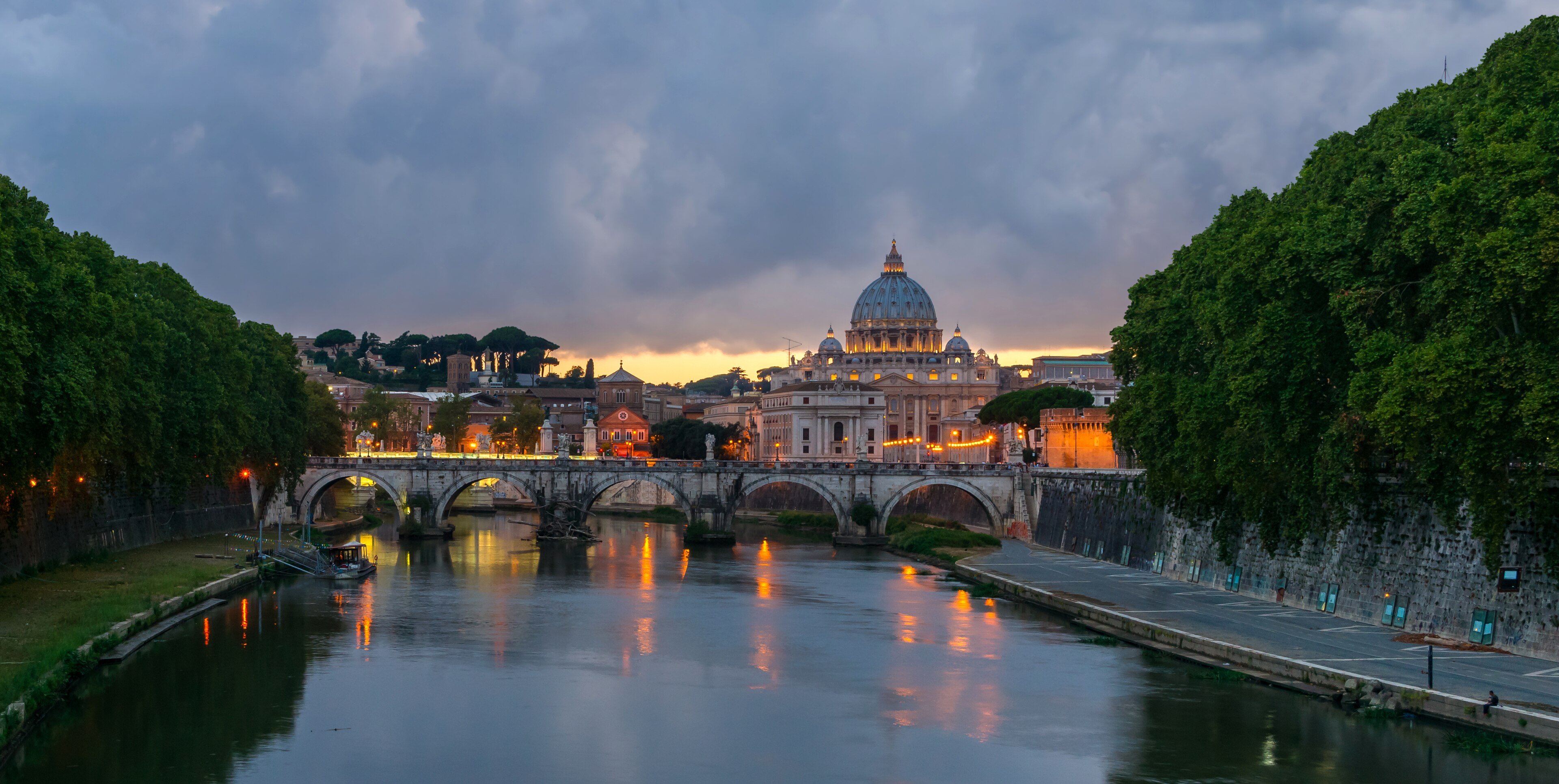
The Eternal City, Layer Upon Layer
Rome is the capital of Italy and of the Lazio region, a city of about 2.8 million people on the River Tiber, known for some two and a half thousand years of continuous history, from the Colosseum and the Roman Forum to the domes of the Renaissance and Baroque. Tradition dates its founding to 753 BC. The historic centre, together with the properties of the Holy See and the Basilica of San Paolo Fuori le Mura, was inscribed as a UNESCO World Heritage Site in 1980 and extended in 1990. Few cities allow you to walk from the age of emperors to the age of Bernini in a single afternoon.
The set pieces reward patience. The Colosseum, inaugurated in AD 80, still anchors the skyline beside the Forum and the Palatine Hill, while the Pantheon, rebuilt under Hadrian, is crowned by the largest unreinforced concrete dome in the world. Baroque Rome unfolds around Piazza Navona and the Trevi Fountain, and the Spanish Steps lead up to Trinita dei Monti. Vatican City, an independent state within Rome, holds St Peter's Basilica and the Vatican Museums, home to Michelangelo's Sistine Chapel ceiling. Between them lie small piazzas, ochre palazzi and a fountain at nearly every turn.
Trastevere Evenings and a Cuisine of Few Ingredients
Roman cooking is simple, seasonal and fiercely local. The classic pastas, carbonara, cacio e pepe, amatriciana and gricia, rely on a handful of ingredients: guanciale, pecorino romano, black pepper and eggs. Supplì, fried rice croquettes, and pizza al taglio sold by weight make the best quick lunches, while carciofi alla giudia, crisp fried artichokes from the old Jewish quarter, are a spring signature. Evenings belong to neighbourhoods: Trastevere with its ivy-covered lanes, Testaccio with its market and trattorias, and Monti, where small wine bars and boutiques fill the streets behind the Forum.
Beyond the monuments, green and quiet places give Rome its breathing space. The gardens of Villa Borghese hold the Galleria Borghese, where Bernini's sculptures stand in rooms made for them, and the Appian Way, the ancient road southward, is lined with umbrella pines, catacombs and ruined tombs. Gelato is a daily ritual and aperitivo its evening counterpart. A tourist board or city partner could present these distinct Romes, imperial, Baroque, culinary and green, as separate itineraries on VisitRoma.co.uk, each aimed at a different kind of visitor.
When to Go and Where Day Trips Lead
Spring and autumn are the favoured seasons, with mild days, clear light and gardens in bloom or turning, while summer brings long evenings and open-air concerts, and winter offers quieter museums and a festive calendar. Rome is a rewarding base for longer stays: the wider region of Lazio holds the gardens of Tivoli, Etruscan tombs and the lakeside Castelli Romani, and the beaches at Sperlonga are within easy reach for a day by the sea. Fast trains also connect the capital with Naples and with Florence in Tuscany.
Rome is among the best-connected cities in Europe. Fiumicino, the main international airport, receives direct flights from the UK in around two and a half hours, and the Leonardo Express train reaches Termini station in about half an hour. Ciampino serves many low-cost routes. Within the centre, the Metro, buses and trams complement the pleasure of simply walking. For travellers planning a broader tour, the guide to Italy is a useful companion, linking Rome with the lakes, the north and the south.
Choosing Your Neighbourhood in the Eternal City
Where you stay shapes your Rome. The historic centre, around Piazza Navona, the Pantheon and Campo de' Fiori, puts the great monuments on foot and suits first-time visitors and couples who want to step out into a baroque piazza after breakfast. Trastevere, across the Tiber, is a village within the city, with ivy-draped lanes, trattorias and a lively evening atmosphere. Monti and the streets near the Colosseum give a more local, boutique character, while the Prati district near the Vatican suits culture seekers with a morning booked at the museums. Historic palazzi converted into elegant hotels are a Roman speciality, many with rooftop terraces that look across the domes.
Other districts offer different rhythms. Parioli and the area around Villa Borghese are leafy and polished, favoured by travellers who want gardens, quiet streets and easy access to the Galleria Borghese. Testaccio is the place for food lovers, and the Aventine hill offers peace and views over the city. Families often choose apartments, which give space and a kitchen, while groups can take a whole floor of a palazzo. Luxury travellers will find grand-hotel addresses near the Spanish Steps and Via Veneto. Whatever the choice, the metro, buses and walking make the city manageable, and the hotel group story is one of heritage buildings and rooftop views.
Festivals, Fountains and Roman Seasons
Rome rewards a calendar-minded visit. Easter week fills the city with processions and the Pope's blessing at St Peter's, and the spring Natale di Roma celebrates the city's traditional birthday on 21 April with historic re-enactments and parades. Summer brings the Estate Romana, a season of open-air concerts, cinema in the piazzas and evening events along the Tiber, and August's Ferragosto holiday gives the city a languid rhythm. Autumn is a favourite season for exhibitions and the opening of the opera and concert programme, while December adds Christmas markets in Piazza Navona and a presepe, or nativity scene, tradition across the churches.
Culture runs from antiquity to the present. The Capitoline Museums, among the oldest public museums in the world, sit on Michelangelo's hilltop piazza, the MAXXI museum shows contemporary art and architecture, and the Baths of Caracalla stage open-air opera in summer. Craft traditions survive in small workshops for leather, bookbinding and printing, and the espresso ritual, taken standing at the bar, is part of daily life. Pastries such as maritozzi, cream-filled buns, belong to breakfast. For an inspiring lens on antiquity, the guide to Campania and its buried towns offers a natural sequel, while Naples extends the journey.
Rome's Day Trips, Walks and Themed Stays
Themed days make the city feel fresh. Walk the Appian Way by bicycle on a Sunday, when the ancient road is closed to cars, and pass catacombs, aqueducts and pine-shaded tombs. Join a cooking class in Testaccio, follow a Baroque trail from Bernini fountain to Borromini church, or spend a morning in the Vatican Gardens. Families can enjoy a gladiator school, the Bioparco zoo in Villa Borghese or a boat-style picnic on the Tiber bank, and wellness seekers will find hotel spas that make a restful counterpoint to museum days. Art lovers can plan an entire trip around Caravaggio, whose paintings hang in several churches in the centre.
Day trips are plentiful. Tivoli's gardens and Hadrian's Villa, Ostia Antica's excavated port town and the Castelli Romani hill towns are all within an easy journey, and the beaches of Sperlonga offer a coastal day. Further afield, fast trains reach Tuscany, Naples and Milan in a few hours, so Rome works as the first chapter of an Italian grand tour. Airlines and hubs can feature these combinations through the airline partners page, and the wider region of Lazio gives a ready-made menu of add-ons for every kind of traveller.
Planning your stay
Rome is the capital of Lazio, and most first visits cover the Colosseum and Forum, the Pantheon, the Trevi Fountain, Piazza Navona and the Vatican. The Foreign, Commonwealth and Development Office says its Italy advice also covers Vatican City. The centre is compact enough to walk, but distances between the major sites add up on a hot day.
Rome works well with the south. Fast trains reach Naples in about an hour and a quarter, and from there the Amalfi Coast and the wider Campania region are within reach. The coast at Sperlonga is a beach alternative if you want sand after the sightseeing.
When to go
April to June and September to October are the most comfortable months, though Easter and the spring weeks are busy. July and August are hot and the city is crowded, with some small family restaurants closing around mid-August. Winter is cooler, wetter and much quieter, with lower hotel prices outside the Christmas period.
Book major attractions ahead where you can, and carry water, because many streets offer little shade.
Getting there and around
Flights from London to Rome Fiumicino take about two hours 30 minutes, and a direct train links the airport with Termini station in around 30 minutes. The metro covers some central sights, and buses and trams cover the rest.
Driving is rarely worth it. It adds that Rome sometimes restricts certain vehicles in the green band area, which covers most of the city.
Before you travel
Entry requirements and official travel guidance are updated regularly, so check the latest position with your government before booking. The sources we used are listed at the foot of this page.
Why Rome matters to the industry
Rome is a top-tier city-break and pilgrimage market, and travellers search for practical answers before they book. VisitRoma.co.uk lets a tourist board, hotel group or airline publish them, and our AI platform carries them to assistants.
Browse our other destination guides, or see how an OTA can use verified rules and transport details to reduce guest queries.
Questions travellers ask about Rome
Do I need a visa for Rome?
No, for stays up to 90 days in any 180-day period across the Schengen area, as long as your passport is under 10 years old and valid for three months after you leave.
What is Rome best known for?
Rome is best known for its ancient monuments, including the Colosseum, Roman Forum and Pantheon, for Vatican City with St Peter's Basilica and the Sistine Chapel, and for Baroque fountains and a celebrated cuisine of carbonara, cacio e pepe and gelato.
When is the best time to visit Rome?
Spring and autumn are the most popular seasons, offering mild weather, soft light and comfortable sightseeing. Summer suits long evenings and open-air events, and winter brings quieter museums and sites. Direct flights from the UK take around two and a half hours.
Which area of Rome is best for first-time visitors?
The historic centre around Piazza Navona and the Pantheon puts the main sights within walking distance. Trastevere is a charming alternative with lively evenings, and Monti suits those who prefer a more local, boutique feel close to the Colosseum.
What are the best day trips from Rome?
Tivoli, for its Renaissance gardens and Hadrian's Villa, and Ostia Antica, an excavated Roman port town, are classic choices. The Castelli Romani hills and the beaches of Sperlonga also make easy, rewarding days, and fast trains reach Naples and Florence.
In the Visit Travel Group portfolio: VisitRoma.co.uk, DiscoverRome.co.uk.