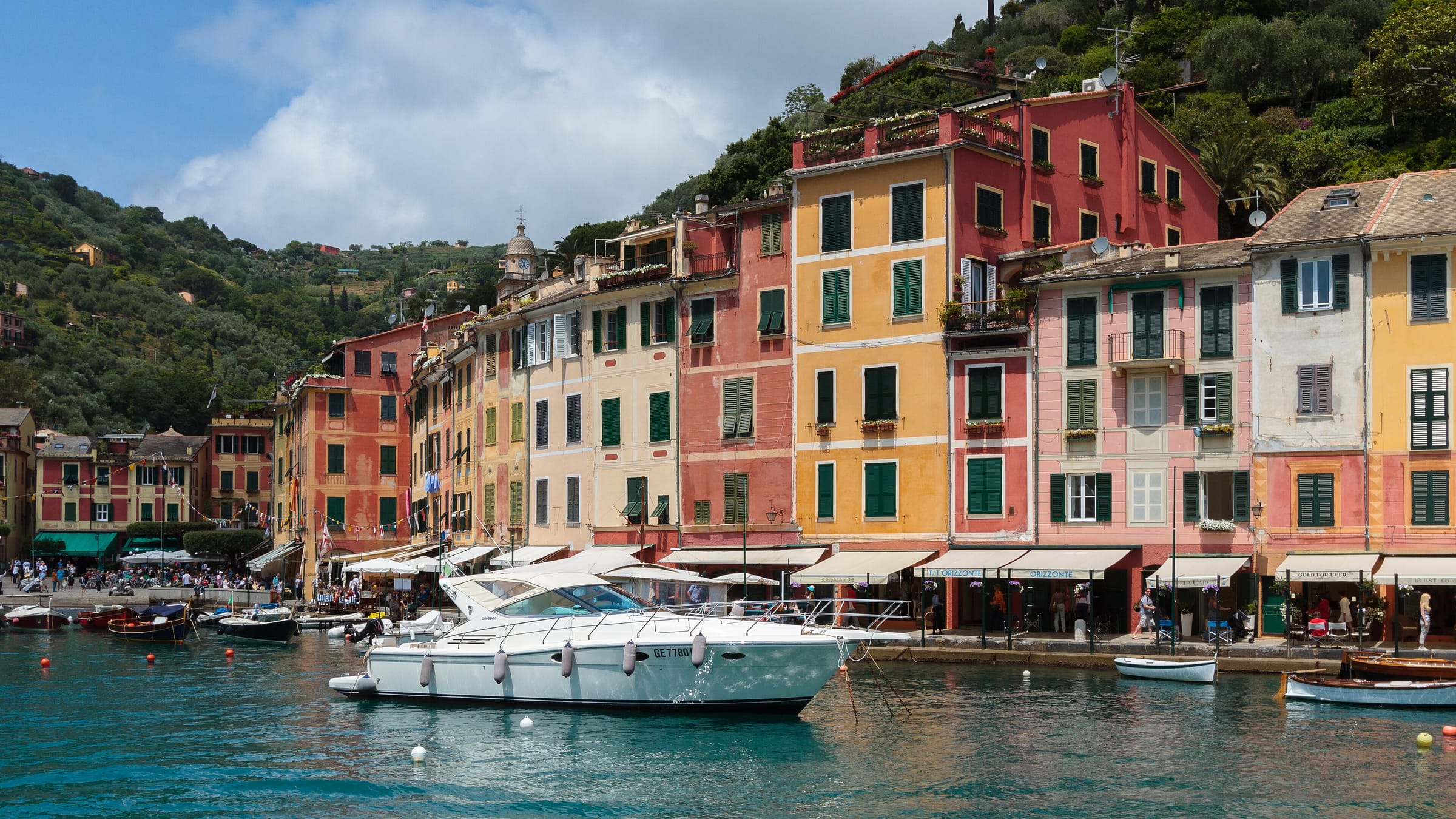
Portofino, the Riviera's Polished Harbour
Portofino is a small fishing village and resort on the Riviera di Levante in Liguria, north-western Italy, known for a perfectly framed harbour of pastel houses, wooden fishing boats and yachts. The name is traditionally traced to the Roman Portus Delphini, the Port of the Dolphin. Tiny in size, it has long drawn artists, writers and film stars, and its waterfront piazzetta, lined with cafes and restaurants, is one of the most photographed squares on the Italian coast. The hills behind are green with pine, olive and Mediterranean scrub.
A short climb leads to Castello Brown, a fortress overlooking the harbour that has been turned into a museum and event space with sweeping views, and further along the path, the Church of San Giorgio and the lighthouse at Punta Portofino offer quiet viewpoints over the open sea. The Portofino Natural Park and its marine protected area surround the village, with trails through woodland and cliff paths that make the headland a favourite for walkers as well as those who come for the harbour.
San Fruttuoso, Paraggi and Boat Days
Boats open up the coast. Ferries and water taxis link Portofino with Santa Margherita Ligure, Rapallo and Camogli, and the medieval Abbey of San Fruttuoso, tucked into a cove reachable by boat or on foot along the headland, is one of the Riviera's most memorable stops. Paraggi, just along the coast, has a small, popular beach with clear water, and the bays around the headland suit snorkelling and boat trips. Many visitors arrange a half day on the water between lunch stops.
The table is Ligurian: pesto, trofie, fresh fish, focaccia and the local white Vermentino. Santa Margherita Ligure, a short distance away, is a livelier seaside town with a palm-lined promenade and a good range of restaurants, and it makes a natural base for the headland. A hotel group with a Portofino property has an instantly recognisable setting to present, from harbour-front suites to hillside villas above the sea.
When to Go and How to Arrive
Late spring to early autumn is the main season, with June and September particularly pleasant. Winter brings a quieter, intimate Portofino, with the harbour lit for Christmas. The village is part of the wider Liguria coast, and Genoa is about an hour away, with the Cinque Terre reached by train along the coast. San Remo offers a contrasting Riviera on the western side of Genoa.
Genoa's airport is the closest, with flights from the UK, and Pisa and Milan are alternatives. Trains run to Santa Margherita Ligure or Rapallo, from where a bus, taxi or boat covers the last stretch to Portofino. A name such as VisitPortofino.co.uk gives airlines and tourist boards a bright, concise home for the story, and the guide to Italy shows how Portofino fits among the Riviera's best-loved stops.
Where to Stay Around Portofino's Headland
Portofino's own stays are few and exclusive, and the harbour is the centrepiece. Historic hotels on the waterfront and hillside suit luxury travellers and couples celebrating something special, with terraces above the yachts and gardens of pine and bougainvillea. Villas above the village give privacy for families and groups, many with pools and sea views. Some visitors arrange a few nights in the village itself and spend the rest nearby, as the headland is compact and best enjoyed in the quiet hours of morning and evening, when the day visitors have left and the harbour lights come on.
Neighbouring towns widen the choice. Santa Margherita Ligure, a short boat or bus ride away, has a palm-lined promenade, beachfront hotels and a livelier choice of restaurants, ideal for families and those who want a resort feel. Rapallo, with its seafront castle and cable car to the Montallegro sanctuary, offers a relaxed seaside base, while Camogli is a colourful fishing town with a pebble beach and charming guesthouses. Paraggi has a small number of upscale beach stays. The hotel group story combines Portofino's glamour with a wider Tigullio base, and Genoa is the city arrival point.
Focaccia, Lace and Seaside Festivals
Portofino and its neighbours offer a cuisine of simplicity. Trofie with pesto, pansoti with walnut sauce, fresh fish and focaccia with cheese from nearby Recco are common, and the region's coffee, gelato and pastries suit long lunches on the piazzetta. Local traditions include the lace of Rapallo and the wooden boats of the Tigullio, and craft shops sell ceramics, linen and olive-oil products. Camogli's Sagra del Pesce, held every May, celebrates the fishing tradition with a giant frying pan, and the nearby Sanctuary of Montallegro hosts a July pilgrimage that fills Rapallo with ceremony.
The festival year adds colour. Each spring the village honours its patron saint, San Giorgio, with a procession and events by the water, and in December the village lights a Christmas tree on the harbour. Summer evenings bring concerts, art exhibitions at Castello Brown and open-air film. Spring brings blossoming gardens and walking weather, while autumn is quiet and golden. Combined with San Remo in the west or the Cinque Terre in the east, Portofino becomes the polished centre of a Riviera journey.
Diving, Hiking and Boat Days from Portofino
Portofino's outdoor appeal is considerable. The Portofino Regional Park has trails through pine and olive woods to viewpoints, the San Fruttuoso path from Camogli or Portofino is a classic coastal walk of a few hours, and the Punta Chiappa headland offers rocky bathing spots. Divers visit the marine reserve, including the Christ of the Abyss statue off San Fruttuoso, while sailors and boat charterers use the harbour as a base for the Gulf of Tigullio. Kayaking, paddle boarding and snorkelling are popular in calm months, and yacht lovers will enjoy the harbour's atmosphere in season.
Excursions are simple and scenic. Ferries run to San Fruttuoso, Camogli, Rapallo and Santa Margherita, and Genoa and the Cinque Terre are within easy reach by train. Walkers can link the headland with the Via dell'Amore of Manarola on a longer trip. Wellness seekers can add spa days at the resorts along the coast. A stay can be built as a polished three-night retreat plus a boat day and a walking day. Airlines may use the airline page to present Portofino as a glamorous add-on to a wider tour of Liguria.
Planning your stay
Portofino is a small fishing harbour that became a yachting address, with a square of pastel houses on the water, a castle and a church on the headland, and a protected marine area off the point. There are few hotels, and a day visit is more common than a long stay.
Larger and cheaper bases include Genoa to the west and the towns along the Tigullio gulf, and many travellers combine it with Cinque Terre to the south east. Sitting within Liguria, it can be reached by road, train and boat from the surrounding towns.
When to go
May, June and September are the most comfortable months, with warm water, open restaurants and lighter traffic than midsummer. July and August are hot, crowded and the most expensive, and the single road into the village can back up. Many hotels and beach services close in winter, so check before you book.
Heavy winter rain can cause local flooding and disrupt boats.
A half day is enough for the harbour and the headland walk, so many visitors pair Portofino with a base in a larger town nearby, where hotels, restaurants and transport are easier to find and prices are lower. Book restaurant tables on the water ahead in high season, and check whether the boats you want are running on the day.
Getting there
There is no railway station in the village. Most visitors take the train to a nearby town such as Santa Margherita Ligure or Rapallo and continue by bus, taxi or boat, and boats usually run in the warmer months in decent weather. Check current timetables on the day.
The road is narrow, winding and congested in summer, and parking is limited and costly.
Entry rules
For Portofino, your passport must be less than 10 years old when you reach Genoa Cristoforo Colombo and valid for at least three months after you plan to leave. For Portofino, UK visitors can stay up to 90 days in any 180, and the Entry/Exit System may require fingerprints and a photo on arrival at Genoa Cristoforo Colombo. Our Italy guide covers the national rules in full.
Before you travel
Entry requirements and official travel guidance are updated regularly, so check the latest position with your government before booking. The sources we used are listed at the foot of this page.
The industry view
Portofino is a global luxury name with very little capacity, so the value lies in precise information and the right audience. VisitPortofino.co.uk lets a hotel group show verified rooms, a tourist board explain access and seasons, and airlines set out the nearest gateways.
Our AI platform carries the same answers to assistants.
Questions travellers ask about Portofino
How do you get to Portofino?
Usually by train to Santa Margherita Ligure or Rapallo, then bus, taxi or boat. The road is narrow and busy in summer, and parking is limited.
When is the best time to visit Portofino?
May, June and September are warm with lighter crowds. July and August are busy and expensive, and many businesses close in winter.
Is Portofino suitable for a day trip from Genoa?
Yes. Genoa has train links along the coast, and you can continue by bus, taxi or boat. In Portofino, check timetables on the day, because strikes are often called at short notice.
Do I need a visa for Portofino?
No. For a stay in Portofino, UK visitors can spend up to 90 days in any 180 across the Schengen area, with a passport under 10 years old and valid for at least three months after they leave.
What is Portofino best known for?
Portofino is best known for its pastel-coloured harbour, yachts and waterfront piazzetta on the Ligurian Riviera, together with Castello Brown, the coastal park, San Fruttuoso abbey and a long reputation as a stylish seaside retreat.
How do I get to Portofino from Genoa?
Take a train from Genoa to Santa Margherita Ligure or Rapallo, then continue by bus, taxi or boat to Portofino. The journey takes roughly an hour in total, and Genoa airport is the closest gateway from the UK.
Where should I stay for a Portofino trip?
Staying in Portofino itself is the most glamorous option, with historic hotels and private villas. Santa Margherita Ligure offers more choice and a lively promenade, while Rapallo and Camogli add good value and a local feel.
What is there to do around Portofino?
Walk the headland trails and the San Fruttuoso path, take boats to the abbey and Camogli, dive in the marine reserve, visit Castello Brown and enjoy a long lunch on the piazzetta. Summer evenings bring concerts and events.
In the Visit Travel Group portfolio: VisitPortofino.co.uk.