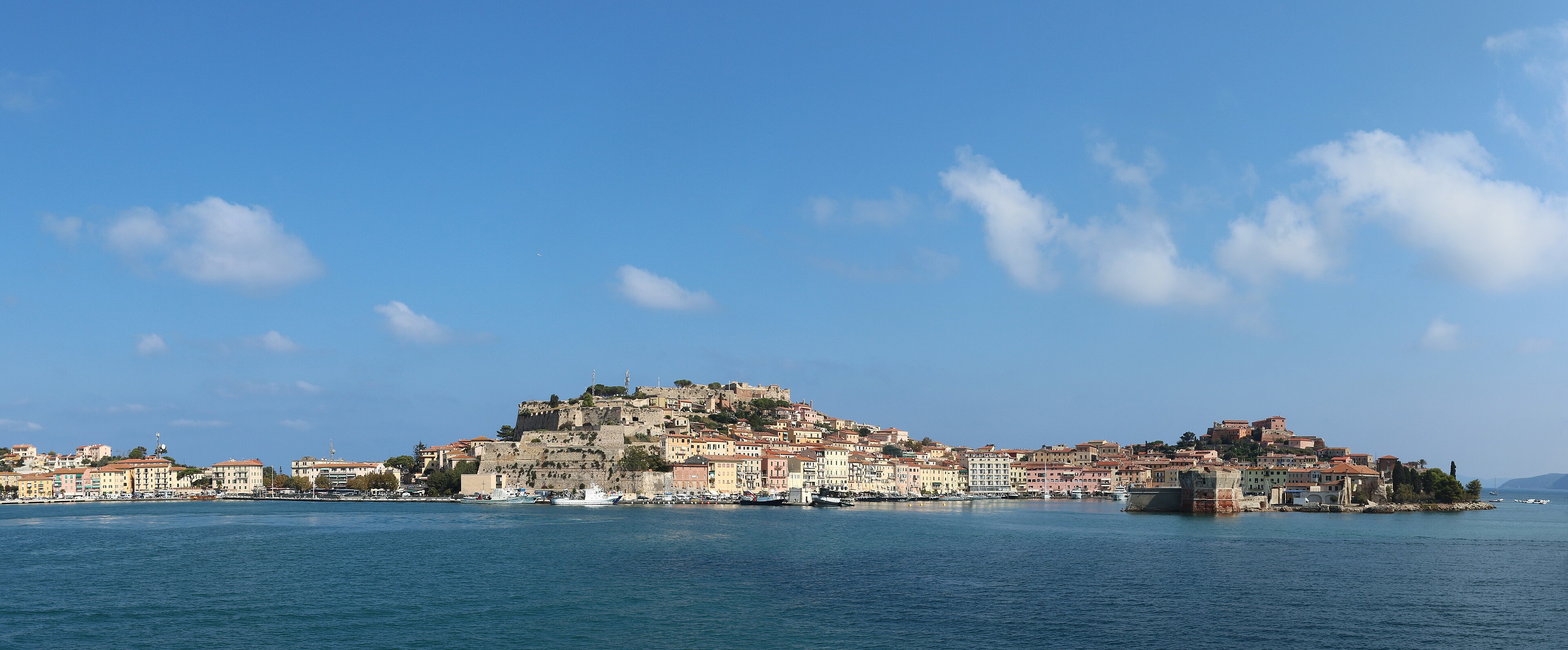
A Medici Harbour Town Above the Blue
Portoferraio is the main town and port of the island of Elba, off the Tuscan coast, known for its fortified harbour, its Medici planning and its link to Napoleon Bonaparte. Cosimo I de' Medici founded it in 1548 as Cosmopoli, a defensive port town, and the star-shaped bastions still define its skyline. The old quarter climbs from a curved harbour of fishing boats and cafes up stepped lanes towards two great forts, and the colours of the waterfront, ochre, peach and faded rose, glow best in late afternoon.
Forte Stella and Forte Falcone crown the headland, and the Linguella tower guards the harbour mouth. Walking the ramparts at golden hour delivers sweeping views over the bay towards the island's green interior. Along the quay, bars and fish restaurants serve the day's catch, from grilled sea bream to octopus salad, and the evening passeggiata turns the harbour into a stage. It is a town that rewards unhurried exploration, with enough variety for a full day or a relaxed first night on the island.
Napoleon's Villas, Museums and Nearby Beaches
Napoleon's story is told in two places. The Villa dei Mulini, his town residence on the ridge above the harbour, retains its terraced garden and sea views, while the Villa San Martino a short drive inland was his country retreat, with an adjacent gallery. Together they give a rounded picture of the ten months he ruled Elba from 1814. The Archaeological Museum of the Linguella and the town's other small museums add Etruscan and Roman context to the island's long iron-ore past.
Beaches are close enough for an afternoon swim after a morning of sightseeing. Viticcio, Capo Bianco and Biodola are all within a short ride, and the long sands of Procchio lie a little further west. Guests who enjoy a base with services, markets and ferries nearby often choose Portoferraio first, then roam across Elba by car. A tourist board could use the town to frame a heritage-meets-beach itinerary on the Tuscan coast.
Ferries, Seasons and Wider Tuscan Journeys
Portoferraio is the island's principal ferry gateway, with regular crossings from Piombino taking roughly an hour. That makes it a natural arrival point for travellers combining an island stay with Tuscany, whether by rail from Florence and Pisa or by road along the Maremma coast. Late May to September offers the warmest sea and the busiest harbour, while spring and early autumn bring softer light, quieter ramparts and ideal conditions for walking the old town.
Within a short ride, the hill town of Capoliveri, the old mines of Rio Marina and the cable car at Marciana make easy additions, and the wider archipelago is reached by boat. Adventurous travellers might continue to Corsica or Sardinia for a larger Mediterranean loop. For ferry operators, airlines and hotels, a name like Portoferraio.co.uk presents Portoferraio as the confident front door to the whole island, with Napoleon, forts and fish suppers all in one frame.
Where to Stay in Elba's Harbour Capital
Portoferraio gives visitors a choice of bases within a compact area. The old town, above the harbour, has small hotels and guesthouses in restored palazzi, ideal for couples and culture seekers who like to wake to the sound of boats and walk to the ramparts for breakfast views. Along the waterfront and around Viale Elba, practical hotels and apartments suit families and groups who value being close to shops, ferries and buses, with markets and beach transfers a short walk away.
Around the bay, quieter options appeal to those who want a resort feel. Biodola and Scaglieri, a short drive west, have sea-facing hotels and beach clubs, and villas with gardens and pools can be found on the hillsides above the bay. Those arriving by ferry often spend a first night in town, then move on across the island. A hotel group could showcase Portoferraio as the easiest base for first-time visitors, with Elba itself a day's drive in every direction and Liguria a natural companion route.
Seafood Quays, Craft Stalls and Harbour Festivals
The harbour is where Portoferraio eats best. Fish restaurants along the quay serve the morning's catch as spaghetti with clams, grilled prawns and fritto of small fish, and the town's bakeries offer schiaccia briaca and soft focaccia for a quick lunch. Coffee bars fill early, and a late-afternoon gelato along the waterfront is a local habit. Look for craft stalls selling hand-painted ceramics, sea-salt, honey and minerals, which make good gifts and carry the island's identity home.
Architecture and history are close at hand. The Medici fortifications, the Linguella tower and the theatre of the Illuminati, a small nineteenth-century jewel, sit within a short walk of each other. The commemoration of Napoleon's arrival in early May fills the old town with parades, while summer evenings bring concerts on the quay and autumn brings a calmer, golden light. Winter is quiet, and ideal for those who prefer a local-feeling visit to the fortress town. Boards can use Portoferraio.co.uk to publish the year's festivals in one place.
Forts, Boats and Day Trips from the Harbour
Portoferraio is a natural launch pad for active days. Boat trips leave the harbour for the island's coves and for the wider archipelago, sea kayaking and paddleboarding are on offer from nearby beaches, and cyclists can join road and mountain routes that begin at the edge of town. Walkers can follow the old paths from the forts toward Capo Bianco, and families enjoy the shallow, sandy shore of Viticcio, where the water stays calm and gentle for children.
Inland, the Monte Capanne cable car at Marciana, the hill village of Capoliveri and the mines at Rio Marina give a varied programme that can fill a week. Across the Piombino channel, the Etruscan site of Populonia and the sheltered Gulf of Baratti make an excellent mainland excursion. Island-hoppers can add the wider archipelago, or fly onward to Sardinia or the Riviera, with Genoa a convenient northern gateway. A airline could frame Portoferraio as the first stop on a Tuscan coast and island route.
Planning your stay
Portoferraio sits on a sheltered bay on the north coast of Elba. The old town climbs a promontory crowned by two forts, and the harbour is the arrival point for most ferries from the mainland. Napoleon lived here in 1814 and 1815, and his town residence, the Villa dei Mulini, is among the sights people look for.
It is a working town as well as a visitor base, with shops, a market and year-round services that the smaller villages lack. It belongs to Tuscany, and the spa town of Montecatini Terme and the coast of Liguria are within reach on a longer trip.
Ferries
The main crossing runs from Piombino to Portoferraio, operated by Moby, Toremar and Blu Navy, with sailings from early morning to late evening and crossings of roughly 40 minutes to an hour. Crossings are short, but cars need booking ahead in July and August, and queues at Piombino can be long on summer weekends. Check the timetable the day before, because rough weather can delay or cancel sailings.
Foot passengers have more flexibility than drivers. If you bring a hire car, confirm that the company allows ferry travel, because some restrict it.
When to go
June and September give warm weather and calmer streets. July and August are the busiest months, with full beaches and heavy ferry traffic, while many hotels and restaurants on the island close or reduce service between late autumn and spring. If you plan a winter visit, check that your accommodation and crossings are running.
Follow local authority advice and any fire restrictions, particularly if you walk or drive through scrub and woodland.
Getting around
The old town is compact and best explored on foot, with steep lanes and steps. Beyond it, island buses link the main villages, and many visitors hire a car or scooter for the beaches.
In Portoferraio, only use officially licensed taxis, which have a taxi sign on the roof and a company name and number on the side.
A good first visit combines a morning in the old town with an afternoon on a nearby beach, and an evening on the waterfront. Walk up to the forts for views over the bay, check opening days for museums and villas, and book restaurants ahead in high season, because the town fills with day visitors from the ferries.
Before you travel
Entry requirements and official travel guidance are updated regularly, so check the latest position with your government before booking. The sources we used are listed at the foot of this page.
The industry view
Portoferraio is where the island's visitors first see Elba, so it is the natural place to answer their practical questions. Portoferraio.co.uk lets a tourist board publish ferry, season and heritage guidance, and a hotel group present verified stays.
Our AI platform carries the answers to assistants, and the wider destination guides show how the model works elsewhere.
Questions travellers ask about Portoferraio
How do you get to Portoferraio?
By ferry from Piombino on the Tuscan mainland. Book car spaces early in July and August, and check the timetable the day before, because weather can affect sailings.
What is Portoferraio known for?
It is the main port of Elba, with a walled old town, two forts and the Villa dei Mulini, where Napoleon lived during his exile on the island in 1814 and 1815.
Can I take a hire car to Elba?
Often yes, but check that your hire company allows ferry travel and book the vehicle space in advance in peak season.
Do I need a visa for Portoferraio?
No. For a stay in Portoferraio, UK visitors can spend up to 90 days in any 180 across the Schengen area, with a passport under 10 years old and valid for at least three months after they leave.
What is Portoferraio known for?
Portoferraio is known as the capital and main port of Elba, founded by Cosimo I de' Medici in 1548. Its star-shaped forts, Forte Stella and Forte Falcone, and Napoleon's Villa dei Mulini are the headline sights, alongside a pretty harbour front.
How do I reach Portoferraio?
Ferries sail to Portoferraio from Piombino on the Tuscan mainland, with crossings of roughly an hour. Piombino is connected by road and rail to Pisa, Florence and Rome, so the island is simple to add to a Tuscan itinerary.
Where should I stay in Portoferraio?
The old town suits couples and history lovers, with small hotels close to the forts and harbour. Families often choose the waterfront or nearby Viticcio for easy beach access, while Biodola and Scaglieri, a short drive away, offer resort-style stays.
What can I do in Portoferraio on a quieter day?
Walk the Medici ramparts at Forte Stella, visit Napoleon's Villa dei Mulini, explore the small museums of the Linguella and enjoy a long seafood lunch on the quay. In spring and autumn, the town is a pleasant base for hill walks.
In the Visit Travel Group portfolio: Portoferraio.co.uk, VisitPortoferraio.co.uk.