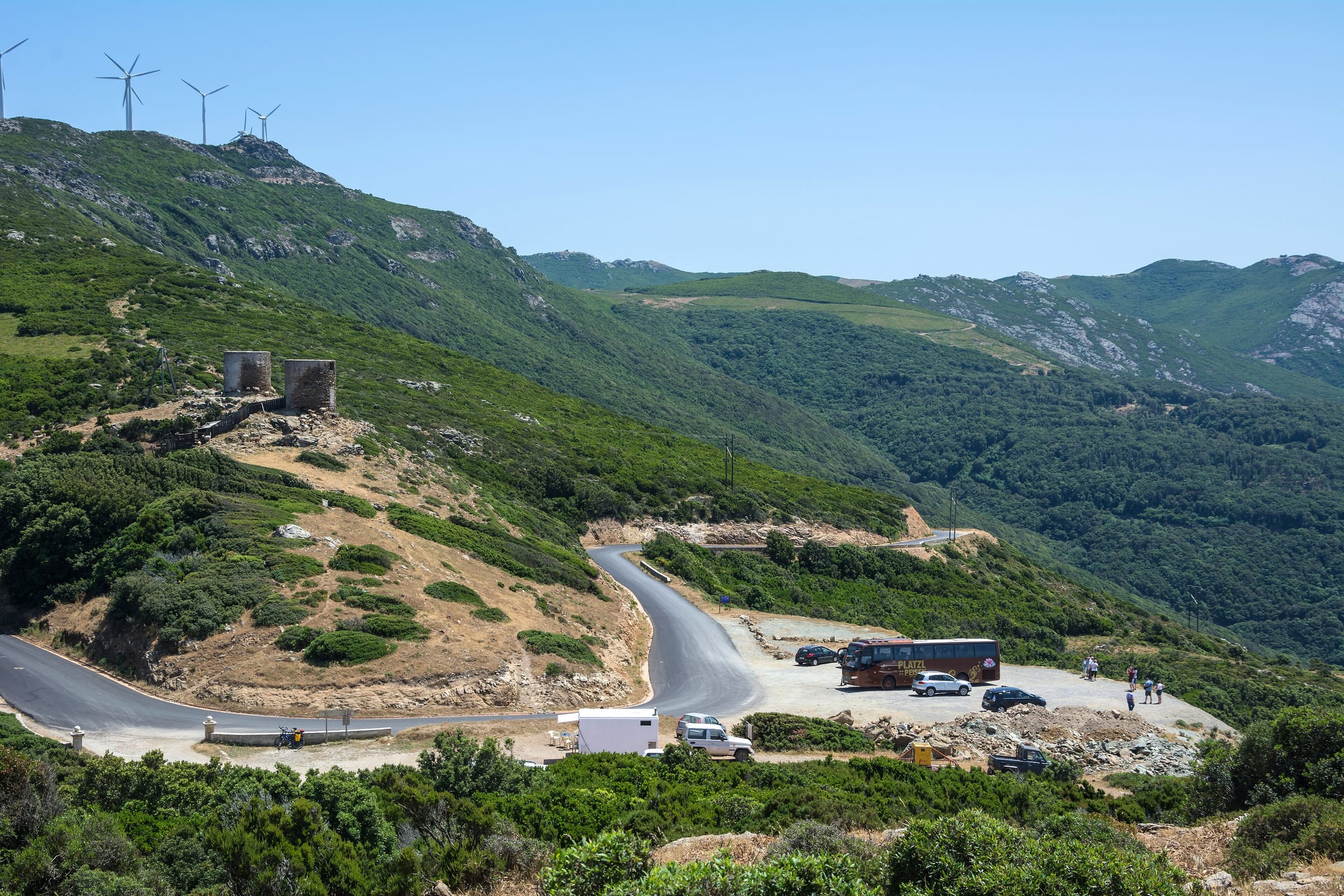
The Island of Beauty and Its Mountain Spine
Corsica is a French island in the Mediterranean Sea, west of Italy and north of Sardinia, known for its mountains, its beaches, its maquis scrub and its strong independent character. About 8,700 square kilometres in size, it rises steeply from the sea to peaks above 2,700 metres, giving it a reputation as a mountain in the sea. Nicknamed the Island of Beauty, it offers granite cliffs, sandy bays, forested valleys and villages built of stone, all within a compact area that rewards unhurried exploration.
History is everywhere. Napoleon Bonaparte was born in Ajaccio in 1769, and the city's Maison Bonaparte and imperial museum tell the story. Bonifacio, on the island's southern tip, is perched on dazzling white limestone cliffs above a long harbour, while Calvi and Bastia are guarded by Genoese citadels. The Gulf of Porto, with the Calanques de Piana, Girolata and the Scandola Nature Reserve, was inscribed by UNESCO in 1983, a landscape of red granite, turquoise water and wild coast.
Palombaggia, the GR20 and Island Flavours
For beaches, the island is generous. Palombaggia and Santa Giulia in the south offer pale sand framed by umbrella pines, Saleccia in the Desert des Agriates is a wild stretch reached by boat or track, and the long curve at Calvi is perfect for family days. Walkers know Corsica for the GR20, a demanding long-distance trail across the mountain spine, and for gentler routes through chestnut forest and along the coast. Boat trips, canyoning and sea kayaking add variety.
Corsican cooking is rooted in the land: brocciu fresh cheese, chestnut flour, figatellu sausages, wild boar stew, honey and clementines, with the wines of Patrimonio and Ajaccio to match. The island sits happily alongside neighbours; Sardinia lies across the Strait of Bonifacio, Elba to the north-east, and the French Riviera on the mainland coast. A hotel group could pair seaside resorts with mountain gites to offer a stay of real range.
Seasons, Ferries and Flights
The best months for the coast are June to September, while spring and early autumn are loved by walkers, cyclists and anyone who likes quiet beaches and wildflowers. The scent of the maquis in May is a reason to travel in itself. Cultural events fill the calendar, including polyphonic singing festivals and village feasts, giving travellers reasons to time a visit around music and food.
Corsica has airports at Ajaccio, Bastia, Calvi and Figari, with seasonal flights from the UK, and ferries link the island to Marseille, Nice and Toulon on the French mainland as well as to Italian ports. Many visitors combine a ferry from Marseille with a drive around the coast, or add St Tropez before sailing. A name like VisitCorsica.co.uk gives boards and airlines a clear home for the Corsican story, from Bonifacio's cliffs to a quiet evening in a mountain village.
Citadel Towns, Beach Resorts and Mountain Gites
Corsica's stays reflect its geography. Porto-Vecchio and the south coast have beach resorts and villas near Palombaggia and Santa Giulia, ideal for families and groups, while Bonifacio's old town has boutique hotels above the cliffs, perfect for couples and heritage lovers. Calvi, in the north-west, combines a citadel with a long beach and a lively harbour, and Ile-Rousse is a smaller, more relaxed alternative. Ajaccio is the choice for city breaks and Napoleonic history, with sea-view hotels along the gulf.
For something quieter, the Cap Corse peninsula offers small harbour hotels in villages such as Erbalunga and Nonza, the Balagne countryside has stone farmhouses among olive groves, and inland, mountain gites and auberges around Corte and Vizzavona suit walkers. Porto, on the Gulf of Porto, is the base for Scandola and the Calanques de Piana. Golfers can play at Sperone near Bonifacio. A hotel group could pair a beach resort with a mountain lodge, and Sardinia is only a short crossing south.
Brocciu, Polyphony and Corsica's Cultural Year
Corsica's cuisine has a real sense of place. Alongside brocciu, try fiadone, a lemony cheesecake, canistrelli biscuits, chestnut beignets, lonzu and prisuttu cured meats, sea urchins in winter and the island's honeys, which hold protected status. Coffee and a pastry fill a morning, and the Corsican clementines are a winter treat. Local crafts include knives, handmade guitars and the island's traditional pottery, and the polyphonic singing known as paghjella, listed by UNESCO as intangible heritage, can be heard in village churches.
The calendar is full of colour. Easter brings the Catenacciu procession at Sartene, spring flowers bloom across the maquis, and summer sees music festivals, including Calvi on the Rocks and Les Nuits de la Guitare in Patrimonio. In August, village feasts fill the squares, and autumn brings the chestnut harvest, with festivals in the Castagniccia region. Napoleonic anniversaries are marked in Ajaccio each August. Winter is quiet and local, ideal for those who want cultural visits. Tourist boards can use VisitCorsica.co.uk to present the island's calendar.
GR20 Stages, Sea Kayaking and Island Day Trips
Corsica is an adventure island. Walkers can try a section of the GR20, from a day on the Restonica valley trails to a multi-day hut-to-hut trek, cyclists enjoy the Cap Corse road loop, and canyoning in the Vacca and Zoicu gorges offers cooling thrills. Sailing and sea kayaking explore the Scandola reserve and the Lavezzi islands, while divers visit the clear water around Cerbicale. Families can swim and snorkel from the sheltered beaches near Porto-Vecchio, and riders can explore the Balagne on horseback.
Day trips knit the island together. From Porto-Vecchio, Bonifacio and the Bavella needles make a classic day, from Calvi, the Balagne villages are an easy ride, and from Porto, a boat to Girolata is a highlight. The Petit Train de la Balagne and the Corsican railway cross spectacular mountain scenery between Ajaccio, Corte and Bastia. Travellers can link Elba by sea or Marseille by ferry, and an airline could offer Bastia in, Figari out as a flexible island route.
Planning your stay
Corsica is a French island about 183 kilometres long and 83 kilometres wide at its widest, with roughly 1,000 kilometres of coastline and a mountainous interior that peaks at 2,706 metres on Monte Cinto. It has beaches and bays, and towns such as Ajaccio, Bastia, Calvi, Bonifacio and Porto-Vecchio. It is known for outdoor activity, from swimming and sailing to walking on the GR20, a long-distance mountain path with a demanding reputation.
On the mainland, the French Riviera, Marseille and St Tropez are the usual ferry and flight links, and Port Grimaud sits on the same coast. To the south, the Italian island of Sardinia is a short crossing away, and Elba lies to the east.
When to go
Late spring and early autumn offer warm sea, workable hiking weather and fewer visitors, while July and August are the busiest and hottest months. Snow can remain on the high ground well into spring, so check conditions before you plan a mountain walk, and carry a map, compass and enough water and food.
Many hotels, restaurants and boat operators work seasonally, so check opening dates, especially in the shoulder months, and book ferries and hire cars early for summer. Visitors who plan to base themselves in one area, rather than circle the island, usually spend less time on the road and see more of the coast.
Getting there
Corsica has airports at Ajaccio, Bastia, Calvi and Figari. Direct flights from the UK are limited and mostly seasonal, so check with airlines, and many travellers connect through Paris, Nice or Marseille. Ferries run from Marseille, Nice and Toulon, which suits visitors who want to bring a car.
Distances on the island are longer than they look, because roads are winding and mountainous.
Entry requirements
A trip to Corsica falls under France's Schengen rules, so UK visitors can travel without a visa for up to 90 days in any 180-day period as tourists. For Corsica, if you fly into Ajaccio, Bastia, Calvi or Figari, your passport must have been issued less than 10 years before that day and must expire at least three months after the day you plan to leave the Schengen area.
On the way into France for Corsica, cash or travellers cheques worth 10,000 euros or more must be declared, including if you land at Ajaccio, Bastia, Calvi or Figari.
Before you travel
Entry requirements and official travel guidance are updated regularly, so check the latest position with your government before booking. The sources we used are listed at the foot of this page.
Why Corsica matters to the industry
Corsica is a market where access is the main barrier, so clear information on flights, ferries, seasons and distances on the island decides bookings, and visitors often compare it with the mainland coast and with Sardinia before they choose. VisitCorsica.co.uk lets an airline, hotel group or tourist board publish accurate answers, and our AI platform carries them to searchers.
See our destination guides for the wider Mediterranean, or our OTA page on booking platforms.
Questions travellers ask about Corsica
How do you get to Corsica from the UK?
Direct UK flights are limited and mostly seasonal, so check with airlines. Many visitors connect via Paris, Nice or Marseille, or take a ferry from Marseille, Nice or Toulon.
Do UK citizens need a visa for Corsica?
Corsica is part of France, so UK visitors can stay for up to 90 days in any 180-day period as tourists. For Corsica, your passport must be under 10 years old and valid for three months after you leave the Schengen area.
When is the best time to visit?
Late spring and early autumn offer warm sea and good walking conditions, with fewer visitors than July and August.
What is Corsica best known for?
Corsica is best known for its mountains and beaches, the cliff-top citadel of Bonifacio, Napoleon's birthplace in Ajaccio, the Scandola Nature Reserve and GR20 walking trail, and a cuisine of brocciu cheese, chestnut flour and charcuterie.
How do I get to Corsica?
Corsica has airports at Ajaccio, Bastia, Calvi and Figari, with seasonal flights from the UK and France. Ferries also run from Marseille, Nice, Toulon and Italian ports, making a sea arrival a pleasant option for those with a car.
Where should I stay in Corsica?
Porto-Vecchio and the south suit beach holidays, Bonifacio suits couples and heritage lovers, Calvi and the Balagne suit families and relaxed stays, and Porto suits nature lovers heading for Scandola. Mountain gites around Corte suit walkers.
What are the best day trips in Corsica?
Take a boat from Porto to Girolata and Scandola, drive from Porto-Vecchio to Bonifacio and the Bavella needles, or ride the Balagne villages from Calvi. Ajaccio's Napoleon museums make a good city day.
In the Visit Travel Group portfolio: VisitCorsica.co.uk.