Italy's Easternmost Town and Its Mosaic Cathedral
Otranto is a historic port town in the Salento peninsula of Puglia, on the Adriatic coast, known for its Aragonese castle, its cathedral mosaic and its position near the easternmost point of mainland Italy. The old town sits within sturdy walls above a small harbour, its lanes lined with limestone houses, craft shops and cafes. Light is the town's great asset: dawn arrives early over the sea, the stone turns pale gold, and evening brings a soft pink glow across the ramparts, which draws photographers and strollers in equal numbers.
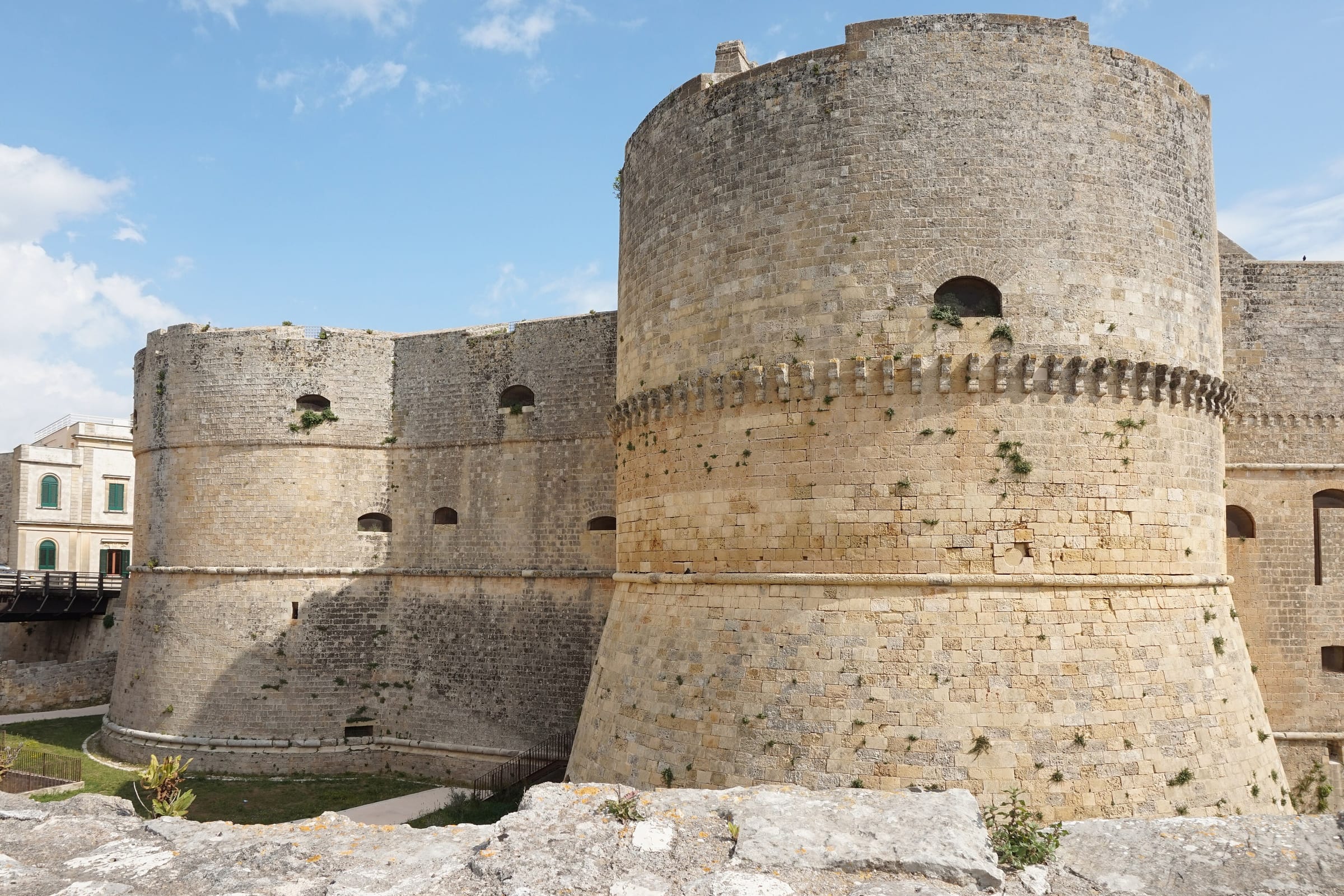
The cathedral is the cultural highlight. Its vast floor mosaic, created in the twelfth century by the monk Pantaleone, spreads a tree of life, zodiac signs, mythical creatures and biblical scenes across the entire nave, a medieval encyclopaedia in stone tesserae. The Aragonese Castle, with its round towers, stands guard at the harbour and hosts exhibitions. Otranto's blend of Greek, Roman, Byzantine and Aragonese history is visible in every street, and gives even a short visit real narrative depth.
Turquoise Coves, Lakes and the Salento Table
Beyond the walls, the coast is a procession of scenic coves. Baia dei Turchi, with its pine-backed sand, Torre dell'Orso, framed by a long curve of beach and two offshore stacks, and the Alimini lakes behind the dunes give a wide choice for sun days. Southwards, the road winds past sea caves such as Grotta Zinzulusa at Castro and on to Santa Maria di Leuca, where the Adriatic meets the Ionian. Punta Palascia, a short drive away, marks the easternmost tip of Italy.
Salento cooking is rustic and generous: fresh sea urchin and raw fish, orecchiette and friselle with tomato, rustico leccese pastries and the custard-filled pasticciotto at breakfast, all alongside Primitivo and Negroamaro wines. Many visitors link Otranto with Puglia as a whole, taking in Lecce's baroque centre, while a hotel group or masseria might build a stay around the coast, the table and the light. For a wider Italian journey, Sicily makes a rewarding next island.
Seasons, Festivals and How to Get There
Late spring through early autumn brings the warmest sea and the liveliest evenings, with open-air concerts, street food and harbour terraces in full swing. May, June and September are particularly attractive, balancing settled weather with lighter crowds and softer light for walking the walls. August is the peak holiday month, with a festive energy that fills the old town well into the night, and local saints' days and food festivals add colour to the calendar.
Otranto is within reach of Brindisi and Bari airports, with onward travel by road or by regional rail to Lecce followed by a short drive, and a hire car is the easiest way to explore the surrounding coast. It combines readily with Italy more widely or with Malta for a southern Mediterranean loop. A tourist board or airline using VisitOtranto.co.uk can present Otranto as the polished, easy-to-sell face of southern Puglia, from sunrise on the castle walls to a late supper by the harbour.
Where to Stay on the Salento Coast
Otranto's old town offers the most atmospheric beds, with small boutique hotels and guesthouses tucked inside restored limestone houses, where terraces look across the harbour and rooftops catch the first light. Couples and culture seekers favour these addresses, since the castle, cathedral and restaurants are all a short stroll away. Just outside the walls, family hotels and apartments near the seafront promenade offer easy access to the town beach, with gelaterie and playgrounds close by, making it the practical choice for a week by the sea.
For space and silence, the surrounding countryside is dotted with masserie among olive trees, many with pools and kitchens built around local produce, and villas can be rented for larger groups near Alimini and Porto Badisco. Further south, Santa Maria di Leuca and Castro have a quieter, more traditional seaside feel, while Gallipoli on the Ionian side suits those who want livelier nightlife. A hotel group could combine an old-town base with a masseria week, with Sicily as a natural island add-on.
Pasticciotto, Pizzica and a Summer of Festivals
Salento cooking rewards a slow lunch. Try ciceri e tria, a dish of chickpeas with fried pasta ribbons, polpo alla pignata, octopus stewed in a clay pot, and sweet-sour turnip tops with local bread, followed by the almond milk drink and sweets of Lecce. Coffee in Salento is often taken as caffe leccese, an espresso over ice with almond milk, a summer ritual. Crafts include Lecce's papier-mache, hand-embroidered linen and the local stonework, and the town's shops sell ceramics and olive oil to take home.
Music is part of the identity. Pizzica, the lively folk dance of Salento, fills squares in summer, and the Notte della Taranta festival in nearby Melpignano is its great annual celebration each August. Otranto marks the feast of its martyrs in August and holds concerts in the castle courtyard. Spring brings wildflowers along the cliff paths and Easter processions, while autumn offers the olive harvest, warm sea and long lunches. Winter is calm and local, a time of simple fish suppers, and VisitOtranto.co.uk can show each season clearly to planners.
Sea Caves, Cycling and Day Trips Across the Heel
The Salento coast is made for active days. Boats and kayaks reach the sea caves between Otranto and Santa Maria di Leuca, including Grotta Zinzulusa and the Grotta Verde, while divers and snorkellers enjoy clear water along the rocky shore. Cyclists find quiet lanes through olive groves, with routes from Otranto to the Alimini lakes and Porto Badisco, and walkers can follow the cliff path of the Costa Otranto, with pine woods and sea views at every turn, an ideal morning outing before lunch.
Day trips are plentiful. Lecce is a half-hour or so by road, and its honey-coloured baroque makes a perfect evening. Gallipoli, with its island old town, offers a sunset harbour, while Santa Maria di Leuca marks the meeting of two seas. Further afield, Puglia opens to Ostuni and Alberobello for a day among the trulli. An airline could frame Brindisi as the gateway to a week on the heel, and a wider Mediterranean loop might continue to Malta.
Planning your stay
Otranto is the easternmost town of mainland Italy's heel, set on a small harbour with a castle, ramparts and a cathedral whose floor is covered by a large medieval mosaic. Narrow white lanes lead down to the sea, and the surrounding coast has rocky inlets, sandy bays and sea caves.
It sits in the Salento area of Puglia, with Lecce a drive away. Further afield, Sicily and its capital Palermo offer a very different Italian island trip, and our Italy guide covers the national rules.
Getting there
Brindisi is the usual airport for UK visitors, and Bari is the alternative, so check which has current routes from your airport. From either, most visitors continue by hire car, which gives access to the coast and villages. Allow extra time in summer, because roads fill up and coastal car parks run out early.
Trains and buses reach Lecce and some coastal towns, but services are slower and less frequent in the countryside. Avoid leaving luggage in a parked car.
When to go
May, June and September offer warm weather, swimmable water and lighter crowds. July and August are very hot and crowded, and August in particular is the main Italian holiday month, so book rooms and restaurants early. Many seaside businesses close for the winter, though the town has a quiet charm in cooler months.
Drink water, avoid exertion in the midday heat, and follow local authority advice on fire restrictions.
Plan your days around the heat. Beach in the morning, a long lunch inside the walls and a walk along the ramparts in the evening is a pattern that works well, and the cathedral and castle are worth visiting at the cooler ends of the day. Book rooms inside or close to the old town if you want to avoid driving at night.
Rules and entry
For Otranto, your passport must be less than 10 years old when you reach Brindisi and valid for at least three months after you plan to leave. UK visitors can stay up to 90 days in any 180, and the Entry/Exit System may require fingerprints and a photo, which can add time at the airport.
Before you travel
Entry requirements and official travel guidance are updated regularly, so check the latest position with your government before booking. The sources we used are listed at the foot of this page.
The industry view
Otranto has a strong image and short season, so partners benefit from clear guidance on timing and access. VisitOtranto.co.uk lets a tourist board or hotel group publish it, and airlines can explain the routes into Brindisi and Bari.
Our AI platform carries the Salento timing and access answers to assistants.
Questions travellers ask about Otranto
How do you get to Otranto from the UK?
Fly to Brindisi or Bari, then continue by hire car, which is the most practical way to reach the coast. Check current routes, because schedules are seasonal.
When is the best time to visit Otranto?
Around Otranto, May, June and September are warm and less crowded than August. July and August are very hot and busy, and many seaside businesses close in winter.
Do I need a visa for Otranto?
No. For a stay in Otranto, UK visitors can spend up to 90 days in any 180 across the Schengen area, with a passport under 10 years old and valid for at least three months after they leave.
What is Otranto best known for?
Otranto is best known for its Aragonese castle, its walled old town and the cathedral's twelfth-century floor mosaic by the monk Pantaleone. It also sits near the easternmost point of Italy and is surrounded by beaches, caves and the Alimini lakes.
When is the best time to visit Otranto?
May, June and September combine warm weather, comfortable sea and fewer crowds, while July and August are the peak beach months. Spring is lovely for walking the old town and exploring the Salento coast by car.
Where should I stay in Otranto?
Choose the old town for atmosphere, with boutique guesthouses close to the castle and cathedral, or the seafront for family-friendly hotels near the beach. For space and quiet, a masseria among the olive groves behind the coast is an excellent alternative.
What can I do in Otranto beyond the beach?
Take a boat trip to the sea caves, cycle to the Alimini lakes, visit Lecce for baroque architecture or walk the cliff path. In the evening, a seafood dinner on the harbour and a stroll on the castle walls complete the day.
In the Visit Travel Group portfolio: VisitOtranto.co.uk.