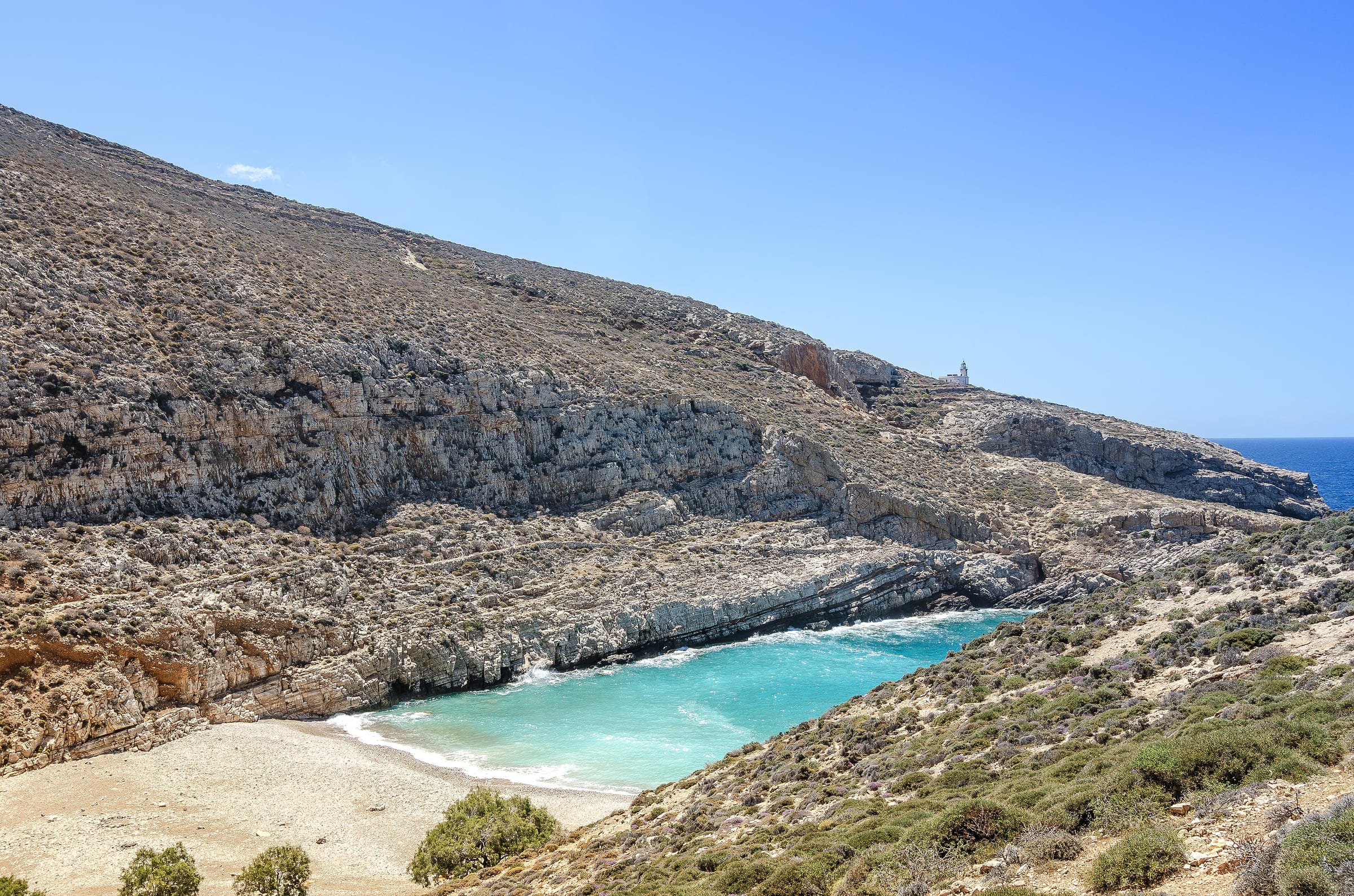
A Cliff-Top Village Above the Aegean
Folegandros is a small Greek island in the southern Cyclades, in the Aegean Sea, known for its cliff-top main village, quiet beaches, hiking paths and unspoilt, traditional character. Its capital, Chora, sits on the edge of a steep cliff high above the water, with whitewashed lanes, flower-draped squares lined with tamarisk trees and a medieval Kastro quarter where houses form a continuous wall. Above the village, the church of Panagia crowns a rocky hill, reached by a winding path, and gives a sweeping view over the Aegean.
The island is gently scaled. Cars are limited in the village, so evenings are spent walking between squares, with music and lamp-lit tavernas at their centre. Ano Meria, an inland farming settlement, preserves a traditional way of life and a small folklore museum, while the Chrissospilia, or Golden Cave, offers stalactites on the coast. For visitors who know Mykonos or Paros, Folegandros is the quieter, more intimate next step in a Cycladic journey.
Hiking, Beaches and Slow Island Meals
Walking is the best way to see it. A path links Chora with Ano Meria through terraces and dry-stone walls, and others lead down to quiet beaches such as Agali, Agios Nikolaos and Katergo, the last of which is reached on foot or by boat and rewards the effort with clear water and open views. Boat trips round the coast reach hidden-feeling coves and sea caves, and the lack of large-scale development means nights are dark and star-filled.
The table is simple and local. Matsata, a handmade pasta often served with rabbit or goat, kalasouna, a sweet-and-savoury cheese pie, fresh fish and local honey all feature, and a long lunch overlooking the water is part of the experience. The Panagia festival around 15 August fills the village with music and food. For a tourist board, this is an island with a clear promise: calm, character and cliff-edge beauty, close to the better-known islands.
Getting There and Pairing Islands
Folegandros has no airport, and that is part of its appeal. Regular ferries connect it with Athens' port of Piraeus and with neighbouring islands, including Milos, Sifnos, Santorini and Naxos, so it fits easily into an island-hopping route. Late spring and early autumn are especially pleasant for walking, while July and August bring the liveliest evenings. Many visitors arrive from Athens or from Santorini, a short sea journey to the south.
A stay of three to five nights suits the scale of the island, and many guests pair it with Paros or Mykonos, or with a longer Greek route through the wider Mediterranean. Travellers who enjoy small islands may also look at Elba in Italy, which shares a similarly unhurried pace. A name like Folegandros.co.uk gives airlines and hotels a single, memorable home for the Folegandros story, from its cliff-top Chora to its quiet paths and beaches.
Cave Houses and Boutique Stays Above the Sea
Folegandros keeps stays small, personal and in tune with the landscape. Chora is the heart, with boutique hotels and guesthouses in whitewashed buildings, some converted from traditional cave houses, and many with terraces over the cliff edge. Karavostasis, the port, is simple and handy, with a sandy beach and tavernas for arrivals, while Agali, on the south-west coast, has a calm beach with a handful of small seaside rooms. Ano Meria is the rural option, with farm-style stays among terraces and stone walls, suited to families and walkers who want peace and space.
Larger resorts are absent, and that is the point. Villas near Livadaki and Agios Georgios, with sea views and private terraces, suit groups and honeymooners, while apartments in the lanes behind Chora suit longer stays. Hosts are often local families who provide breakfast with honey, yoghurt and homemade pies, and the atmosphere is warm and informal. In summer, rooms in Chora are best reserved early, and in spring and autumn the quiet rhythm is a gift for walkers. A hotel group could showcase this style of intimate, family-run hospitality as a premium experience.
Island Music, Goat Stews and Village Evenings
The island's cooking is farmhouse and fresh. Goat and kid, slow-cooked in clay pots or roasted with herbs, sit beside capers, sun-dried tomatoes, almond sweets and island honey, while bakeries sell warm pies and bread early in the morning. Greek coffee is served in the squares, and tables are set under tamarisk trees and strings of lights as evening falls. Many tavernas buy from neighbouring farms, so menus follow the season, and a long lunch of salad, fish and local cheese is a treat after a morning walk.
Music and village life shape the calendar. In the Cyclades, the violin, the lute and the santouri accompany island dances at summer feasts, and Folegandros keeps this tradition alive at weddings and panigiria. Easter in Chora is a candlelit procession through the lanes, and summer evenings bring music in the squares and open-air film nights. Autumn is the season of harvest, quiet beaches and clear light. Island lovers who enjoy this unhurried culture also look at Corsica, Sicily and Sardinia for small-scale village travel in the western Mediterranean.
Sailing, Walking and Island-Hopping from Folegandros
Activities are gentle and rewarding. Day boats leave from Karavostasis for coastal coves, sea caves and swimming stops, and snorkelling in clear water is excellent from several beaches. Walkers can follow the old path from Chora to Agios Georgios, or a coastal route to Livadaki, a sheltered beach with tamarisk trees, while cyclists find quiet lanes and sweeping views. Photographers love the light on the Kastro and the golden hour at the clifftop churches, and the lack of lights makes stargazing from a terrace a nightly pleasure.
Island hopping is part of the charm. Sikinos, a quiet neighbour with its own hilltop village and monastery, is an easy ferry hop away, while Milos, with its lunar coves and Sarakiniko, lies further west and Santorini to the south-east. A common route links Mykonos, Paros and Folegandros, going from glamour to calm in three steps. The ferry schedule is the island's pulse, and with planning a stay of four to six nights fits comfortably between its neighbours, ready to be showcased in a travel itinerary that celebrates slow Greek island life.
Planning your stay
Folegandros is a small Greek island in the Aegean, part of the Cyclades and of the Thira regional unit, which also covers Santorini. Its ferry port is Karavostasis, a small settlement, and the main village, Chora, sits above the sea on a cliff, with a kastro, the old fortified quarter, and a church on the rock above the village. Further along the island, Ano Meria contains a small Ecological and Folklore Museum.
Beaches are limited and several need a walk or a boat. Katergo, for example, is accessible only on foot or by boat from Karavostasis. Wikipedia gives the island's area as 32.2 square kilometres, with its highest point at 455 metres. Visitors who want more nightlife usually head for Mykonos, while Paros offers a larger, more practical base with more services.
When to go
Late May to June and September are the most comfortable months, with warm sea and fewer visitors. July and August are the busiest, and the island is small enough that accommodation, ferry seats and taxis fill early. Outside the main season many businesses close, so book ahead and check that your chosen hotel and restaurants are open.
Make sure your phone is registered to receive emergency alerts, call 112 in an emergency, and avoid hiking alone.
Entry rules and getting there
Greece follows Schengen rules. A stay of up to 90 days in any 180-day period needs no visa, and ferry days to and from Athens count towards it.
The EU's Entry/Exit System is now being implemented across the Schengen area, so you may need to register fingerprints and a photo, free of charge. Folegandros has a port rather than a major airport, so most visitors arrive by ferry from Athens or from larger Cyclades such as Paros. Treat ferry times as provisional and always check with the operator the day before.
Before you travel
Entry requirements and official travel guidance are updated regularly, so check the latest position with your government before booking. The sources we used are listed at the foot of this page.
Why Folegandros matters to the industry
Folegandros is an example of a small, high-quality destination that depends on clear information because access is not easy. Folegandros.co.uk lets a tourist board or hotel group publish ferry, season and visitor guidance, and gives airlines and online travel agencies a trusted page to link to.
For a wider view, compare it with Paphos or the Turkish coast in Türkiye, or browse our destination guides and the AI platform page.
Questions travellers ask about Folegandros
How do I get to Folegandros?
Most visitors take a ferry from Athens or from a larger Cyclades island such as Paros. Schedules change with season and weather, so check with the operator the day before you travel.
Do UK citizens need a visa for Folegandros?
No. UK visitors can stay up to 90 days in any 180-day period in the Schengen area, with a passport under 10 years old and valid for at least three months after leaving.
When is the best time to visit?
Late May to June and September are the most comfortable. July and August are busiest, and many businesses close outside the main season.
What is Folegandros best known for?
Folegandros is best known for its cliff-top Chora, whitewashed squares, the Panagia church on the hill above the village and a peaceful, authentic atmosphere. Hiking paths and quiet beaches such as Agali and Katergo add to its appeal.
How do I get to Folegandros?
Folegandros is reached by ferry, with regular services from Piraeus and links to Milos, Sifnos, Santorini and Naxos. It has no airport, so most visitors fly to Athens or a larger island and continue by sea.
Where should I stay on Folegandros?
Chora is best for most visitors, with boutique hotels, cliff-top views and lively evening squares. Karavostasis is handy for the port, Agali has a quiet beach, and Ano Meria suits those who want a rural stay.
What are the best day trips from Folegandros?
Boat trips along the coast reach coves and sea caves, while ferries link to Sikinos, Milos and Santorini. Walking from Chora to Agios Georgios or Livadaki beach is a lovely half-day on the island itself.
In the Visit Travel Group portfolio: Folegandros.co.uk, VisitFolegandros.co.uk.