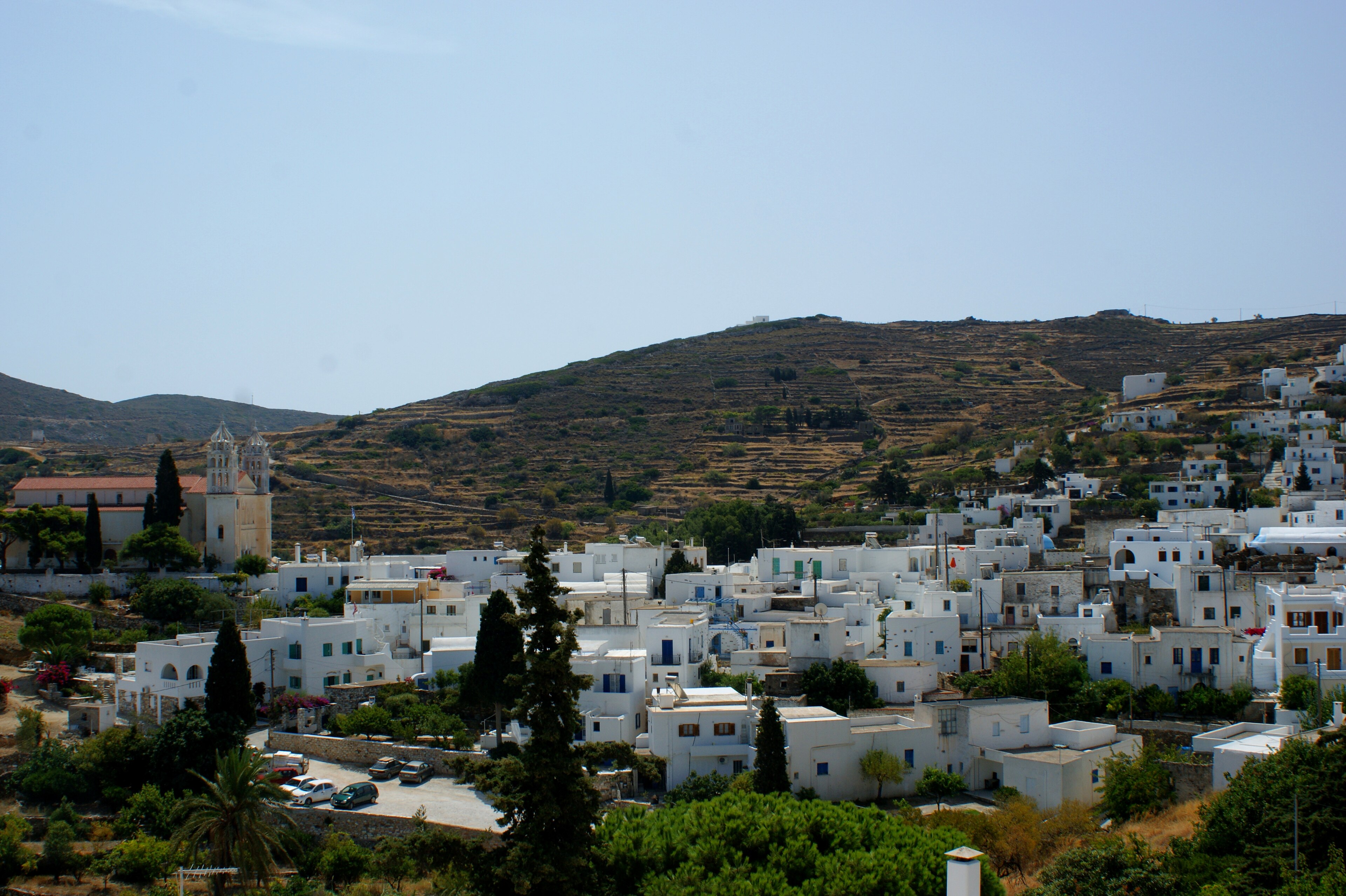
Marble Villages and Fishing Harbours
Paros is a Greek island in the central Cyclades, in the Aegean Sea, known for its whitewashed villages, golden beaches, ancient marble and a relaxed mix of traditional life and quiet style. Parikia, the main port and capital, has an old town of narrow lanes and a Venetian castle, while Naoussa, on the north coast, is a small fishing harbour with a ruined Venetian fortress, boutiques and waterside tavernas. The island's marble, prized since antiquity, was used for some of the most celebrated sculpture of the ancient world.
Heritage is close to hand. The Church of Panagia Ekatontapyliani, or Church of One Hundred Doors, in Parikia is one of the great Byzantine monuments of the Aegean, with origins in the fourth century. In the hills, Lefkes is a marble-paved mountain village, linked to Prodromos by a Byzantine path that is a favourite walk. Together these places show why Paros appeals to travellers who want culture as well as beaches, and who may already know Mykonos and want a calmer, more traditional alternative.
Golden Beach, Antiparos and Island Tables
The coast offers plenty of choice. Golden Beach and Piso Livadi on the east are known for wind and kitesurfing, Kolymbithres in the north has sculpted granite rocks around sheltered coves, and Santa Maria is a long, easy beach with watersports. A short boat ride leads to Antiparos, a small island with a lively harbour village and a large cave of stalactites, while the quiet waters between the two are ideal for sailing and kayaking.
Food is straightforward and delicious: fresh fish, octopus drying in the sun, local cheeses, sweet pies with honey and sesame, and vegetables from island gardens, often served at tables set in whitewashed courtyards or right at the water's edge. The mix of stays, from village guesthouses to design-led boutique hotels and beach resorts, gives a hotel group plenty to promote. For a quieter and more cliff-edge Cycladic alternative, Folegandros lies a short sea journey away.
Getting to Paros and Planning the Season
Paros enjoys a long season from late spring to early autumn, with warm sea, long days and a lively but relaxed calendar of village festivals and music. May, June and September are particularly good for walking and sailing. The island has a small airport with domestic flights from Athens, while regular ferries from Piraeus, as well as links to Naxos, Mykonos, Santorini and other islands, make it a natural hub for a Cycladic itinerary.
Most UK visitors fly to Athens and continue by ferry or domestic flight, or fly to a larger Cycladic airport and arrive by sea. The wider Mediterranean guide places Paros within a longer summer of island travel, and Croatia offers a comparable sailing-led alternative. A name like VisitParos.co.uk gives airlines, boards and hotels a clear home for the Paros story, with its harbours, beaches, marble and tavernas.
Naoussa Harbour, Parikia and Quiet Villages
Paros gives guests a wide choice of settings. Naoussa is the elegant harbour town, with boutique hotels, galleries and waterside restaurants, and suits couples and style-conscious travellers. Parikia, the main port, is handy for ferries and has small guesthouses in the old town, a Venetian castle and easy beach access. Aliki, a quiet fishing village in the south-west, has a sandy bay and low-key tavernas, while Piso Livadi and Logaras on the east coast offer relaxed family beaches. Golden Beach is the base for wind and kitesurfers, with beachside hotels and surf schools nearby.
Inland, the mountain villages of Lefkes and Marpissa give a rural alternative, with stone houses, marble lanes and views to the sea. On Antiparos, a short ferry hop away, Chora's whitewashed lanes and small beach hotels give a laid-back island within an island. Villas and farm-style stays suit groups and families who want a kitchen and a garden, while larger resorts have spas and kids' clubs. Whether guests choose a village hideaway or a beach resort, an airline can feature Paros as an easy hub for the central Cyclades.
Honey, Capers and Marble Heritage
Parian cooking is simple and flavourful. Kolokithokeftedes, courgette fritters, fava purée, capers, sesame pasteli and thyme honey sit alongside fresh fish and grilled octopus, and local wines from the Monemvasia and Mandilaria grapes carry a long island heritage. Pastry shops serve almond sweets and cheese pastries, and cafés beside the harbour serve Greek coffee with a view of the fishing boats. Many village tavernas have gardens, where meals last long into the evening, and olive oil from the island's groves is a favourite gift.
Culture runs deep. The island was home to the poet Archilochos in the seventh century BC, and its marble quarries shaped some of the greatest sculpture of the ancient world. Parikia's archaeological museum and the old quarry at Marathi reveal this story, and the village of Lefkes has a small folk museum. Summer festivals include the Dormition celebrations on 15 August in Parikia, with processions and music, while Naoussa hosts evenings of dance and fireworks by the harbour. Island-lovers who enjoy this mix also look at Sardinia and Turkey's Aegean coast.
Windsurfing, Sailing and Island-Hopping Days
Paros is a wind and water playground. Pounda and Golden Beach host windsurfing and kitesurfing schools, and sailing and kayaking trips leave from Naoussa and Parikia for the quiet bays of the north and Antiparos. Walkers can follow the Byzantine Road from Lefkes to Prodromos, cyclists enjoy gentle roads between villages, and yoga and wellness retreats gather in the quieter corners. Divers explore reefs around the island, and sunset sails with a simple dinner on board are a popular evening outing.
Day trips extend the holiday. Naxos, with its marble gate on the harbour, is a short fast-boat journey, and Antiparos can be visited in half a day, including the nearby ancient sanctuary at Despotiko. Mykonos and Santorini are linked by regular sailings, and Folegandros offers a quieter finish to a Cycladic itinerary. A stay of five to seven nights on Paros, with two or three day trips, shows the best of the Aegean without constant packing, and the wider Mediterranean guide adds ideas for a longer summer.
Planning your stay
Paros is a Greek island in the Aegean Sea. Its main town and port, Parikia, has the Frankish Castle and the church of Panagia Ekatontapiliani, and the island is also known for its marble quarries. Naoussa, on the north coast, is the other main base, a fishing harbour with restaurants and bars, while smaller villages inland have a slower pace.
Paros is one of the more relaxed islands in the Cyclades, and many visitors choose it over Mykonos for lower prices and a quieter feel. To the south, Folegandros is far smaller and more remote, and can be added as a second stop by ferry.
When to go
Late May to June and September are the sweet spot for walking, swimming and eating outdoors without the peak summer crowds. July and August are hot, busy and the most expensive, and a strong summer north wind known as the meltemi can disrupt ferries and make exposed beaches unpleasant. Many seasonal businesses close in winter, so check opening times if you travel outside the main months.
Entry rules and getting there
Greece follows Schengen rules. UK visitors can travel without a visa for up to 90 days in any 180-day period, and overstaying can lead to a ban of up to three years.
Most visitors reach Paros by ferry or a short flight from Athens, so check current schedules with the carrier.
Before you travel
Entry requirements and official travel guidance are updated regularly, so check the latest position with your government before booking. The sources we used are listed at the foot of this page.
Why Paros matters to the industry
Paros competes for the same Cyclades visitor as its better known neighbours, and it also acts as a transport hub, which makes reliable ferry and transfer information valuable. VisitParos.co.uk lets a tourist board, hotel group or airline publish clear, sourced guidance for travellers, and an online travel agency can link it to its listings.
Visitors who like the Aegean also look at Paphos in Cyprus or the Turkish coast near Türkiye. Our destination guides and AI platform show how the same approach extends across the network.
Questions travellers ask about Paros
Do UK citizens need a visa for Paros?
No. A holiday on Paros can last up to 90 days in any 180-day period without a visa, counted across the whole Schengen area. Whether you land at Athens or sail into Parikia, your passport must be under 10 years old and have three months left beyond your departure.
When is the best time to visit Paros?
Late May, June and September are warm and less crowded. July and August are hot, busy and expensive, and the meltemi wind can affect ferries and beaches.
What is Paros best known for?
Paros is best known for its whitewashed villages, fishing harbour of Naoussa, ancient marble, golden beaches and watersports. Parikia's Byzantine church, the village of Lefkes and nearby Antiparos add culture and charm.
How do I get to Paros from the UK?
Most visitors fly to Athens and continue by ferry from Piraeus or by a short domestic flight to Paros. Regular ferries also link Paros with Mykonos, Naxos, Santorini and other Cycladic islands during the season.
Where should I stay on Paros?
Naoussa suits couples and food lovers, Parikia is handy for ferries and old-town walks, and Golden Beach suits wind and kitesurfers. Aliki and Lefkes offer a quieter, more traditional atmosphere with village tavernas.
What are the best day trips from Paros?
Antiparos and its cave are a short hop by boat, Naxos is a quick fast-ferry trip, and Mykonos, Santorini and Delos can be reached by sea. A sailing day around the northern bays is another favourite.
In the Visit Travel Group portfolio: VisitParos.co.uk.