The Queen of the Dolomites and Her Olympic Story
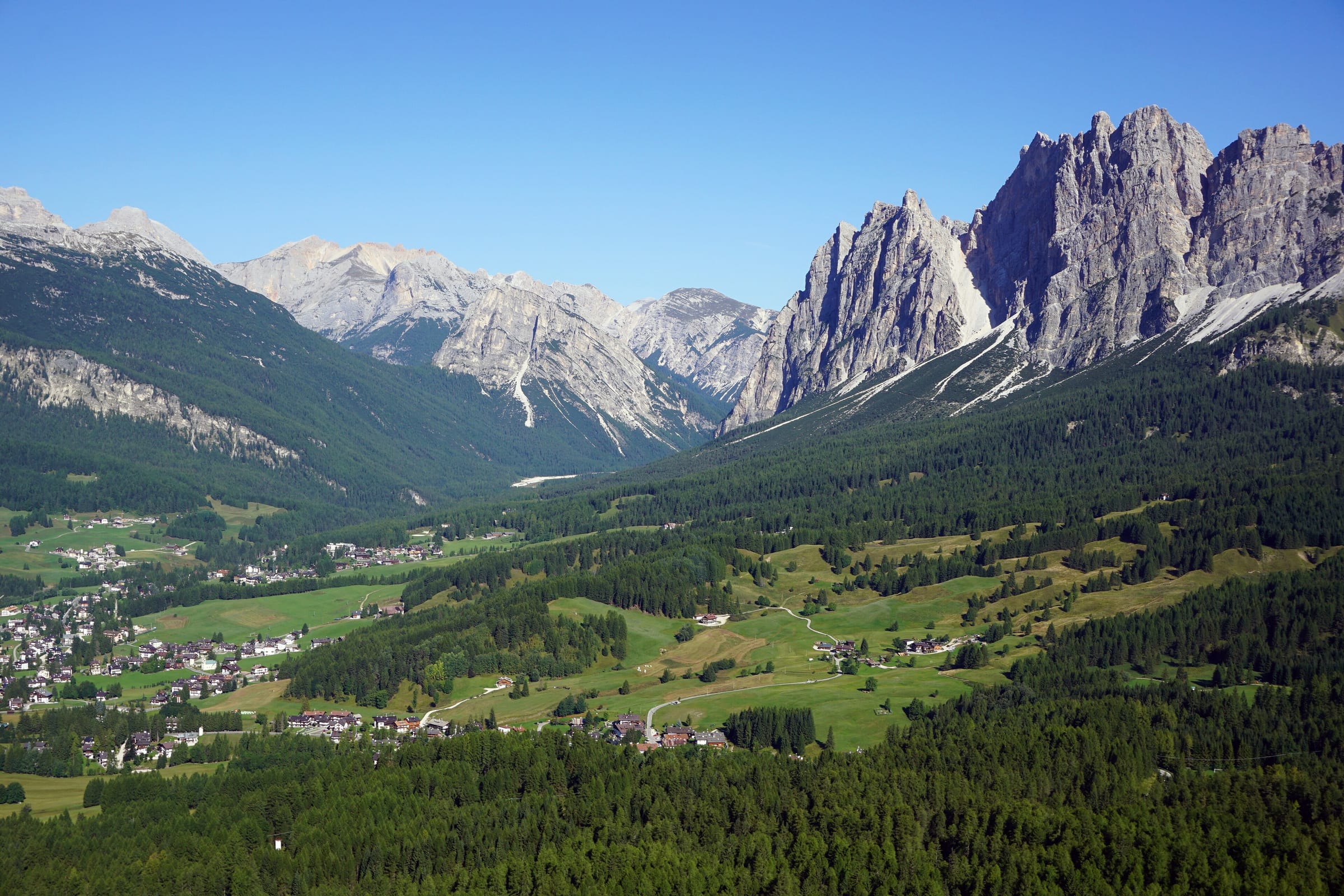
Cortina d'Ampezzo is a mountain town in the Veneto region of northern Italy, in the heart of the Dolomites, known for its skiing, its glamorous atmosphere and its Olympic history. It hosted the Winter Olympics in 1956 and, with Milan, co-hosted the 2026 Winter Olympic Games, bringing fresh attention to its slopes and bobsleigh heritage. The Dolomites were inscribed by UNESCO in 2009, and the pale rock towers of Tofane, Cristallo and Pomagagnon rise directly above the town, glowing pink at dawn and dusk.
Cortina's centre is as appealing as its mountains. Corso Italia, the pedestrian main street, is lined with boutiques, patisseries and cafes, and the campanile of the Basilica of Saints Philip and James rises above it. The valley retains a Ladin cultural heritage, still visible in local names, cuisine and craftsmanship. The mix of cosmopolitan polish and mountain tradition makes the town feel distinct from other alpine resorts, and it has long drawn film stars, artists and writers.
Tofane, Cinque Torri and the Tre Cime
Skiing here is scenic and varied. The Dolomiti Superski network, one of the largest ski areas in the world, covers Cortina and neighbouring valleys, and local runs from Faloria, Cristallo and the Tofane combine wide cruising with long views. In summer, the same peaks become a hiking and climbing playground: the Cinque Torri rock towers, the Tre Cime di Lavaredo, Lake Sorapis and the emerald Lago di Braies are all within easy reach. Cable cars, rifugi and well-marked trails make high-mountain days accessible to many abilities.
Mountain cooking is a pleasure, with casunziei ravioli filled with beetroot, venison, polenta and strudel, followed by espresso on a terrace in the sun. Stays range from grand hotels on Corso Italia to mountain chalets and rifugi. Visitors who enjoy the Dolomites might compare St Moritz and Kitzbuhel across the Alps, while Veneto offers Venice Lido and Verona as cultural city add-ons. A hotel group could shape a stay around gastronomy and views.
When to Go and How to Arrive
Winter runs from December to March, with Cortina's snow, Christmas markets and festive evenings drawing visitors, while summer brings walking, via ferrata climbing and cycling over famous passes. Late June to September is the best period for hiking, and September offers clear air and golden larch trees in some valleys. Spring and autumn are quieter, with some lifts and mountain huts closed, so they suit those who prefer a slower, valley-based break.
Cortina is about two hours by road from Venice Marco Polo airport, with Treviso a practical alternative, and seasonal bus services link the town to Venice and Mestre. It fits naturally into an Italy itinerary that might include Lake Garda or Milan. A name like VisitCortinaDAmpezzo.co.uk gives boards and airlines a single place to show the town's glamour, from the Olympic heritage of 1956 and 2026 to a Dolomite sunset above Corso Italia.
Grand Hotels, Chalets and Rifugi in the Dolomites
Cortina's centre, around Corso Italia, is the place for elegance, with historic grand hotels, boutique addresses and apartments close to the shops, pastry counters and the lifts to Faloria. Couples and style seekers choose these for their spas and terraces, many with views of the pink peaks at dusk. Families often prefer chalets and apartments in the quieter neighbourhoods, such as Pocol and Zuel, with a short bus or lift ride to the slopes, and groups can rent whole mountain chalets with fireplaces and saunas.
Beyond town, rifugi, the mountain huts of the Dolomites, offer simple, memorable stays with dinner and sunrise views, ideal for walkers and photographers. Misurina, beside its lake and near the Tre Cime, is a quiet base for summer hikers, and Cinque Torri and Passo Falzarego have high-mountain stays. Golfers can play the course at Cortina in summer, and spa-lovers find wellness hotels with panoramic pools. Veneto makes a natural pairing for city days, and a hotel group could combine Cortina with Venice for a mountain-and-lagoon week.
Casunziei, Strudel and the Ladin Calendar
Cortina's cooking draws on Ladin, Austrian and Venetian traditions. Casunziei, the beetroot ravioli with poppy seeds, canederli dumplings, barley soup, game with polenta and plum or apple strudel are signature dishes, served in mountain huts and village trattorie. Coffee and hot chocolate are taken in the grand cafes on Corso Italia, and bakeries sell hearty rye breads and biscuits. Local crafts include wood carving, embroidered textiles and the celebrated eyewear tradition of the nearby Cadore valley, an industry with a long history.
The calendar is lively. Winter brings World Cup skiing, Christmas markets and torchlit processions, spring offers quieter, sunnier slopes, and summer fills with concerts, vintage car events and mountain festivals. The Museo d'Arte Moderna Mario Rimoldi holds a notable collection, and the Ladin museums tell of local life. Autumn brings larches turning gold, clear light and calm trails, and food festivals showcase local produce. Tourist boards can use VisitCortinaDAmpezzo.co.uk to give each season a clear identity for planners and guests.
Via Ferrata, Cycling Passes and Dolomite Day Trips
The Dolomites reward active travellers in every season. Summer walkers follow the circuit around the Tre Cime di Lavaredo, hikers reach the Cinque Torri by chairlift, and via ferrata routes give guided climbers an exhilarating introduction to the rock walls. Cyclists tackle the famous passes of Falzarego, Giau and Tre Croci, and e-bikes open them to all, while in winter, cross-country trails, snowshoeing and the Olympic bobsleigh track add variety to the skiing. Families will enjoy sledging, ice-skating and gentle forest walks.
Day trips complete the stay. Lago di Braies and the Lago di Sorapis are easy summer excursions, the Great Dolomites Road leads towards Bolzano, and Venice or Lake Garda are within reach on a longer journey. A scenic drive takes in the mountains and valleys, with stops at Alpine villages along the way. Visitors can add Lake Garda or Verona by road, and an airline could link Venice and Verona in an open-jaw route for Dolomite holidays.
Planning your stay
Cortina is set at 1,224 metres in a wide bowl surrounded by dramatic limestone peaks in the Dolomites, a UNESCO World Heritage mountain range, and the nearest high summit, Tofana di Mezzo, rises to 3,244 metres. The town has a pedestrian centre, smart shops and a long tradition as a winter and summer resort. Milano Cortina hosted the 2026 Winter Olympics, which brought attention and investment to the area.
The Dolomites sit in the Veneto region, and Venice is the usual gateway. Courmayeur and Cervinia in the western Alps offer a different mountain character, and our Italy guide covers the national rules.
When to go
The winter ski season runs through the colder months, and the skiing is varied, with scenic, mostly moderate terrain and links to the wider Dolomiti Superski area, which offers about 1,200 kilometres of slopes and some 450 lifts on a single pass. In summer, the area is a base for walking, via ferrata and cycling, and the high trails usually open once snow has cleared. Check lift and hut opening dates before you book.
Weather in the Dolomites changes quickly. Summer thunderstorms can build in the afternoon, so start walks early, and winter fog and wind can close lifts. Check the forecast each morning, carry layers and tell someone your plans before heading out.
Getting there
Venice Marco Polo is the usual airport for UK visitors, with Treviso as a lower-cost alternative, and the transfer to Cortina is a mountain road journey of a couple of hours, so check current times. Book shared or private transfers early for peak weeks, and use only licensed taxis.
If you drive, winter tyres or snow chains are needed in the cold months, and mountain roads can be closed by snow. You can use a UK photocard licence in Italy, though hire companies often set stricter requirements.
Hiking, health and entry
Plan your route, wear suitable footwear, carry a map, compass and communications equipment, and call 112 if you are lost or hurt. Risks are greater if you hike alone.
For Cortina d'Ampezzo, your passport must be less than 10 years old when you reach Venice Marco Polo and valid for at least three months after you plan to leave. For Cortina d'Ampezzo, UK visitors can stay up to 90 days in any 180, and the Entry/Exit System may require fingerprints and a photo on arrival at Venice Marco Polo.
Before you travel
Entry requirements and official travel guidance are updated regularly, so check the latest position with your government before booking. The sources we used are listed at the foot of this page.
The industry view
After the Olympics, Cortina has a stronger international profile and a clearer need for reliable information on access, seasons and rules. VisitCortinaDAmpezzo.co.uk lets a tourist board or hotel group publish it, and airlines explain the routes via Venice.
Our AI platform carries the Dolomites access and ski-rule answers to assistants.
Questions travellers ask about Cortina d'Ampezzo
Which airport is best for Cortina d'Ampezzo?
Venice Marco Polo is the usual choice, with Treviso as an alternative. The transfer is a mountain road journey, so check current times and book early for peak weeks.
Is Cortina good for summer holidays?
Yes, for walking, cycling and via ferrata, once high trails are clear of snow. Check hut and lift opening dates, and take care with afternoon thunderstorms.
Do I need a visa for Cortina d'Ampezzo?
No. For a stay in Cortina d'Ampezzo, UK visitors can spend up to 90 days in any 180 across the Schengen area, with a passport under 10 years old and valid for at least three months after they leave.
What is Cortina d'Ampezzo best known for?
Cortina d'Ampezzo is best known as the Queen of the Dolomites, a stylish ski and hiking resort that hosted the 1956 Winter Olympics and co-hosted the 2026 Games with Milan. The Dolomites are a UNESCO World Heritage Site.
How do I reach Cortina from the UK?
Most visitors fly to Venice Marco Polo, from where the drive to Cortina takes about two hours. Treviso is an alternative gateway, and seasonal buses connect Cortina with Venice and Mestre.
Where should I stay in Cortina d'Ampezzo?
Corso Italia and the centre suit couples and style seekers, quieter districts such as Pocol suit families, and mountain rifugi offer memorable, simple stays for walkers. Misurina is a peaceful summer base near the Tre Cime.
What is there to do in Cortina in summer?
Hike the Tre Cime circuit, ride the lift to the Cinque Torri, try a via ferrata, cycle the great passes or visit Lago di Braies. Corso Italia's cafes and boutiques fill the evenings, and concerts enliven the season.
In the Visit Travel Group portfolio: VisitCortinaDAmpezzo.co.uk.