Istria's Painted Harbour Town on the Adriatic
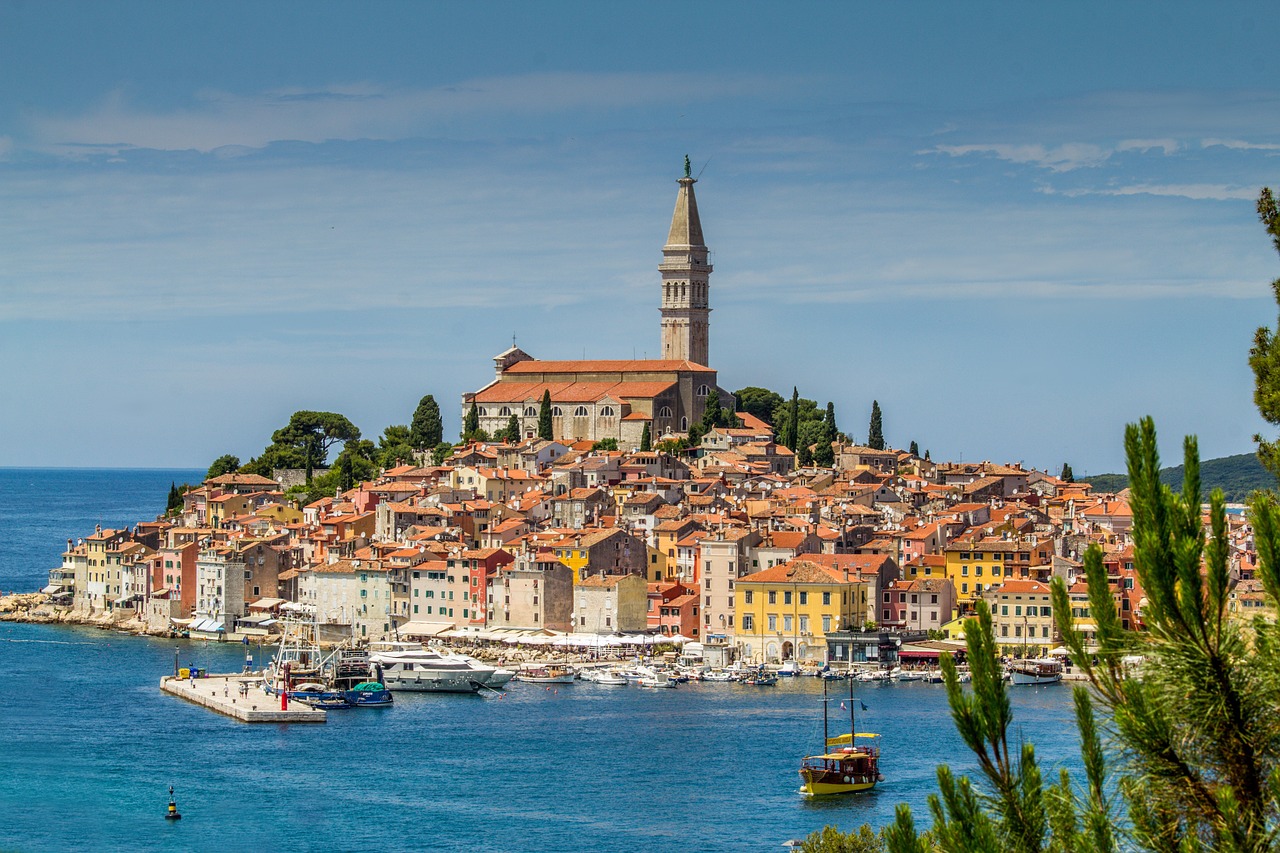
Rovinj is a historic coastal town on the western shore of the Istrian peninsula in Croatia, known for its pastel-coloured old town, its Venetian heritage and the baroque Church of St Euphemia, whose bell tower rises above the harbour. The old town was once an island and now sits on an oval peninsula, with narrow cobbled lanes known as grisia climbing from the waterfront to the church at the top. Italian remains an official minority language alongside Croatian, a reminder of centuries of Venetian influence.
The harbour is the town's stage. Fishing boats and yachts line the quay, cafe tables spill onto the stones and, at the golden hour, the buildings glow orange against the sea. Art galleries and studios fill the lanes, and the setting has drawn painters for generations. Travellers who love Adriatic towns often compare it to Venice Lido and the coastline of the Veneto, yet Rovinj has its own unhurried, human scale and a strong sense of everyday local life.
Golden Cape, Truffles and Malvazija
Outside the old town, the Zlatni Rt or Golden Cape forest park wraps the shore in pine and cypress, with paths and pebbly coves ideal for walking and cycling. A scatter of islands lies offshore, reached by boat for a day of swimming and lunch. Inland, Istria is a landscape of vineyards, olive groves and hilltop villages, and the Lim Fjord, a long flooded valley to the north, is known for its oysters and mussels. For active visitors, the peninsula's cycling routes are a major draw.
Istrian food is a gift. Truffles from the forests around Motovun, extra virgin olive oil, handmade fuzi pasta, cured ham and fresh Adriatic fish are staples, accompanied by Malvazija, a crisp white wine, and the red Teran. Konobas, small family taverns, serve all of these in relaxed settings. A hotel group can showcase Rovinj as a base for gourmet touring, pairing a boutique harbour stay with vineyard visits and truffle hunts.
Seasons, Routes and Neighbouring Coasts
Late spring and early autumn are especially pleasant, with warm sea, long light and a calmer pace, while the summer months bring a lively festival calendar and an easy sea-and-sun rhythm. Rovinj lies within reach of Pula's Roman amphitheatre and the town of Poreč with its Euphrasian Basilica, a UNESCO-listed Byzantine church, which together make strong day trips. Evenings often end on the quay, watching the sun drop behind the old town.
Pula airport is the nearest, with Trieste and Venice also within reach, and the road network makes Istria easy to explore by car. A name like Rovinj.co.uk offers boards and airlines a single clear showcase for that whole story. Visitors can easily extend their journey across the wider Croatian coast or into Italy, and a stay on the Adriatic pairs nicely with a city break in Europe or a holiday across the Mediterranean.
Harbour Suites, Island Resorts and Istrian Farmhouses
Rovinj gives visitors a clear choice of atmosphere. Staying inside the old town means stepping out onto cobbled lanes and the harbour quay, with small boutique hotels and apartments tucked into restored stone houses, ideal for couples and anyone who loves early morning light on the water. Just outside the centre, larger hotels cluster along the wooded shore near the Katarina island and the Lone Bay, where pools, spa floors and sea views suit families and groups.
The coast beyond holds more. The Amarin and Valalta areas bring modern resorts and long pebble beaches, and the Golden Cape forest park keeps a green buffer around the shoreline. Inland, Istria is dotted with converted farmhouses and wine estates, many with pools and garden terraces, and these suit gourmet travellers and small groups looking for a slow week among vineyards. For luxury, look to the island of Sveti Andrija, where a restored lighthouse and the nearby sea create a very private retreat.
Truffle Season, Fisherman's Nights and Art Studios
Istrian food follows the seasons. Truffle hunting runs through autumn, with white truffles shaved over eggs, fuzi pasta and tartare, and spring brings wild asparagus omelettes. Peka, a slow-baked dish under an iron bell, is a family favourite, and boškarin, the local ox, appears in stews. Olive oil from groves around Rovinj has won international attention, and cooperatives welcome visitors for tastings. The sweet fritule and an afternoon coffee on the quay make an easy ritual.
Culture blends Italian and Croatian traditions. The Batana Eco-Museum celebrates the local flat-bottomed fishing boat, and Rovinj's Fisherman's Nights in summer fill the harbour with music, boats and grilled sardines. Grisia Street holds galleries where painters sell directly, and an open-air art evening is held on the street in August. Classical concerts at the church and the Rovinj Photodays add an arts note to the early autumn, while winter markets and quiet harbour walks suit slow breaks.
Cycling Istria, Sailing the Islands and Wine Roads
The peninsula is made for active travel. Marked cycling routes, among them the Parenzana, follow an old railway line through tunnels and vineyards, while the Golden Cape's paths suit gentle runs and walks. Kayaking and boat trips reach the islands of St Catherine and St Andrew, and the sea is warm enough for sailing and paddle boarding from late spring until the autumn. Diving clubs run excursions to reefs and wrecks along the Istrian coast, and horse riding is available in the interior.
Day trips radiate easily from town. Motovun, on its hilltop, brings truffle shops and film festival memories, Grožnjan is a hilltop town of artists and musicians, and Pula offers its Roman amphitheatre, one of the best preserved in the world. Slovenian Piran and Italy's Trieste also lie within reach for a longer outing. A hotel group could shape a seven-night stay around cycling, food and the coast, and visitors can continue towards the Veneto or Venice Lido by road, or add Croatia's islands, with Italy and Europe beyond.
Planning your stay
Rovinj is a town in western Croatia on the north Adriatic, with a population of 12,968 at the 2021 census. It stands on the western coast of the Istrian peninsula and is both a popular tourist resort and an active fishing port. The town is officially bilingual, Croatian and Italian, so both Rovinj and Rovigno appear on signs.
The official tourist board highlights the old town, the traditional batana boats, the Lim Bay, the Palud wetland, the Golden Cape forest park and boat trips to the coastal islands and to Brijuni National Park. Rovinj is also a base for sailing and has a marina, and is a good alternative to a big city break in Croatia for travellers who prefer a smaller town.
When to go
Late spring and early autumn are warm, calmer and good for walking and cycling. July and August are hot, crowded and the most expensive, and parking and accommodation need to be planned well ahead. Winter is quiet and many seasonal venues close, so it suits visitors who want a slow break rather than a beach holiday.
Entry rules
Croatia follows Schengen rules, and you will usually clear them at Pula or Zagreb before reaching Rovinj, and British Airways lists the flight from London Heathrow to Pula at 2 hours. You may stay up to 90 days in any 180-day period without a visa, with Croatian days added to any other Schengen trips, and overstaying could mean a ban of up to three years.
The EU's Entry/Exit System is now being implemented across the Schengen area, so you may need to register fingerprints and a photo at no cost, and should allow extra time at the border.
Sailing and getting around
The tourist board also publishes a notice on the nautical tourist tax for boat owners and charter guests.
Before you travel
Entry requirements and official travel guidance are updated regularly, so check the latest position with your government before booking. The sources we used are listed at the foot of this page.
Why Rovinj matters to the industry
Rovinj shows how a small town can build a strong brand, and it competes with other Mediterranean harbour towns for the same sailing and short-break visitor, including Malta.
See our destination guides and the AI platform page for how this content is found by searchers and assistants.
Questions travellers ask about Rovinj
Do UK citizens need a visa for Rovinj?
No. A Rovinj holiday of up to 90 days in any 180-day period needs no visa, because Croatia is in the Schengen area. Border officers in Croatia expect a passport under 10 years old with three months of validity after your planned departure.
What is Rovinj best known for?
Rovinj is best known for its pastel old town on a peninsula, the baroque Church of St Euphemia and its bell tower, its Venetian heritage, the Golden Cape forest park and Istrian food such as truffles, olive oil and Malvazija wine.
When is the best time to visit Rovinj?
Late spring and early autumn offer warm sea, long light and a calmer pace, while summer is the liveliest season for the harbour and festivals. Istrian truffle and wine season in autumn is especially appealing for food lovers.
Where should I stay in Rovinj?
The old town suits couples and culture seekers who want boutique stays steps from the harbour. Hotels near Katarina island and the Golden Cape suit families and groups, while Istrian farmhouses and wine estates inland offer a peaceful, food-focused retreat.
What are the best day trips from Rovinj?
Pula's Roman amphitheatre, the hilltop town of Motovun and its truffle shops, artistic Grožnjan and the Euphrasian Basilica in Poreč are all popular. Boat trips to nearby islands and cycling the Parenzana route add active alternatives.
In the Visit Travel Group portfolio: Rovinj.co.uk, VisitRovinj.co.uk.