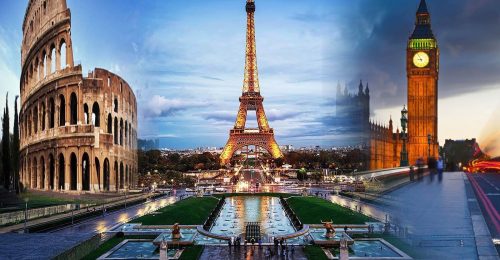
A Continent of Cities, Coasts and Mountains
Europe is the western part of the Eurasian landmass, a continent known for its dense mix of historic cities, varied coastlines, mountain ranges and cultures within short distances of each other. From the fjords and forests of the north to the olive groves of the south, it offers an extraordinary range of landscapes in a compact space. Rome, Paris, Prague, Vienna, Lisbon and Amsterdam carry centuries of art, architecture and ideas, and each rewards a long weekend or a longer stay.
The variety is the point. Travellers can ski in the Alps at Chamonix or St Moritz, walk the cliffs of Ireland and Scotland, or taste olive oil in Tuscany on the same trip. Cities such as Berlin and Brussels show modern Europe's cultural and political energy, while smaller Baltic capitals such as Tallinn in Estonia bring medieval streets and a thoroughly digital present.
Rail Journeys, Food Regions and Festivals
Europe's transport network makes it uniquely connected. High-speed trains link capital cities, scenic lines cross the Alps, and low-cost flights open smaller regional airports. The result is a continent that suits both a single-city break and a multi-country grand tour. Ferries connect the Baltic, North Sea and Mediterranean ports, and cruises give another way to see coastlines from the water.
Food regions form natural itineraries, from Italy's Emilia-Romagna and Spain's Basque Country to Belgium's chocolatiers and Portugal's Douro. The calendar brims with festivals: music in Salzburg and Edinburgh, carnival in Venice, Christmas markets across Germany and the Alps. A tourist board can use a European showcase to place its own region within a wider, well-understood story of culture, cuisine and connections, and attract visitors who are already planning multiple stops.
When to Go and How to Plan
Spring and early autumn are widely favoured for city sightseeing, with comfortable temperatures and gentle crowds. Summer suits the coasts, islands and long northern evenings, while winter brings Christmas markets and ski seasons in the Alps and Pyrenees. Each season has its signature destination, and shoulder months often give the best balance of weather and atmosphere. For UK travellers, Europe's nearness means that many journeys are simple, short and easily combined.
A name like VisitEurope.co.uk gives airlines and hotels one clear showcase for Europe's range, from the sun-soaked Mediterranean to the northern capitals. Hotel groups can arrange properties by theme, from city design stays to wine estates, and travellers weighing a sunnier break can look to Spain or Italy as natural starting points for a longer exploration.
From Alpine Chalets to Grand Capital Hotels
Europe's stays are as varied as its landscapes. In the great capitals, grand nineteenth-century hotels stand beside design-led boutiques, so a weekend in Vienna, Prague or Lisbon can mean either imperial ballrooms or a converted townhouse. The mountains offer chalets and spa lodges in Chamonix, Zermatt and Kitzbuhel, and the lakes of northern Italy bring lakeside villas for couples and families who like terraces and boat trips. Coastal resorts from the Algarve to Croatia suit beach holidays with children.
Country stays give another flavour. Wine estates in Tuscany, the Douro and Burgundy host guests among vines, castles in Scotland and Ireland offer baronial comfort, and farmhouses and gites welcome walkers and cyclists. Rail hotels, canal boats and historic inns each add a distinctive style. Luxury travellers can select palace hotels in Paris, Rome or Venice, while budget-conscious groups find well-run hostels and apartments. Spa towns in Germany, Hungary and Czechia keep a long tradition of restorative stays in elegant surroundings.
Markets, Museums and a Calendar of Festivals
Europe's food and culture reward slow exploration. Pastry in Vienna, pasta in Bologna, tapas in San Sebastian, seafood in Lisbon, chocolate in Brussels and smorrebrod in Copenhagen each define a city in a bite. Open-air markets are an easy way in, and regional cheeses, cured meats and breads show how closely cuisine follows the land. Wine regions such as Burgundy, Rioja and Tuscany add a heritage dimension for those curious about the craft of harvest and cellar.
The museum list is formidable: the Louvre, the Prado, the Rijksmuseum, the Uffizi and the Hermitage, to name a few. Festivals set the rhythm, from Carnival in Venice and Cologne to Edinburgh's summer arts, Salzburg's music weeks, Pamplona's summer fiestas and the Christmas markets of Strasbourg and Vienna. Spring brings blossom and Easter traditions, summer fills open-air stages and beaches, autumn offers harvest and walking, and winter lights up the old towns with snow and markets.
Rail Trails, Ski Weeks and Cultural Day Trips
A European break can be themed in many ways. Rail enthusiasts ride the Glacier Express, the Bernina line or the night trains linking capitals, and walkers tackle the Tour du Mont Blanc or the Camino de Santiago. Cyclists follow the Danube path, skiers head for the Alps in winter, and sailors race around the Greek islands in summer. Wildlife lovers can watch puffins in Scotland, flamingos in the Camargue and storks in Estonia, while wellness fans find spa towns from Baden-Baden to Budapest.
Day trips multiply value. From Brussels, Bruges is a short train ride, from Berlin Potsdam's palaces are close by, and from Paris, Versailles and Giverny are easy outings. A airline route map can link regional cities with long weekends, and travellers looking for island add-ons can try Mallorca or Madeira. Many holidays combine a city with a coast, such as Porto with the Douro, or Amalfi with Rome, giving guests a rich contrast within one trip.
Planning your stay
For a UK traveller, Europe is not one set of rules. Estonia, Belgium and Germany all follow Schengen rules, Ireland is in the EU but outside Schengen, and travel within the UK, including to Scotland and the Tees Valley town of Yarm, needs no border checks at all. The Channel Islands are a separate case again.
Our northern Europe guides cover Estonia, Brussels and Berlin on the mainland, Ireland and Scotland in the British Isles, and the Channel Islands and Yarm closer to home.
Schengen: the 90 in 180 rule
UK visitors can travel without a visa to the Schengen area for up to 90 days in any 180-day period, as tourists, to visit family or friends, to attend business meetings, cultural or sports events or for short-term study or training.
EES and what happens at the border
You may be asked to register biometric details, such as fingerprints and a photo, at a booth on your first visit, at no cost, and you may be asked for a fingerprint or photo when you leave. Children aged 11 or younger are not fingerprinted but can be required to have their photo taken.
At border control you may also be asked to show a return or onward ticket and prove that you have enough money for your stay.
Ireland and the Common Travel Area
A trip that combines Ireland with the continent therefore involves different checks on each leg, and time spent in Ireland does not follow the Schengen count. Plan documents and carrier rules for each border you cross.
Before you travel
Entry requirements and official travel guidance are updated regularly, so check the latest position with your government before booking. The sources we used are listed at the foot of this page.
Why Europe matters to the industry
Europe is the UK's closest and most visited region, and travellers compare cities, countries and islands before they choose a provider. VisitEurope.co.uk lets a tourist board, hotel group or airline present accurate, current rules in one place, and an online travel agency can link to the same page.
Browse our destination guides for city and country detail, and see the AI platform page for how this content is found by searchers and assistants.
Questions travellers ask about Europe
How long can UK citizens stay in Schengen countries?
Up to 90 days in any 180-day period without a visa, as tourists or for short business meetings and events. Days spent in all Schengen countries count together.
What is Europe best known for as a destination?
Europe is best known for its historic cities, world-class museums, varied coastlines, Alpine and mountain scenery, regional cuisines and festivals, all within short distances of each other and well connected by rail, air and ferry.
When is the best time to visit Europe?
Spring and early autumn suit city breaks and touring, summer favours coasts and islands, and winter brings Christmas markets and ski seasons. The right month depends on which region and style of holiday you prefer.
Where should I stay for a first trip to Europe?
First-time visitors often start with a classic capital such as Rome, Paris, Lisbon or Prague, staying near the old centre for walkable sightseeing, then add a coast or mountain stop by train or short flight for contrast.
What are the best things to do in Europe in winter?
Winter highlights include skiing in the Alps, Christmas markets in Germany, Austria and Brussels, spa breaks in Budapest or Baden-Baden, and sunny city breaks in Lisbon, Seville and Malaga when northern days are short.
In the Visit Travel Group portfolio: VisitEurope.co.uk.