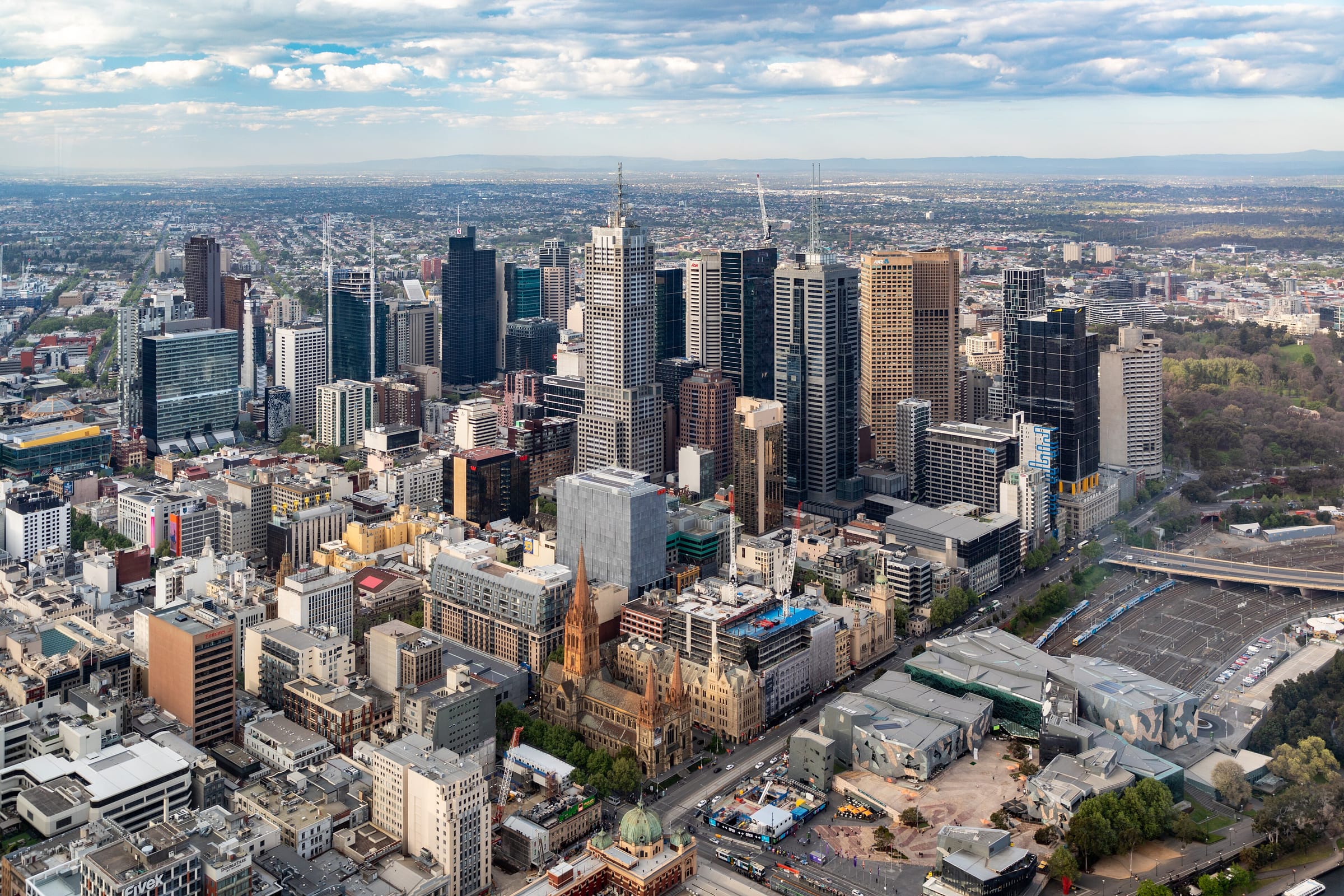
Laneways, Coffee and a City of Culture
Melbourne is the capital of the state of Victoria in southeastern Australia, known for its coffee culture, laneways, street art, sport and arts scene. Founded in 1835 and enriched by the Victorian gold rush, it grew into a city of grand Victorian architecture, trams and arcades. The Royal Exhibition Building and Carlton Gardens are UNESCO World Heritage listed, and the Yarra River winds through the centre past the Arts Precinct, Southbank and the Melbourne Cricket Ground.
The city's identity is its food and its culture. Hosier Lane and Degraves Street are celebrated for street art and cafés, the Queen Victoria Market has traded since 1878, and neighbourhoods from Fitzroy and Collingwood to Carlton and Chapel Street offer restaurants from every continent. The National Gallery of Victoria, the Melbourne International Comedy Festival, Melbourne Cup Day and the Australian Open turn the calendar into a continuous celebration of art, music and sport.
Great Ocean Road, Wine Valleys and Phillip Island
Beyond the centre, Melbourne is an ideal base for day trips. The Yarra Valley and Mornington Peninsula are wine and cellar-door country, the Dandenong Ranges offer fern gullies and tea rooms, and Phillip Island is known for its nightly penguin parade. The Great Ocean Road, one of Australia's classic coastal drives, runs west to the Twelve Apostles and the surf town of Torquay, home of the legendary Bells Beach.
Back in the city, rooftop bars, speakeasies and chef-led dining rooms give hotels and boards plenty to promote. A tourist board could use that breadth to appeal to food lovers, sports fans and design-minded travellers. Many visitors pair Melbourne with the rest of Australia, including Sydney and the reef, or continue across the Tasman to New Zealand. For a longer Pacific journey, Fiji offers an easy beach finish.
Four Seasons in a Day and When to Come
Melbourne is famous for changeable weather, which locals shrug off with a layer and a flat white. Summer, December to February, is the season for festivals, outdoor cinema and the Australian Open; autumn, March to May, brings warm days and golden light for the food and wine festivals; and winter fills the galleries and AFL stadiums. Spring is the season of the Melbourne Cup and the Spring Racing Carnival.
Melbourne Airport, at Tullamarine, receives long-haul flights from Asia and the Gulf, with UK journeys typically taking more than 22 hours including a connection. The Skybus and rail links the airport to the centre, and the free City Circle tram makes the central district easy to explore. For hospitality partners, VisitMelbourne.co.uk is a ready showcase for the city's boutique hotels, restaurants and event calendar.
Where to Stay in Melbourne by Neighbourhood
Melbourne rewards a choice of base. The CBD puts guests within walking distance of laneways, Flinders Street Station, Federation Square and the trams, ideal for first visits and business. Southbank and the Docklands suit those who want river views and easy access to the Arts Precinct, while St Kilda adds a seaside promenade, a pier with penguins at dusk and a lively cafe strip. Fitzroy and Collingwood suit design-minded travellers and music fans, Carlton is known for Italian heritage on Lygon Street, and South Yarra and Toorak offer smart boutiques and tree-lined streets close to the Botanic Gardens.
Styles of stay range from grand Victorian-era hotels with marble lobbies to converted warehouses, boutique rooftop hotels and serviced apartments. Families often favour Southbank or St Kilda for space and parks, sports fans choose rooms near Richmond and Jolimont for the Melbourne Cricket Ground and Rod Laver Arena, and shoppers stay near the Bourke Street Mall and the Block Arcade. For a quieter base, Brighton and Williamstown offer bayside calm with a short train ride into town. Booking a few nights in the city then a countryside stay on the Mornington Peninsula or in the Yarra Valley gives a rounded experience.
Brunch Culture, Dumplings and a Festival Year
Melbourne's food scene is a reason to visit. Brunch is a local art form, with smashed avocado, ricotta hotcakes and filter coffee served in laneway cafes, while Chinatown's dumplings, Lygon Street's gelato and Victoria Street's pho show the migrant mix. Greek food shines in Oakleigh, Vietnamese in Richmond and Italian in Carlton. Markets such as Queen Victoria Market, South Melbourne Market and Prahran Market sell cheeses, oysters and fresh bread, and food trucks gather at festivals through summer. Coffee roasters have made the city a global reference for the flat white, and cooking classes at the markets are a popular visitor activity.
Culture fills the calendar. January brings the Australian Open, March the Formula One Grand Prix at Albert Park, and the Moomba festival along the Yarra. April has the Comedy Festival, and September the AFL Grand Final. Winter hosts the Melbourne International Film Festival and the White Night style lights, and spring brings the Melbourne Cup and Spring Racing Carnival. Museums include the NGV International, ACMI at Federation Square, the Immigration Museum and the Melbourne Museum. Live music venues in Fitzroy, Richmond and St Kilda keep gig culture alive, and street art walking tours reveal how the laneways change monthly.
Penguins, Peninsula Hot Springs and Coast Drives
Day trips are a strength. Phillip Island's penguin parade is a firm family favourite, and the Mornington Peninsula pairs beaches, cellar doors and Peninsula Hot Springs for a relaxing wellness day. The Yarra Valley, about an hour from the centre, offers cellar doors, cheese makers and hot air ballooning at dawn, while the Dandenong Ranges bring Puffing Billy steam train rides and fern gullies. Daylesford and Hepburn Springs, in spa country, suit couples, and Ballarat's Sovereign Hill brings the gold rush to life. Cyclists enjoy the Yarra Trail and Bay Trail, and golfers play the Sandbelt courses that rank among the world's best.
The Great Ocean Road is the obvious add-on, best treated as an overnight or two with stays in Lorne, Apollo Bay and Port Campbell. Twelve Apostles helicopter flights, Otway rainforest walks and surfing lessons at Torquay suit active guests. Melbourne also anchors wider trips: link it with Tasmania by a short flight, with Australia's reef and red centre, or with New Zealand and Singapore on the way. A airline stopover programme could showcase a two-night city break, while Fiji gives a quick tropical follow-on for those wanting a beach after the laneways.
Planning your stay
Melbourne is a walkable grid centred on the Yarra River, with trams that are free within the central zone. The laneways hold cafes, street art and small bars, the arts precinct has galleries and theatres, and suburbs such as Fitzroy, St Kilda and South Yarra each have their own character.
Many visitors use the city as a base for day trips, including the Great Ocean Road, the Yarra Valley wine region and the penguin parade at Phillip Island. Melbourne is the southern gateway to Australia, and the usual onward options are New Zealand, Fiji and the wider South Pacific.
When to go
The seasons are reversed from the UK. Summer runs from December to February and is the best period for beaches and outdoor events, with the Australian Open tennis held in January. Autumn from March to May is mild and popular for food and wine, and spring from September to November brings the spring racing carnival, including the Melbourne Cup on the first Tuesday of November.
Winter from June to August is cool and often wet, which suits galleries, restaurants and AFL football. The weather can change quickly through the day, so carry layers whatever the month.
Visa and quarantine
The Foreign, Commonwealth and Development Office says you must have a visa to visit Australia, and that British citizens can usually get an eVisitor visa, with no visa application charge or service fee, or an Electronic Travel Authority through the iOS or Android app. Australia requires your passport to cover the full length of your planned stay.
Australia has strict quarantine rules. You must complete an Incoming Passenger Card and declare risk goods such as food, animal products and plant material, including wooden articles, or dispose of them in the airport bins. There is no non-stop flight from the UK, and one-stop journeys typically take around a day, so check the total journey time with your airline. Flights arrive at Melbourne Airport at Tullamarine.
Bushfire, heat and weather
Smoke can accumulate far from a fire, including in urban areas and major cities, and can worsen respiratory conditions.
Water, wildlife and driving
Many beaches along the Great Ocean Road are unpatrolled outside summer, so take local advice before you swim.
You can use a UK photocard driving licence in Australia if you remain a temporary overseas visitor, and driving is on the left. Long drives, wildlife on roads and fatigue make driving risky, so plan stops.
Before you travel
Entry requirements and official travel guidance are updated regularly, so check the latest position with your government before booking. The sources we used are listed at the foot of this page.
Why Melbourne matters to the industry
Melbourne combines business, major events, education and visiting friends and relatives, which makes it a high-value destination for UK visitors. VisitMelbourne.co.uk lets a hotel group, airline or tourist board publish clear guidance on seasons, events and entry, and our AI platform carries it to searchers.
Our other destination guides compare Melbourne with rival city breaks, and the OTA page explains how booking platforms use content like this.
Questions travellers ask about Melbourne
When is the best time to visit Melbourne?
Summer from December to February suits beaches and events, autumn is mild, and spring brings the racing carnival. Winter is cool and often wet.
What can I not bring into Australia?
Declare food, animal products and plant material, including wooden articles, on the Incoming Passenger Card. You may have to dispose of them at the airport.
What is Melbourne best known for?
Melbourne is best known for its coffee culture, laneway street art, sport, festivals and food. The Melbourne Cricket Ground, Queen Victoria Market, Federation Square and the nearby Great Ocean Road are its best-known landmarks and experiences.
When is the best time to visit Melbourne?
Summer from December to February suits festivals and the Australian Open, while March to May is warm and colourful for food and wine events. November brings the Melbourne Cup and spring racing carnival.
Which Melbourne neighbourhood is best to stay in?
The CBD suits first-time visitors for laneways and trams, St Kilda suits seaside and cafe lovers, Southbank suits river views and the arts, and Fitzroy suits design and live music fans. South Yarra is good for boutiques and gardens.
What are the best day trips from Melbourne?
Phillip Island for the penguin parade, the Mornington Peninsula for beaches and hot springs, the Yarra Valley for cellar doors and ballooning, and the Great Ocean Road for the Twelve Apostles. Daylesford is a favourite spa retreat.
In the Visit Travel Group portfolio: VisitMelbourne.co.uk.