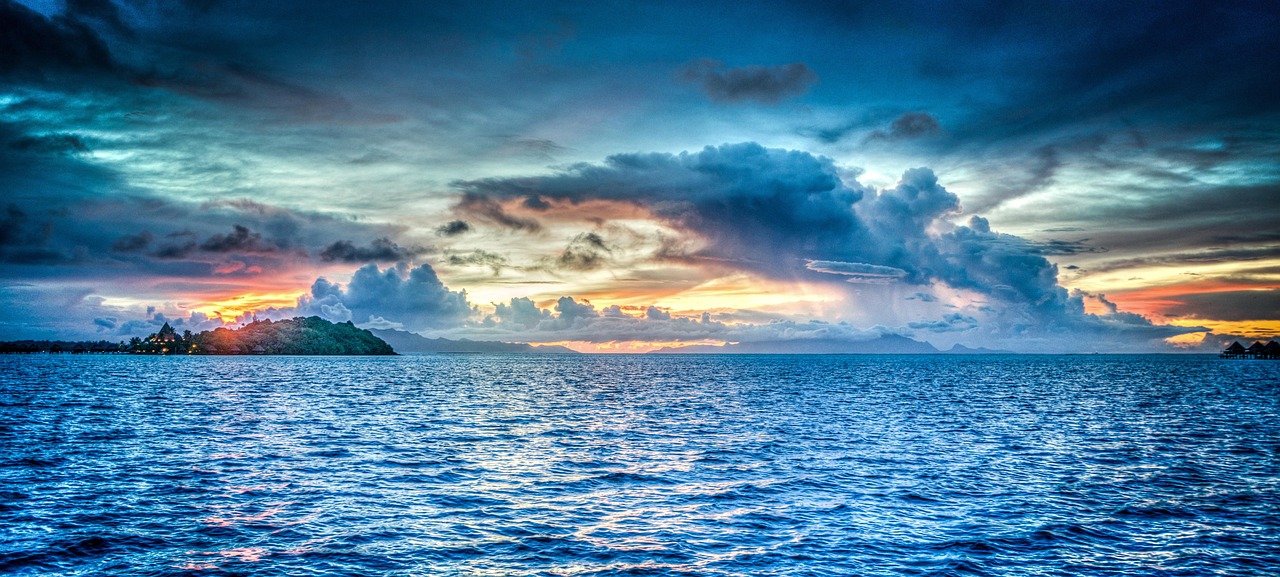
The Lagoon That Defines the South Pacific
Bora-Bora is a small volcanic island in the Society Islands of French Polynesia, known worldwide for its lagoon, overwater bungalows and the dramatic peak of Mount Otemanu. The main island is roughly 30 kilometres in circumference and encircled by a barrier reef of small islets called motus, which shelter water in shades of turquoise, jade and deep blue. Vaitape is the main village, and a ring road follows the coast past small beaches, churches and the remains of marae temple platforms.
The island's fame is partly historical. Polynesian navigators settled it long ago, and in the Second World War the United States used it as a supply base, leaving behind old gun emplacements that visitors can still find. Today the focus is on the lagoon: stand-up paddleboarding, outrigger canoe trips, snorkelling with rays and reef sharks, and sunset cruises. Local food includes poisson cru, fresh tuna, coconut bread and tropical fruit served beside the water.
Overwater Villas, Matira Beach and Motu Picnics
Stays are the headline. Overwater bungalows, which first appeared in French Polynesia, line the lagoon in clusters on the motus and the main island, many with glass floor panels, private decks and views of Otemanu. Matira Beach, a long curve of white sand at the south of the island, is the public favourite for sunset, and the Matira Point area has small guesthouses and restaurants for those who prefer a local rhythm.
Adventure and romance sit side by side. Guides take guests by 4x4 up to World War II cannons with panoramic views, lagoon excursions include motu picnics and shark and ray feeding stops, and scuba divers visit sites such as Tupitipiti. A hotel group or honeymoon specialist can show off the full range. Many visitors begin in Tahiti or French Polynesia more widely, and some continue to Fiji or the Cook Islands for a longer Pacific holiday.
When to Go and How to Get There
May to October is the favoured season, with drier, sunnier weather, lower humidity and calm lagoons. November to April is warmer and greener, with occasional showers and lower rates at some resorts. Bora-Bora is lovely at any time of year, but sunset colours are especially vivid in the dry months, and the island hosts events including outrigger races and the Heiva celebrations in July.
Bora-Bora Airport sits on a motu in the lagoon, reached by a short flight of about 50 minutes from Papeete on Tahiti. A boat transfer then takes visitors to Vaitape or directly to resorts. From the UK, travellers typically connect via Paris or Los Angeles to Tahiti. For airline and tourism partners, VisitBoraBora.co.uk offers a place to present the whole story clearly.
Which Corner of the Lagoon Is Yours
Bora-Bora's stays fall into distinct settings. The motus, small islets on the outer reef, hold the grandest resorts, each with overwater bungalows facing Mount Otemanu or the open ocean, reached by a short boat ride from the main island. The southern tip at Matira Point offers beach-level hotels and pensions with easy access to the white sands of Matira Beach and local restaurants. The northern and eastern main island has quiet bays and family-run guesthouses, and Vaitape village is a convenient base for travellers wanting shops, cafes and the ferry quay. Couples tend to prefer the motus, families the mainland beaches.
Styles vary by budget and mood. Overwater bungalows come with glass floors, lagoon-view decks and direct ladders into the water, while garden and beach villas suit those wanting more space and private pools. Pensions de famille give a warm, home-style stay at much lower prices, with meals cooked by hosts. Some resorts specialise in wedding and honeymoon packages, with ceremonies on the sand, while others focus on spa and wellness. Staying split between a motu resort and a mainland pension lets guests enjoy both the glamour and the daily life of Bora-Bora, and spend time in the village without leaving the lagoon behind.
Vanilla, Tuna and an Island of Craft
Bora-Bora's food blends the freshest local seafood with French technique. Poisson cru is on every menu, grilled mahi mahi arrives with vanilla or coconut sauces, and lobster, prawns and tuna carpaccio feature at resort restaurants. Roulottes in Vaitape serve steak frites and crepes at modest prices, and Matira Beach cafes are popular for lunch with the sea at your feet. Local fruit includes pineapple, banana and grapefruit, and coconut bread and fresh juices make breakfast memorable. Taha'a's vanilla, grown a short boat ride away, is used in desserts and sauces across the region.
Culture shows in dance, music and craft. Resort evenings feature Tahitian dance with drumming and ukuleles, while artisans sell pareos, woodcarvings, shell jewellery and Tahitian pearls from small shops in Vaitape. Tattoo artists carry on a tradition with deep meaning to Polynesians. The Heiva celebrations in July bring dance and canoe races, and the dry months from May to October bring calm, clear days. Humpback whales pass nearby from July to October, and manta ray encounters continue year-round. Sunset is a daily ritual, with the sky over Otemanu turning gold and pink while guests gather on decks and beaches.
Rays, Reefs and Excursions Beyond the Lagoon
Lagoon excursions are the core of any stay. Guided boats stop at shallow sandbars for snorkelling with blacktip reef sharks and stingrays, while scuba divers explore sites such as the Muri Muri manta cleaning station and Tupitipiti. Jet-ski circuits, parasailing, paddleboarding and outrigger canoe lessons add variety. A 4x4 tour climbs to the former US Navy gun emplacements for panoramic views, and a coastal walk or bicycle ride around the ring road shows the villages, marae platforms and small churches. Helicopter flights give a bird's-eye view of the colour gradient, and helicopter picnics on a motu are a favourite for special occasions.
Bora-Bora also works as part of a wider voyage. A day trip or short stay on Taha'a visits vanilla farms and pearl farms, while Raiatea and Huahine are reached by catamaran or flight. Many guests spend a few nights in Tahiti for culture, then Moorea, before ending on Bora-Bora, which fits perfectly with the wider French Polynesia story. For a longer trip, add Fiji or Hawaii. A hotel group can use this structure to pair a signature resort with local guesthouses, and Los Angeles is the usual outbound connection.
Planning your stay
Bora Bora has a single main island, Vaitape being the main village, with the 727 metre Mount Otemanu rising behind it. The barrier reef encloses a wide lagoon, and the airport sits on a motu, a small islet, so every arrival includes a boat transfer to the main island or directly to a resort.
Most visitors stay at a resort on a motu or at an overwater villa, and spend their days snorkelling, diving with rays and sharks, taking lagoon cruises and visiting Matira Beach. The island is part of French Polynesia, and almost every trip starts on Tahiti.
Getting there
Flights from the UK reach Papeete in Tahiti with at least one connection, usually via Paris or Los Angeles, where Air France and Air Tahiti Nui fly to Papeete. From Papeete, a short domestic flight takes you to Bora Bora, and the resort then collects you by boat. Allow time for a night in Tahiti on arrival or departure so that a delayed long-haul flight does not cost you a transfer.
Bora Bora is also a stop on itineraries that include the Cook Islands and Fiji. If you are combining islands, check baggage allowances on the small aircraft, which are often lower than on long-haul flights.
When to go
The drier season from roughly May to October brings more settled weather and lower humidity, and it is when most resort availability and prices peak. The wetter season from November to April is hotter, with higher humidity and more chance of heavy rain.
Overwater villas are priced at a premium, so compare what is included, such as transfers, meals and lagoon excursions, before you decide. Resorts on a motu depend on their own boats for every journey, which is worth checking if you have young children or limited mobility.
Entry rules
Bora Bora arrivals need a passport with at least three months' validity beyond the planned departure date. UK visitors can visit without a visa for up to 90 days for tourism or business, and must get permission from the French Consulate General before working.
A yellow fever vaccination certificate is required if you are coming from a country listed as a transmission risk. Declare anything that may be prohibited or subject to tax or duty, and check TravelHealthPro for vaccination advice before you travel.
Before you travel
Entry requirements and official travel guidance are updated regularly, so check the latest position with your government before booking. The sources we used are listed at the foot of this page.
Why Bora Bora matters to the industry
Bora Bora is one of the most recognised luxury names in the world and attracts detailed, high-value research. VisitBoraBora.co.uk lets a resort group, airline or tourist board publish clear answers on transfers, seasons and entry, and our AI platform carries them to searchers.
Our destination guides set Bora Bora against other luxury lagoons, and the OTA page shows how booking platforms handle content like this.
Questions travellers ask about Bora Bora
How do I get to Bora Bora from the UK?
Fly to Papeete on Tahiti with at least one connection, then take a short domestic flight to Bora Bora. Resorts arrange a boat transfer from the airport on a motu.
Do UK citizens need a visa for Bora Bora?
British visitors can stay up to 90 days for tourism or business without a visa, provided the passport is valid three months past the planned departure.
What is Bora-Bora best known for?
Bora-Bora is best known for its turquoise lagoon, the volcanic peak of Mount Otemanu and its overwater bungalows. It is a favourite honeymoon island, with snorkelling among rays and reef sharks, sunset cruises and white-sand Matira Beach.
How do I get to Bora-Bora?
Fly to Papeete on Tahiti, then take a domestic flight of about 50 minutes to Bora-Bora's airport on a motu. Resort boat transfers complete the journey, and arrival over the lagoon is part of the experience.
Where is best to stay in Bora-Bora for couples?
Couples usually choose an overwater bungalow on one of the outer motus, facing Mount Otemanu, with a private deck and lagoon access. Matira Point is a good alternative for beach access and local restaurants at lower prices.
What is there to do in Bora-Bora beyond the beach?
Take a lagoon tour with ray and shark snorkelling, a 4x4 trip to the wartime gun emplacements, a helicopter flight, a dive at the manta cleaning station, or a boat excursion to Taha'a's vanilla and pearl farms. Cycling the ring road is easy.
In the Visit Travel Group portfolio: VisitBoraBora.co.uk.