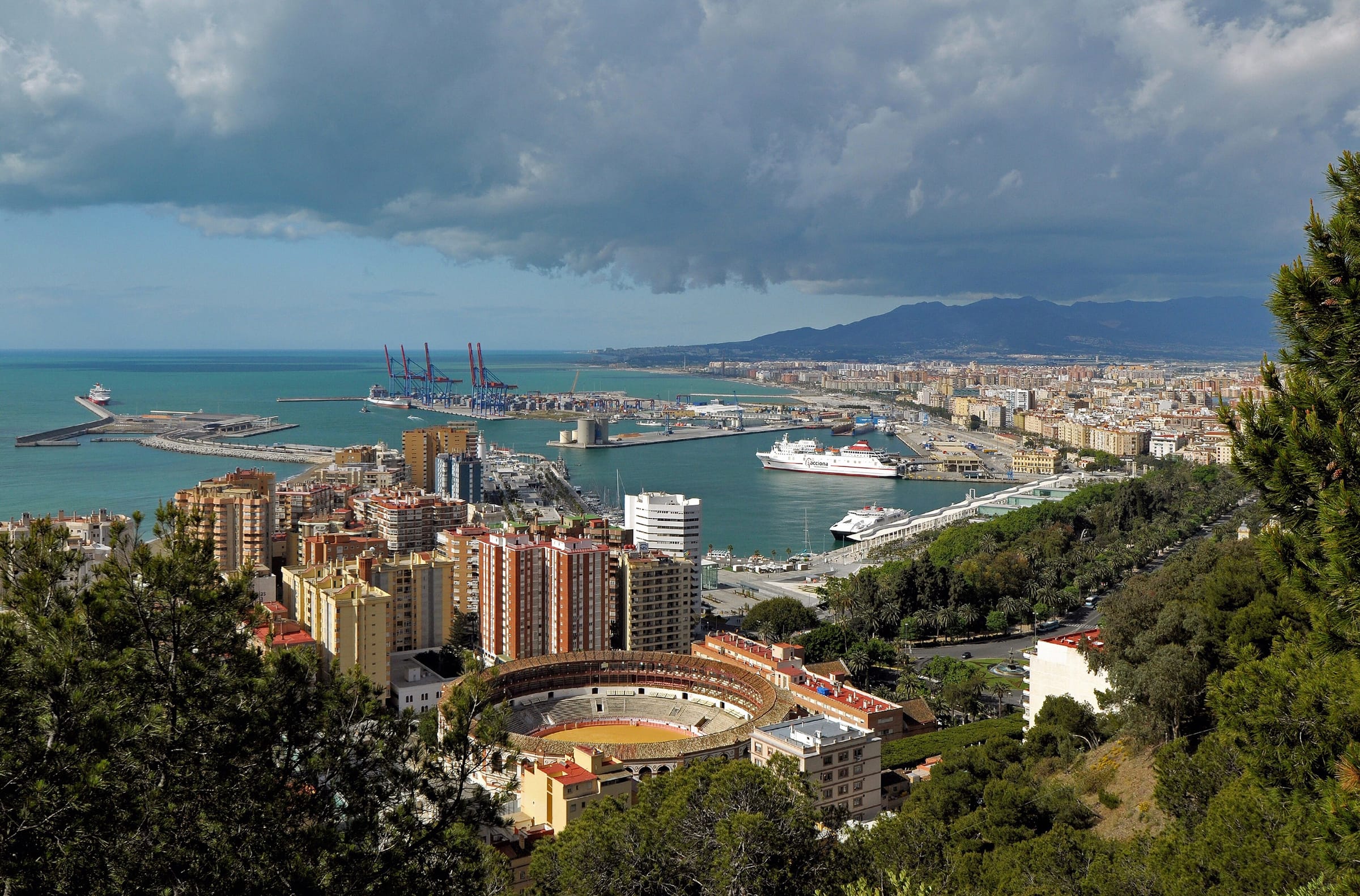
Picasso's Hometown and a Revived Harbour
Málaga is a port city on the Costa del Sol in the province of the same name in Andalusia, southern Spain, known as the birthplace of Pablo Picasso, as a historic Mediterranean harbour and as a lively year-round cultural city. Founded by the Phoenicians nearly three thousand years ago, it has Roman, Moorish and Christian layers visible within a few streets. The Alcazaba, an 11th-century Moorish fortress, rises above the Roman theatre, with Gibralfaro castle higher still and the cathedral, nicknamed La Manquita, in the old town.
The city has reinvented itself in recent decades as a museum destination. Picasso was born here in 1881, and the Museo Picasso Málaga opened in 2003 in a Renaissance palace in the old town, and the Centre Pompidou Málaga opened in 2015 at the harbour's glass cube. The revitalised Muelle Uno promenade, the Carmen Thyssen Museum and the Soho district's street art add further reasons to linger. Along the coast, Marbella offers a glamorous beach counterpart a short drive to the west.
Espetos, Beaches and Old-Town Evenings
Food is a delight. The signature dish is the espeto, sardines skewered on cane and grilled over open fires on the beach, and the city's tapas bars serve fried fish, ajoblanco, a cold almond soup, and Málaga's sweet wines. The Mercado de Atarazanas, in a Moorish-style gateway, is a great place to taste local produce, and the city's evenings, with lively plazas and rooftop bars, give it an easy social spirit. Beaches such as La Malagueta and Pedregalejo are close to the centre.
The calendar adds colour. Semana Santa brings some of Spain's most elaborate processions through the streets, and the August Feria fills the city with music and dancing. Málaga's Film Festival, held each spring, is an important showcase for Spanish-language cinema. A booking platform can package these experiences easily, and inland, the white village of Frigiliana, the gorge of El Chorro and the Moorish heritage of Córdoba all offer day or overnight extensions.
Year-Round Sun and an Easy Arrival
Málaga enjoys mild winters and warm, sunny summers, so city breaks work in almost every month, with spring and autumn especially comfortable for walking and sightseeing. Beach days are possible from late spring through to October, and the Christmas lights and winter sun draw many visitors. The compact centre is easy to explore on foot, and the old town's lanes lead naturally from museum to market to sea.
Málaga's airport is one of Spain's busiest and has many direct flights from the UK, typically taking around three hours. The AVE high-speed train links the city with Córdoba, Seville and Madrid. VisitMalaga.co.uk gives airlines and hotel groups a single home for this connectivity. Travellers can continue across Andalusia to Granada and Seville, or explore the wider Spain guide for the next stop.
Old Town Boutiques, Port Views and Beach Quarters
Málaga offers a stay to suit nearly every taste. The Centro Histórico is the natural base for first-time visitors, with boutique hotels in restored townhouses a few minutes from the cathedral, museums and tapas bars. Soho, the arts district beside the port, has colourful street murals, design hotels and a creative pace, and Muelle Uno gives access to the harbour, with a promenade, shops and the Centre Pompidou. La Malagueta, close to the bullring and city beach, suits those who like to walk to the sand, while Pedregalejo and El Palo are former fishing quarters with beach restaurants and a village atmosphere.
Styles of stay include rooftop-terrace hotels with views of the Alcazaba, seafront apartments, family-friendly beach resorts and elegant townhouses in Limonar. Beyond the city, Torremolinos and Benalmádena offer lively resort bases, and Rincón de la Victoria and Nerja provide quieter retreats. Golfers choose resorts in the hills, and larger groups often rent villas inland. A hotel group with a city or coastal property can present Málaga as a year-round base, and Marbella offers a polished beach contrast along the coast.
Sweet Wine, Verdiales and Midsummer Beaches
Málaga's food culture has plenty of depth. Ensalada malagueña, a salad of salt cod, orange, potato and olive, gazpachuelo, a warm fish soup with mayonnaise, and porra antequerana, a thick tomato cousin of salmorejo, are local classics, while boquerones victorianos, fresh anchovies marinated in vinegar, appear in every tapas bar. Málaga's sweet wines, made from Moscatel and Pedro Ximénez grapes, form part of its culinary heritage, and the city's raisins and almonds flavour desserts. Churros with chocolate and cafés serving the city's coffee order, from nube to sombra, are great fun to learn.
Culture is lively and varied. The Teatro Cervantes hosts concerts, theatre and dance, the Picasso birthplace house near the Plaza de la Merced is a charming stop, and the La Concepción botanical garden is an oasis of tropical plants. The Noche en Blanco in May fills the city with late-night art, the Night of San Juan on 23 June turns the beaches into bonfire parties, and the July sea procession of the Virgen del Carmen is a moving local tradition. Christmas lights on Calle Larios are a highlight of winter, and the verdiales folk music of the hills adds a rustic note.
Caminito del Rey, Antequera and Tangier by Ferry
Málaga is an excellent base for active and themed days. The Caminito del Rey, a walkway above the El Chorro gorge, is a thrilling morning, while El Torcal de Antequera offers strange limestone formations for easy walking. The Nerja caves in the east hold huge chambers with ancient paintings, and the Sierra de las Nieves has mountain trails. Sailing, paddleboarding and diving are available from the coast, cyclists enjoy the Costa del Sol promenade, and golfers have dozens of courses within an hour. The city's museums and rooftop terraces fill rainy days with colour.
Day trips are wide-ranging. The Dolmens of Antequera, a UNESCO site, the white village of Frigiliana, Ronda's gorge and Mijas' hillside lanes are close, and the AVE train reaches Granada and Seville quickly. Ferries run to Morocco from nearby ports, so Morocco is an exotic add-on, while the wider Andalusia guide covers the heartland. Guests with more time can combine the city with Córdoba or take the coast road to Huelva. A short break easily becomes a week by mixing city, mountain and beach days.
Planning your stay
Málaga is the capital of its province and has a compact historic centre, with a cathedral, a Roman theatre, the Alcazaba fortress and Gibralfaro castle above the port. Pablo Picasso was born here, and the Museo Picasso Málaga is one of several museums in the old town. The city beaches, including La Malagueta, are a short walk or bus ride from the centre.
Wikipedia describes the airport, 8 km south-west of the city, as the main international airport serving the Costa del Sol, and many visitors never stay in the city at all. Marbella lies 57 km from Málaga's main railway station, and the wider Andalusia guide shows how to link the coast with Seville and Granada. High-speed trains also connect Málaga with Córdoba, which makes a historic day trip.
When to go
Spring and autumn are warm and comfortable for sightseeing, and winter is mild by UK standards, which suits short breaks and long stays. July and August are hot and busy, with high prices on the beaches.
Getting there and entry rules
British Airways lists 2 hours 45 minutes as the London to Málaga flight time. Spain follows Schengen rules, so a passport issued under 10 years before the day you land, and valid for at least three months after you plan to leave, gets you through, with a stay of up to 90 days in any 180.
Before you travel
Entry requirements and official travel guidance are updated regularly, so check the latest position with your government before booking. The sources we used are listed at the foot of this page.
Why Málaga matters to the industry
Málaga is where many UK holidays on the Costa del Sol begin, so clear arrival and transfer information has real commercial value. VisitMalaga.co.uk lets an airline, hotel group or tourist board publish verified guidance, and our destination guides show how the approach works across markets.
Visitors who want a quieter coast after a few days in the city can look west to Huelva, and our Spain guide explains the national entry rules in more detail. A practical point for planners: arrival-day questions about luggage, transfer times, taxi fares and hire car collection come up in the weeks before travel, and answering them in plain English on a trusted page reduces repeat enquiries to reservations teams. Our AI platform makes that content available to the assistants travellers now ask.
Questions travellers ask about Málaga
How far is Marbella from Málaga?
Wikipedia puts Marbella 57 km from Málaga's main railway station, and the airport is 8 km south-west of the city. Buses, taxis and pre-booked transfers serve the coast, and many visitors hire a car.
How long is the flight from London to Málaga?
British Airways gives 2 hours 45 minutes, and Málaga is served from London and from regional UK airports.
Do I need a visa for Málaga?
No. A British passport allows 90 days in any 180 across the Schengen area. At Málaga the passport should be under 10 years old and have three months left after your planned departure.
What is Málaga best known for?
Málaga is best known as the birthplace of Pablo Picasso, for the Alcazaba and Gibralfaro castle, for its museums including the Museo Picasso and the Centre Pompidou, and for espetos, grilled sardines served on the beach.
How long is the flight from the UK to Málaga?
Direct flights from the UK to Málaga take around three hours, with services from many airports. The city's compact centre and beaches are only a short transfer from the airport, making it popular for short breaks.
Where should I stay in Málaga?
The Centro Histórico suits first-time visitors who want museums and tapas close by, Soho is ideal for art and design, and Pedregalejo and El Palo are best for beach restaurants. La Malagueta suits those who want the city beach nearby.
What is there to do in Málaga on a rainy day?
Málaga's museums are the answer, including the Museo Picasso, the Centre Pompidou, the Carmen Thyssen Museum and the Glass Museum. Cafés in the old town, the Atarazanas market and the Teatro Cervantes also make good indoor plans.
In the Visit Travel Group portfolio: VisitMalaga.co.uk.