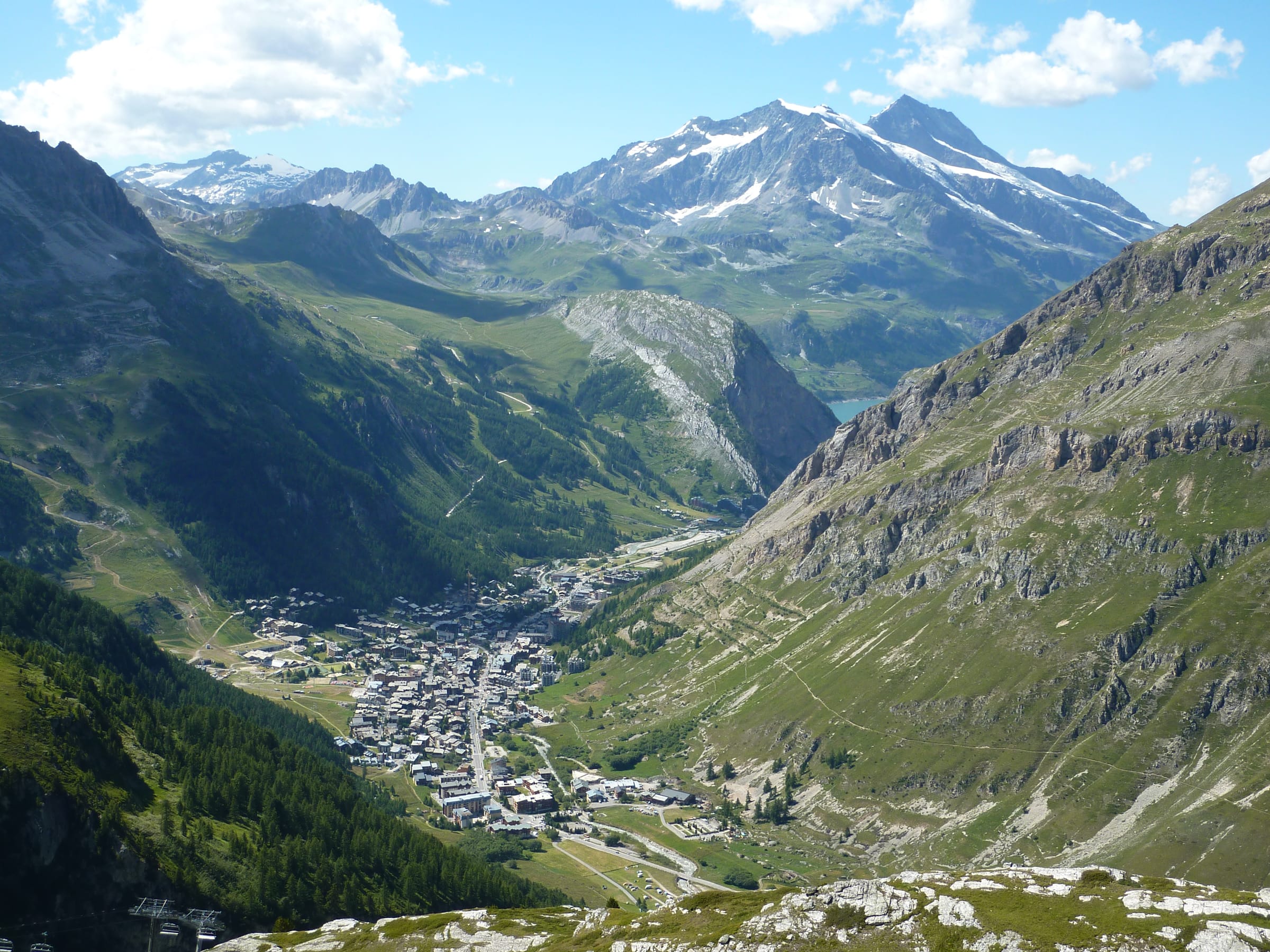
A Genuine Mountain Town at the Top of the Valley
Val d'Isère is a ski resort and village at the head of the Tarentaise valley in the French Alps, known for its high-altitude snow, its seriously good terrain and its character as a real mountain community. It sits at about 1,850 metres and shares the Espace Killy ski area with neighbouring Tignes, named after the French skiing champion Jean-Claude Killy, who was born here. The village retains a stone-and-timber Savoyard look, with a church, narrow lanes and lively terraces close to the lifts.
Its sporting history is a defining part of its identity. The Bellevarde Face is a famous race slope used for the Critérium de la Première Neige, an annual World Cup opener, and the resort hosted the 1992 Winter Olympics men's alpine events and the 2009 Alpine World Ski Championships. Nearby, the Col de l'Iseran, at around 2,760 metres, is one of the highest paved mountain passes in the Alps. For a quieter mood, Les Arcs and Méribel sit within an easy day's reach.
Espace Killy Slopes, Glaciers and Alpine Tables
The skiing is wide and varied. Espace Killy links Val d'Isère and Tignes through a long chain of lifts, with the Pissaillas glacier opening high snow in early and late season and an extensive off-piste playground for experienced skiers with a guide. Beginners and families have their own gentle slopes close to the village, while the confident find long descents from the Bellevarde and Solaise sectors, with views across the Vanoise and Grande Sassière National Reserve.
Evenings in the village are lively and convivial, with after-ski terraces, cosy bars and restaurants serving Savoyard classics such as fondue, raclette and tartiflette alongside refined modern cuisine. Summer is quieter and greener, with road cycling over the Iseran, walking in the high pastures and visits to nearby mountain refuges. A tourist board or valley partner can use the resort's racing heritage and high-altitude reliability as a compelling story for skiers, while Courchevel offers a more polished neighbour for those seeking glamour.
Seasons, Access and the Wider Alps
Val d'Isère is among the earlier resorts to open, with skiing typically starting in late November and continuing into early May on the higher slopes. That long, reliable season, plus the glacier access, makes it popular for early-winter trips and spring skiing. Summer, from late June, sees the village reopen for walking and cycling, with the Iseran pass usually open for road trips during the warmer months.
Most guests fly to Geneva, Lyon or Chambéry and continue by road or shared transfer, and a direct snow train from London reaches Bourg-Saint-Maurice in winter, from where a coach runs up the valley. VisitValDisere.co.uk gives airlines and rail operators a single home for those routes. Beyond the valley, Chamonix and Zermatt offer rewarding extensions across the Alps.
La Daille, Le Fornet and the Village Heart
Val d'Isère is really a family of neighbourhoods, each with its own appeal. The village centre has the liveliest streets, with shops, bakeries, terraces and the Olympique cable car close at hand, and it suits groups of friends and those who like to step out of the door into the evening. La Daille, at the foot of the Bellevarde Face, is the practical, slopeside choice for skiers who want the lifts first. Le Laisinant and Le Joseray give a quieter, residential feel, and Le Fornet, at the top of the valley, is a small hamlet with its own access to the high slopes.
Styles of stay range from stone-and-timber chalet-hotels with spas and warm interiors to catered chalets, apartment residences and family-run guesthouses. Many properties offer ski rooms, boot warmers and shuttle buses, and the free village bus makes it simple to move between districts. Across the pass, Tignes brings a more modern, high-altitude alternative, with Tignes Le Lac and Val Claret offering ski-in, ski-out convenience. A hotel group with an Alpine property can show guests exactly which neighbourhood matches their pace, and Les Arcs makes a good comparison across the valley.
Savoyard Kitchens, Chapels and Mountain Festivals
The table in Val d'Isère is generous and local. Beaufort d'alpage, made in summer pastures, is a prized regional cheese, and farcement, diots, crozets and tarte aux myrtilles appear on menus from mountain huts to bistros. Cafés and bakeries in the village centre serve warm pastries, and honey and nut cakes make popular gifts. Génépi, the herbal mountain liqueur, belongs to the valley's culinary heritage and is often offered at the end of a long dinner, and cosy dining rooms with timber panelling add to the feeling of a proper mountain evening.
Culture here is rooted in the high valley. The village's historic chapel stands among the chalets, the Maison de Val d'Isère displays local life through photographs and tools, and the Tarentaise Baroque trail leads to richly painted churches lower down. The winter season opens with the early World Cup races on the Bellevarde Face, followed by Christmas lights and torchlit descents, while spring brings long, sunny lunches. In summer, the Tour de France has often crossed the Col de l'Iseran, and cycling events, trail races and mountain festivals fill the calendar through July and August.
Glacier Skiing, High Passes and Italian Day Trips
The range of experiences is wide. From Tignes, the Grande Motte glacier offers summer skiing on high snow, and the submerged village beneath Lac du Chevril, which reveals itself when the water is lowered, adds a quirky chapter to the local story. Road cyclists tackle the Col de l'Iseran, hikers walk into the Vanoise and Grande Sassière reserves, and families enjoy lake picnics and pony rides. Winter adds heli-skiing introductions with local guides, snowshoe walks, ice driving and ski-touring routes, all within a short distance of the village.
Day trips are scenic and varied. Bonneval-sur-Arc, one of France's most attractive villages, lies over the Iseran pass and is a showcase of stone roofs and mountain craft, while Bourg-Saint-Maurice has a lively market. In summer the Little St Bernard Pass links to the Aosta Valley and Courmayeur, and Chamonix and Courchevel are within reach by road. The destination guides show how Val d'Isère can link with St Moritz for a grand Alpine circuit.
Planning your stay
Val d'Isère sits at about 1,850 metres, with slopes rising to over 3,400 metres, which gives it reliable snow from late November. It shares the Espace Killy with Tignes, with 300 kilometres of linked pistes according to the resort, and has a reputation for challenging terrain and a busy après-ski scene. The village has a traditional centre and a long main street, with chalets and hotels along the valley.
Nearby resorts include Courchevel and Méribel in the Trois Vallées, Les Arcs and Alpe d'Huez, and Chamonix for a different, mountaineering style. Each suits a different type of skier and budget.
When to go
Late November to early May is the season, with the most reliable snow from December to April, and the Grande Motte glacier at neighbouring Tignes opening for skiing from late June into early August. Christmas, New Year and February half term are the peak weeks at Val d'Isère, so lodging and lift passes cost most then and need booking early. March and early April offer long days and good snow at lower prices, and the season ends with spring events.
Check conditions and avalanche forecasts on the Météo-France website, because heavy snow can close roads and lifts, and transfers can take much longer in poor weather.
Getting there and entry rules
The nearest airports are Chambéry, Grenoble and Geneva, with transfers of two and a half to four hours depending on the airport and the day, and the road over the Col de l'Iseran is closed in winter. Book transfers for Saturday changeovers early. Flights from London to Geneva take about one hour 50 minutes.
Check two dates on your passport before Val d'Isère: it must be less than 10 years old at arrival and valid for three months beyond your departure from the Schengen area. Declare cash worth 10,000 euros or more.
Off-piste and insurance
Take a guide for off-piste terrain, and wear a helmet.
In Savoie and Haute-Savoie, you may need to be transferred to Switzerland for treatment, which can affect your cover, so read the policy before you travel.
Before you travel
Entry requirements and official travel guidance are updated regularly, so check the latest position with your government before booking. The sources we used are listed at the foot of this page.
Why Val d'Isère matters to the industry
Val d'Isère has a loyal, high-spend British audience that books through tour operators, chalet companies and online agencies. VisitValDisere.co.uk lets a hotel or chalet group, tourist board or airline publish clear answers on snow, transfers and costs, and our OTA partnerships show how bookings follow.
For Val d'Isère alongside the other Alpine resorts, see our destination guides and AI platform.
A practical note for planners: the Saturday changeover concentrates most arrivals into a few hours, so transfer firms, chalet hosts and hotels all work to the same timetable. Content that explains arrival-day timings, luggage limits on transfers and where to hire equipment answers questions that visitors ask in the weeks before they travel, and it reduces repeat enquiries to reservations teams.
Questions travellers ask about Val d'Isère
How do you get to Val d'Isère from the UK?
Fly to Geneva, Chambéry or Grenoble and take a transfer of roughly two and a half to four hours. Book transfers early for Saturday changeovers.
When is the best time to ski in Val d'Isère?
December to April has the most reliable snow, with January to March the best. March and early April offer long days and lower prices.
Do I need a visa for France?
A UK visitor needs no visa for Val d'Isère on a stay of up to 90 days in any 180-day period. Check two dates on your passport before Val d'Isère: it must be less than 10 years old at arrival and valid for three months beyond your departure from the Schengen area.
What is Val d'Isère best known for?
Val d'Isère is best known for its high-altitude snow, the Espace Killy ski area shared with Tignes, and its racing heritage, including the Bellevarde Face, the 1992 Winter Olympics men's alpine events and the 2009 Alpine World Ski Championships.
When is the best time to visit Val d'Isère?
The ski season typically runs from late November to early May, with reliable snow thanks to the altitude and the Pissaillas glacier. Summer, from late June, suits walking and road cycling, including rides over the Col de l'Iseran.
Where should I stay in Val d'Isère for easy skiing?
La Daille is the practical choice for direct slope access at the foot of the Bellevarde Face, while Le Fornet suits those who prefer a small hamlet. The village centre is best for restaurants and evening atmosphere.
What can I do in Val d'Isère in summer?
Summer offers road cycling over the Col de l'Iseran, walking in the Vanoise and Grande Sassière reserves, glacier skiing at nearby Tignes, mountain biking and visits to Bonneval-sur-Arc. The village is quiet, green and welcoming.
In the Visit Travel Group portfolio: VisitValDisere.co.uk.