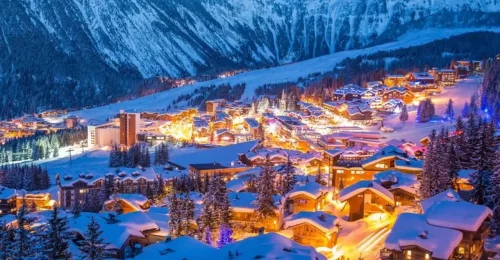
Courchevel 1850 and the Art of Alpine Polish
Courchevel is a ski resort in the Tarentaise valley of the French Alps, part of Les Trois Vallées and known for its refined hotels, its concentration of Michelin-starred restaurants and fast access to some of the best-groomed slopes in Europe. The resort is made up of villages named for their altitude: Courchevel 1850 at the top, then 1650, 1550 and 1300 below. Developed from the late 1940s as a purpose-built resort, it was planned around the slopes, which is why lifts, boutiques and chalet-hotels sit so neatly together.
At 1850, the atmosphere is polished but easy. Ski-in, ski-out chalets, spas and boutiques line the main streets, and the resort's altiport, with its distinctive short, sloping runway, is one of the most photographed in the Alps. Courchevel's slopes also hosted events at the 1992 Albertville Winter Olympics, with the ski jumps still visible above the valley. Neighbouring Méribel offers a more timber-clad, chalet-village feel, while Val d'Isère across the range suits those who want a more mountaineering mood.
Three Valleys Skiing and Tables Worth the Trip
The ski area is the headline. Les Trois Vallées is among the largest linked ski domains in the world, with roughly 600 kilometres of pistes, and Courchevel is its most direct gateway. Wide, well-groomed runs suit all levels, from gentle beginners' slopes at 1550 and 1650 to long, fast descents toward Méribel and Val Thorens. Families, groups and couples all find a version of the resort that suits them, and ski schools and mountain guides are part of the fabric of every village.
Dining sets Courchevel apart. The resort has long attracted ambitious chefs, and its restaurants range from mountain-hut lunches serving local cheeses and charcuterie to tasting menus from some of France's best-known kitchens. Savoyard staples such as reblochon, tartiflette and génépi round out the experience. A hotel group with a Courchevel property can build a compelling story around its spa, its table and its position on the slopes, and visitors comparing options often look at Les Arcs for a more modern, family-minded alternative.
Seasons, Access and Beyond the Valley
Skiing runs from December through to April, with the Christmas and February holiday weeks at their most animated. Summer brings an altogether quieter Courchevel: walking, mountain biking, golf and open-air music in a landscape of alpine meadows, with the high peaks of the Vanoise National Park close at hand. The resort suits guests who want a polished mountain base in either season, and its village structure makes it easy to choose the altitude and pace that suit you.
Most guests fly to Geneva or Lyon and continue by road or transfer to the Tarentaise valley, with the altiport and nearby airfields serving private and charter flights. VisitCourchevel.co.uk gives airlines and tour operators a single home for those connections. For visitors extending a French Alps trip, Chamonix and the Mont Blanc massif lie a little further north, and the Swiss resort of Verbier is a rewarding next stop.
Four Altitudes, Four Ways to Stay
Choosing the right Courchevel village shapes the whole holiday. Courchevel 1850 is the showpiece, with ski-in, ski-out chalet-hotels, spas, boutiques and the lively Jardin Alpin area, and it suits couples and luxury travellers who want the best position on the mountain. Courchevel 1650, known as Moriond, is calmer and more family-minded, with direct slopes and a practical, friendly village centre. Courchevel 1550, or Village, keeps a traditional hamlet feel, and Courchevel 1300, Le Praz, is a quiet, wooded village beside the ski-jump complex that suits families and value-minded groups.
Styles of stay run from five-star palace hotels with private spas to catered chalets for friends and extended families, and from boutique inns to self-catering apartments close to the lifts. Many properties offer ski rooms, children's clubs and in-house chefs, so a family can arrive with little more than luggage. In summer the same buildings reopen with terraces, pools and golf packages. An AI platform can match each guest to the right altitude, whether they want a first-time ski week, a wellness break or a celebration with a large group, and Méribel offers a gentler neighbouring base.
Beaufort, Baroque Chapels and Winter Evenings
Beyond the famous restaurants, Courchevel's pleasures are rooted in the Tarentaise. Beaufort, the mountain cheese made from the milk of Tarine and Abondance cows, is the valley's pride, and farçon, a savoury potato dish, diots and tarte aux myrtilles turn up in mountain restaurants. Ravioles, small cheese parcels, and creamy gratins fill the cold months with warmth. Honey, local bread and fresh pastries from the village bakeries make a good start to a day on the slopes, and the cafés at the top of each lift serve hot chocolate to match the views.
The wider valley adds culture. The Tarentaise is known for its Baroque chapels, with painted altars and gilded details found in villages such as Saint-Bon and Bozel, and the cathedral at Moûtiers tells a longer ecclesiastical story. Winter evenings revolve around torchlit descents, fireworks and the Christmas and New Year weeks, when the resort glows with lights, while the Easter holiday brings sunlit terraces and long lunches. Summer is quiet and green, with alpine pastures, flower walks and open-air concerts, and autumn is the resort's resting season, with soft light on the Vanoise.
Ski Touring, Wellness and Day Trips by Road
Courchevel offers more than downhill skiing. Snowshoe trails, cross-country circuits, dog-sled rides, ski touring with a guide and a large aquatic centre with pools and slides give families a full week of choices, while spas inside the hotels offer massage, steam and treatments after a day on the pistes. In summer, the Vanoise National Park is on the doorstep, with ibex and marmots on the high paths, and road cyclists climb the famed Col de la Loze, a spectacular pass above the resort. Mountain bikers, golfers and tennis players find facilities close to the villages.
Day trips make the stay richer. Annecy, with its old town and clear lake, and the thermal town of Brides-les-Bains are both within reach, and Albertville recalls the 1992 Olympic story. For a bolder circuit, Chamonix and the Aiguille du Midi lie to the north, Val d'Isère and Les Arcs to the east, and St Moritz a scenic route beyond. Builders of itineraries can mix a ski week with a lake weekend, and the destination guides show how neighbouring Alpine places fit together.
Planning your stay
Courchevel is named for its altitude levels: 1850 is the most upmarket village, with luxury hotels and shops, while 1650, 1550 and Le Praz are quieter and better value. Each level has direct access to the slopes, which makes it easier than most resorts to ski from the door.
The Trois Vallées link includes Méribel and Val Thorens, giving access to hundreds of kilometres of pistes in one pass. Other Alpine options include Val d'Isère, Les Arcs, Alpe d'Huez and Chamonix, and each offers a different kind of ski holiday.
When to go
The season runs from December to April, with the best snow from January to March. Christmas, New Year and February are the most expensive and crowded, while January and late March offer good snow and lower prices. Courchevel's slopes face several directions, which helps late in the season.
Check weather forecasts and avalanche risks on the Météo-France website, particularly if you ski off-piste. Heavy snow can close roads and delay transfers, so allow extra time on arrival and departure days.
Getting there and entry rules
The resort is served by Chambéry, Grenoble and Geneva airports, with transfers of about two to three hours, and by a small altiport at Courchevel for private flights. Flights from London to Chambéry and Geneva take around one hour 50 minutes. Book transfers early for Saturday changeovers.
The passport test for Courchevel follows Schengen rules: issued less than 10 years before you arrive, and valid for at least three months after the day you plan to leave the Schengen area. Declare cash or travellers cheques of 10,000 euros or more.
Before you travel
Entry requirements and official travel guidance are updated regularly, so check the latest position with your government before booking. The sources we used are listed at the foot of this page.
Why Courchevel matters to the industry
Courchevel is a luxury brand with a global audience, where trust and detail drive bookings. VisitCourchevel.co.uk lets a hotel group, tourist board or airline publish accurate answers on snow, transfers and costs, and our AI platform carries them to searchers.
See the other destination guides and our OTA page for how booking platforms use this content.
A practical note for planners: Courchevel's village levels confuse first-time visitors, who often book 1850 without realising the lower villages ski just as directly. Clear content on what each level offers, how to get between them and what the Saturday changeover involves answers questions asked in the weeks before travel, and it helps reservations teams, chalet hosts and transfer firms handle fewer repeat enquiries.
Questions travellers ask about Courchevel
What is Courchevel 1850?
It is the highest and most upmarket village in Courchevel, with luxury hotels and shops. The lower villages, such as 1650, 1550 and Le Praz, are quieter and better value.
How do you get to Courchevel from the UK?
Fly to Chambéry, Grenoble or Geneva, which take around one hour 50 minutes from London, then transfer by road in about two to three hours. Book early for Saturday changeovers.
Do I need a visa for France?
For a week in the Trois Vallées, no visa is required within 90 days in any 180-day period. The passport test for Courchevel follows Schengen rules: issued less than 10 years before you arrive, and valid for at least three months after the day you plan to leave the Schengen area.
What is Courchevel best known for?
Courchevel is best known for Courchevel 1850, its polished hotels and chalets, a strong restaurant scene including Michelin-starred tables, and direct access to Les Trois Vallées, one of the largest linked ski areas in the world.
When is the best time to visit Courchevel?
The ski season runs from December to April, with February and the Christmas weeks the busiest. Summer, from June to September, is quieter and ideal for walking, biking and the Vanoise National Park, so the best time depends on what you want from the mountains.
Which Courchevel village is best for families?
Courchevel 1650 and Le Praz at 1300 are popular with families for their gentler pace, direct slopes and practical facilities. Courchevel 1850 also has children's clubs and ski schools, so the choice depends on budget and atmosphere.
What can I do in Courchevel when I am not skiing?
Try the aquatic centre, hotel spas, snowshoe walks, dog-sled rides, torchlit evenings and a day trip to Annecy. In summer, walking in the Vanoise National Park, cycling the Col de la Loze and golf are popular choices.
In the Visit Travel Group portfolio: VisitCourchevel.co.uk.