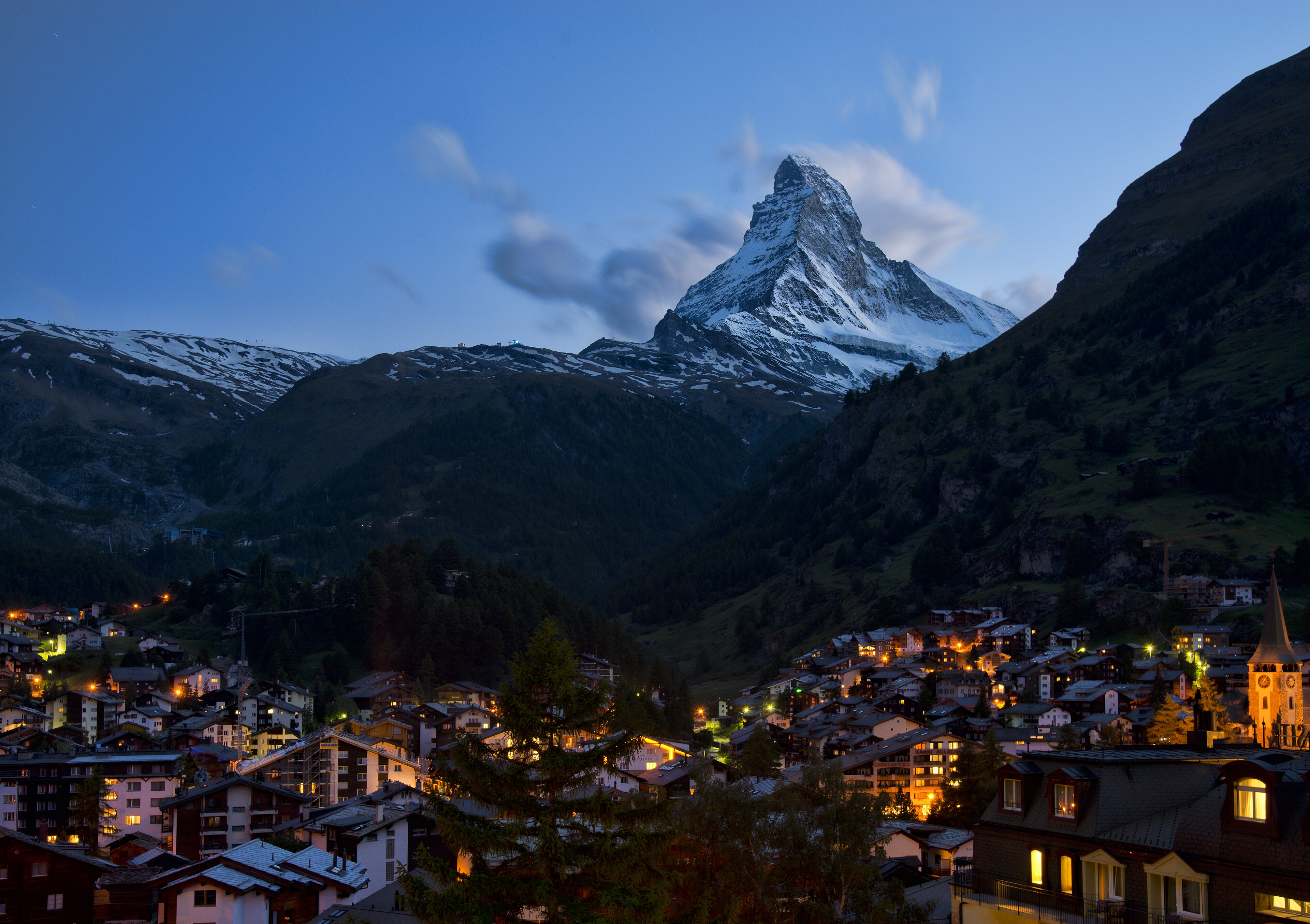
The Matterhorn and a Village Without Cars
Zermatt is a mountain village in the canton of Valais in southern Switzerland, known for the Matterhorn, a pyramid of rock rising to 4,478 metres, and for being largely car-free. Electric taxis and horse-drawn carriages move along the main street, and visitors arriving by road leave their cars in nearby Täsch and take the shuttle train. The result is a village with a clean, quiet atmosphere, wooden chalets, narrow lanes and a mountain framed at the end of almost every view.
The Matterhorn defines the place. It was first climbed in 1865 by a party led by Edward Whymper, an ascent that marked the end of the golden age of alpinism, and the story is told in the Matterhorn Museum in the village. Today the peak is a symbol of Switzerland itself. Across the glacier, the Italian side is reached via Cervinia, giving skiers a rare chance to ski between two countries, and Chamonix offers the French counterpart to Zermatt's alpine drama.
Gornergrat, Glacier Skiing and Alpine Tables
The mountain experiences are exceptional. The Gornergrat rack railway, opened in 1898, climbs to around 3,090 metres for a panorama of the Monte Rosa massif and dozens of other four-thousand-metre peaks, while the Matterhorn Glacier Paradise cable car rises to about 3,880 metres, the highest cable-car station in Europe. Skiing here reaches high glacier snow, and the area is linked with Cervinia in Italy for long descents between two countries. Summer brings hiking, climbing and glacier skiing on the highest slopes.
Table culture is another strength. Mountain huts serve rösti, raclette and Walliser dishes, while the village's restaurants range from traditional stübli to ambitious modern kitchens. Valais wines, many grown on steep terraces in the valley below, accompany meals. A hotel group with an alpine property can build its story around the Matterhorn view, the quiet car-free setting and the full range of summer and winter activity. Verbier provides a livelier contrast for those moving on across Valais.
Seasons, Trains and Onward Alpine Journeys
Zermatt works in both seasons. Skiing typically runs from November to April, with the glacier area offering snow earlier and later than most, and the summer walking season runs from June to September, with many paths open by July. The village is a stop on the Glacier Express, the slow scenic train between Zermatt and St Moritz, a route renowned for its viaducts and mountain views.
Getting here is straightforward and scenic: fly to Geneva or Zurich, then take a train through the Rhône valley to Visp and on to Täsch and Zermatt, a rail journey of a few hours with panoramic windows. VisitZermatt.co.uk gives airlines, rail operators and hotels a single home for the whole route. Travellers can continue on the Glacier Express to St Moritz, or cross to Italy and Courmayeur, for a grand Alpine circuit.
Chalets, Grand Hotels and Car-Free Corners
Zermatt offers an unusually varied choice of places to stay, and the car-free layout means most are within a short walk or electric taxi ride. The village centre, along the Bahnhofstrasse, has grand hotels, boutiques and restaurants, ideal for those who enjoy a lively evening. Winkelmatten, on the quiet side of the river, is a quieter residential neighbourhood of chalets, with the Sunnegga lift close by. Blatten and Findeln, small clusters of old timber houses on the slopes, offer a rustic mood, and Riffelalp, reached by a mountain railway, is a secluded retreat with a close Matterhorn view.
Styles range from historic grand hotels that have welcomed travellers for generations to boutique chalet-hotels, family guesthouses and self-catering apartments. Spas, indoor pools and rooftop terraces are common, and many hotels have a Matterhorn-facing balcony or a restaurant with the peak in the window. Täsch, down the valley, offers practical, good-value stays with a short shuttle-train ride to the village. A tourist board can present these neighbourhoods as distinct options, and Lake Como or Italy make graceful onward legs for guests continuing to the south.
Walliser Rye Bread, Music and Mountain Culture
The Valais table has its own specialities beyond rösti and raclette. Walliser Roggenbrot, a dense rye bread protected by origin, is a staple of mountain lunches, and air-dried beef and ham are sliced paper-thin and served with pickled onions. Käseschnitte, a baked cheese toast, is a warm favourite, and apricot tarts and nut cakes feature on café counters. Mountain huts serve soups and stews, and local honey and cheeses from nearby alps are popular souvenirs. Chocolate, of course, is part of the Swiss pleasure, and Zermatt's cafés make a point of warming up their guests.
The village also has a cultural calendar. Zermatt Unplugged, held in April, brings acoustic and rock artists to stages across the village, while the Zermatt Festival in late summer features classical music in the mountains. The Matterhorn Ultraks trail run and the Matterhorn Valley's cheese and cattle gatherings give the autumn a local flavour. The church of St Mauritius, with its churchyard memorials to mountaineers, adds a quiet, reflective stop, and the narrow Hinterdorf lanes, with their dark old barns on stilts, show how farming life once looked.
Five Lakes, Alpine Peaks and Valais Day Trips
Active guests are well served. The 5 Lakes Walk from Blauherd passes alpine lakes, including the Stellisee, where the Matterhorn reflects in still water on calm mornings, and the Gornergrat and Rothorn lifts open walking and viewpoints all summer. The Klein Matterhorn, reached by cable car, offers snow even in July, and the Europaweg is a celebrated high-level trail for experienced walkers. Cyclists, climbers and paragliders also find routes, and families can enjoy the marmot trail and the Riffelsee, a picture-book lake with a mountain reflection.
Day trips complement the village. Saas-Fee, a car-free village beneath glaciers, is a short journey away, Visp and Brig offer castles and old towns, and the Glacier Express departs from Zermatt for a day on the rails. Across the glacier, Courmayeur and Aosta are accessible via the Italian side, Verbier and Chamonix provide neighbouring mountain moods, and St Moritz closes the Alpine circuit by train. A week built around two high lifts, a lake walk and a rail journey makes Zermatt a complete, rewarding stay.
Planning your stay
Private vehicles stop at Täsch, where the Matterhorn Terminal has about 2,100 covered spaces and shuttle trains run every 20 minutes for the 12-minute ride up the valley. Inside the village, electric taxis, horse-drawn carriages, bicycles and a free e-bus do the work. Zermatt stands at 1,608 metres, and the Klein Matterhorn cable car climbs to 3,883 metres, serving a glacier ski area that stays open through summer.
The cable car also crosses into Italy, so Cervinia is reachable on skis and is a cheaper base on the other side of the border. For a different Alpine character, compare Verbier, St Moritz, Kitzbühel and St Anton.
When to go
Winter skiing is usually at its most dependable from January to March, helped by the glacier terrain far above the village. Hotel rates peak over Christmas, New Year and the February school holidays, so midwinter weekdays and late March are the quieter, cheaper options. Summer brings hikers and climbers onto marked trails and cable cars with the Matterhorn in view.
Getting there and Swiss entry checks
Fly to Geneva or Zurich (check current schedules for London services), then continue by train. The Zermatt tourist office gives about 3.5 hours from Zurich Airport and about 4 hours from Geneva Airport, ending with the Täsch shuttle or the through train. It is the simplest route if you would rather not drive in winter conditions.
Switzerland is outside the EU but applies Schengen rules. Tourist stays are limited to 90 days in any 180.
Rules, costs and getting around
Switzerland is expensive: lift passes, restaurants and hotels cost more than in neighbouring countries, so compare the total cost of your stay, including transfers, ski hire and mountain restaurant prices, against Italian and French alternatives before you book.
Before you travel
Entry requirements and official travel guidance are updated regularly, so check the latest position with your government before booking. The sources we used are listed at the foot of this page.
Why Zermatt matters to the industry
Zermatt is a global brand where a small number of hotels, lift operators and transfer companies serve a high-spend, repeat audience. VisitZermatt.co.uk lets a hotel group, tourist board or airline publish clear, current answers on snow, transfers and costs, and our AI platform carries them to searchers.
Our destination guides set Zermatt beside the other Alpine markets it competes with.
Questions travellers ask about Zermatt
Can you drive to Zermatt?
Not into the village. Cars stay at Täsch, and a shuttle train takes about 12 minutes to cover the rest. Most visitors take the train from Geneva or Zurich all the way.
When is the best time to ski in Zermatt?
January to March is usually the most dependable stretch, and the glacier terrain extends the season. Prices climb over Christmas, New Year and the February holidays.
What is Zermatt best known for?
Zermatt is best known for the Matterhorn, which rises to 4,478 metres, and for being a largely car-free village. It also offers the Gornergrat railway, high glacier skiing, and runs across to Cervinia in Italy.
How do I reach Zermatt from the UK?
Most visitors fly to Geneva or Zurich and then take a scenic train through the Rhône valley to Visp, changing for Täsch and the final shuttle into Zermatt, which is largely car-free. The rail journey takes a few hours.
Where should I stay in Zermatt for Matterhorn views?
Many hotels in the village centre and in Winkelmatten have Matterhorn-facing rooms, while Riffelalp and the slopes above offer the closest views. Booking a room with a balcony facing the peak is the simplest way to wake up to it.
What can I do in Zermatt in summer?
Summer offers hiking the 5 Lakes Walk, riding the Gornergrat railway, glacier skiing on the Klein Matterhorn, climbing, cycling and the Zermatt Festival. Day trips to Saas-Fee and the Glacier Express add variety.
In the Visit Travel Group portfolio: VisitZermatt.co.uk.