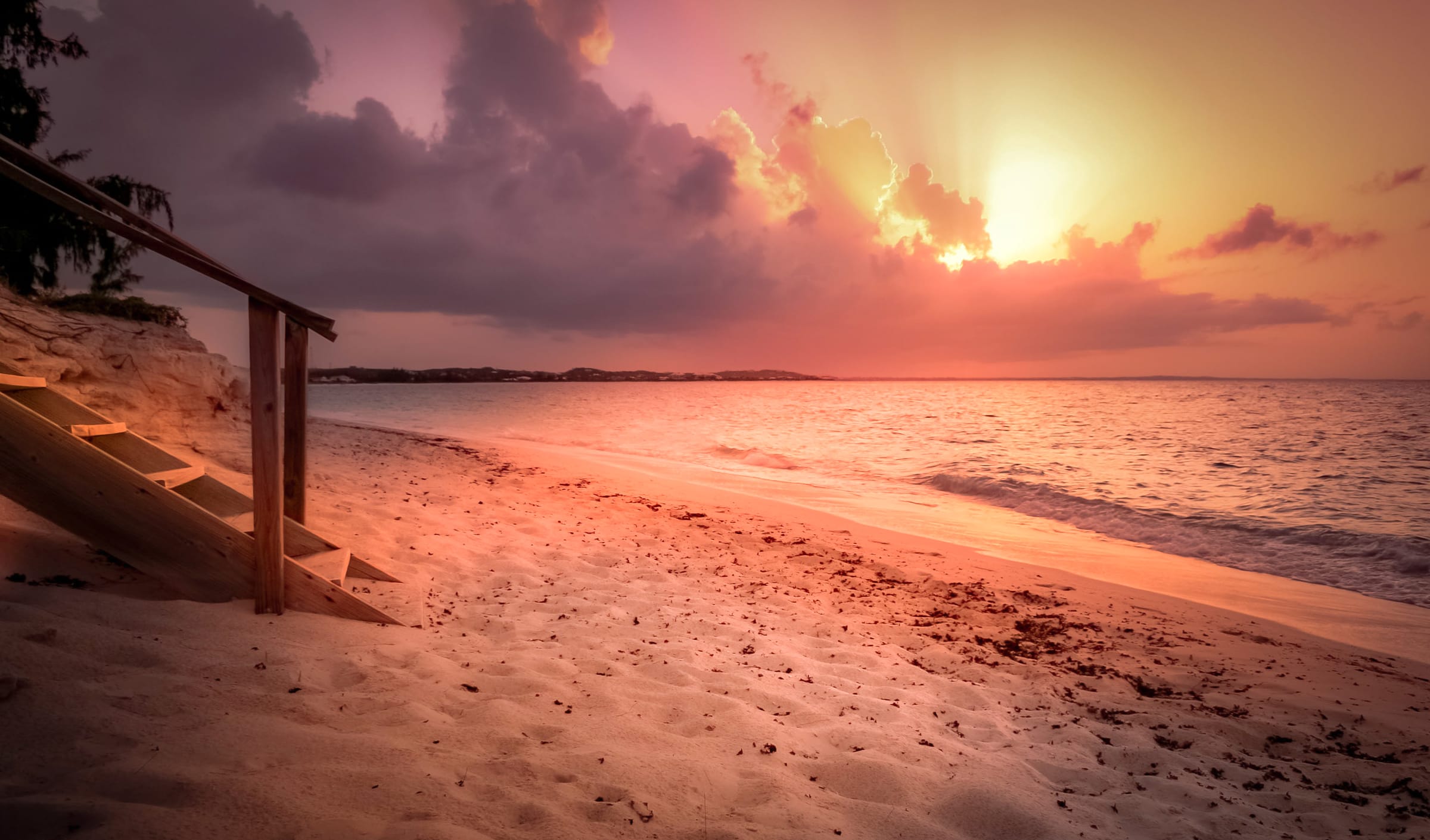
A Ribbon of Pale Sand in Turquoise Shallows
Turks and Caicos is a British Overseas Territory in the Atlantic, south-east of the Bahamas, known for powder-white beaches, clear turquoise water and some of the best coral reef conditions in the region. The group has more than 40 islands and cays, though only about eight are inhabited, with Providenciales the busiest and Grand Turk the seat of government. The name comes from the Turk's-head cactus and from 'caya hico', a Lucayan phrase for island chain. The population is a little over 45,000, and the mood is polished but easy.
Grace Bay, on the north shore of Providenciales, is the territory's showpiece: a long, gentle curve of sand backed by low-rise resorts and sheltered by a reef that keeps the water calm. Chalk Sound National Park, further inland, is a lagoon of vivid turquoise with tiny limestone islets. Neighbouring Bahamas lie to the north-west and Dominican Republic to the south, so the territory is easily included in a Greater Antilles itinerary.
Grand Turk, Salt Cay and Middle Caicos
Beyond Providenciales the islands slow down. Grand Turk's Cockburn Town has historic stone buildings, a lighthouse and a waterfront of small restaurants, and its coral wall drops steeply just offshore, a magnet for divers. Salt Cay, once a salt-raking centre, is a quiet place of old salt ponds and wooden houses; from January to March, humpback whales pass through the Turks Island Passage and can be seen from boat trips. Middle Caicos, the largest island, has the Conch Bar Caves and long, empty beaches.
Local food leans on the sea. Conch, caught in the shallows, is served fresh in salads, fritters and cracked conch, and spiny lobster and fish are everyday fare at beachside shacks, including the weekly fish fry on Providenciales. Kayaking among mangroves, kitesurfing and bonefishing add active options. A tourist board has a strong story here: a small territory with a very high concentration of beautiful scenery, from Cayman-style diving to quiet cays.
When to Go and How to Arrive
December to April is the driest and most popular period, with warm, sunny days and cooler evenings, while May to November is hotter and quieter, with lower rates and excellent visibility for boat trips. The humpback whale season from January to March on Salt Cay and Grand Turk is a seasonal highlight. Providenciales is the main base, with hotels, villas and restaurants concentrated around Grace Bay, Leeward and the marina, while Grand Turk and the outer cays offer a calmer, small-scale stay.
Providenciales International Airport is the main gateway, with services from North America, and flights from the United Kingdom operate seasonally. Inter-island flights and boats link the other islands. Visitors often add St Barths or Anguilla for a longer luxury Caribbean journey. A name like VisitTurksAndCaicos.co.uk gives hotels and airlines one home for the territory's beaches, reefs and quiet cays, in a single narrative that is simple to share.
Where to Stay: Grace Bay, Private Cays and Quiet Islands
Turks and Caicos is a place where the style of stay is part of the story. On Providenciales, Grace Bay is the heart of the resort scene, with low-rise hotels, suites and condominiums set along the reef-sheltered sand, an easy base for families, couples and anyone who likes restaurants within walking distance. Leeward, on the quieter eastern side, has villas and marina living, and Long Bay Beach, with its shallow flats, is the kitesurfers' favourite. Sapodilla Bay and the north-west point suit travellers who prefer a calm bay and sunset terraces.
Beyond Providenciales, the range widens. Pine Cay and Parrot Cay are private-island retreats for guests who want seclusion and personal service, and North and Middle Caicos have simple villas and cottages beside empty beaches and limestone cliffs. On Grand Turk, small inns and guesthouses in Cockburn Town suit divers and history lovers, while Salt Cay offers a handful of intimate stays in a wooden-house village. Large groups and multi-generational families usually choose villas with pools and private beach access, and honeymooners often split a stay between a lively Grace Bay base and a quiet outer island.
Ripsaw Rhythms, Conch Festivals and Island Craft
The islands' music is distinctive. Ripsaw, the national sound, is played with a carpenter's saw scraped by a metal blade, alongside goatskin drums and accordion, and it is the heartbeat of local festivals. Maskanoo, a Boxing Day and New Year Junkanoo-style parade of masks and costumes, brings Providenciales and Grand Turk to life, while the Music and Cultural Festival and regattas in the warmer months extend the calendar. In late November, the Caicos Conch Festival at Blue Hills celebrates the shell with cooking contests, music and local craft stalls, and the weekly fish fry on Providenciales is a lively, family-friendly gathering.
Heritage is within easy reach. The National Museum in Cockburn Town displays finds from the Molasses Reef wreck, among the oldest European shipwrecks excavated in the Americas, and Salt Cay's windmills and salt ponds recall centuries of salt-raking. Local women weave silver palm straw into baskets and hats, which are sold at craft markets. Menus feature cracked conch, grouper, lobster in season and johnnycakes, with tropical fruit desserts and fresh coconut. Winter is the high season of sunshine and celebrations, spring and early summer bring regattas, and autumn offers quieter beaches and the conch festival.
Kiteboarding, Kayaks and Day Trips by Air or Boat
Active ideas are plentiful. Long Bay's shallow lagoon is a world-class kiteboarding site, and kayaking and paddleboarding in the green waters of Chalk Sound and the mangroves at Leeward are easy outings. Little Water Cay, a short boat ride from Providenciales, is home to rock iguanas on a boardwalk trail, and a conch farm on the island shows how the shell's famous meat is raised. Snorkellers enjoy Bight Reef near Grace Bay and Smith's Reef, while divers head for the Grand Turk wall, with its sheer drop-off, and the walls off Northwest Point. Golfers play a course at Provo, and sailing day trips visit remote cays.
Day trips and add-ons give variety. A short flight reaches Grand Turk or Salt Cay for history and whale season, and small boats and charter flights visit Middle Caicos for its caves and empty beaches. Longer routes can add Jamaica, Puerto Rico or Antigua to a Caribbean circuit, while Florida is the main gateway for many guests. A booking platform could assemble a week with a Grace Bay base, an outer-island night and a kiteboarding or diving session, giving travellers a clear picture of how much a small territory can hold.
Planning your stay
Providenciales, known as Provo, is where most visitors stay. Grace Bay is a long, shallow, calm beach with a reef close to shore, lined with resorts, restaurants and dive operators. It suits couples, families and anyone who wants a high quality beach holiday with excellent infrastructure.
Grand Turk, the capital island, is quieter, with a historic colonial centre, a cruise terminal, wall diving and, in winter, humpback whales passing offshore. Middle Caicos, North Caicos and Salt Cay are the quiet islands, with cave systems, empty beaches and very few services, ideal for travellers who want to get away from resorts for a day or longer.
When to go
December to April is the most popular period, with warm, dry weather. Humpback whales migrate past the islands from roughly January to March, which makes winter the best time for whale watching, particularly around Grand Turk. May to November is hotter, more humid and cheaper, and hurricane season runs from June to November, with the highest risk typically from August to October.
Prices are high throughout the year, and the best rooms on Grace Bay can sell out early for Christmas, New Year and Easter.
Entry rules and getting there
UK visitors can visit without a visa and are normally given permission to stay for up to 90 days. Your passport must be valid for the duration of your stay, and you may be asked to show a return or onward ticket. You need a permit to work on any of the islands. Because it is a British Overseas Territory there is no British Embassy, and the territory government supports you if you need help.
Flights from the UK take roughly nine to ten hours and usually involve a connection through a US hub such as Miami, with seasonal direct services in some years. The airlines that connect the territory benefit from clear information about routes, which is why airline partners matter to the destination.
Where to stay
Grace Bay is the premium choice for beach access and walkability, and hotels range from large resorts to boutique properties. Long Bay and Turtle Cove offer calmer, more local options, and villas on the north shore suit groups that want privacy. Grand Turk has a handful of small hotels and guesthouses and suits divers.
A hire car is useful on Provo, because the island is spread out and taxis can be expensive. The territory drives on the left, and the US dollar is the currency, which makes budgeting simple for UK visitors.
Because rooms are expensive, compare what is included before you book: transfers, beach furniture, water sports and breakfast can add hundreds of pounds to a week. Travellers choosing between islands often use an AI concierge to compare these details side by side, so hotels that publish clear, current information tend to be the ones recommended. Browse our other destination guides to see how the options compare.
Before you travel
Entry requirements and official travel guidance are updated regularly, so check the latest position with your government before booking. The sources we used are listed at the foot of this page.
Combining Turks and Caicos with other islands
It is a short hop to the Bahamas to the north west, and the Dominican Republic to the south, and the Cayman Islands offers another British territory option. See our Caribbean guide for more.
For businesses, a small territory with premium pricing depends on trust and accuracy: a hotel or tourist board on VisitTurksAndCaicos.co.uk can give travellers and AI assistants the verified detail they need before they commit, which is the idea behind our hotel partnerships.
Questions travellers ask about Turks and Caicos
Do UK citizens need a visa for Turks and Caicos?
No. UK visitors can usually stay up to 90 days without a visa. Your passport must be valid for the duration of your stay, and border officers may ask to see a return or onward ticket.
When can you see whales in Turks and Caicos?
Humpback whales pass the islands from roughly January to March, with Grand Turk one of the best places to see them. Book a licensed operator and check the season before you plan around it.
How long is the flight from the UK to Turks and Caicos?
Roughly nine to ten hours, usually with a connection through a US hub such as Miami. Direct services have operated seasonally in some years, so check the current schedule.
Is Turks and Caicos expensive?
Yes. It is a premium destination and prices are high throughout the year, particularly on Grace Bay. The US dollar is the currency, which makes pricing simple, but build the cost of eating out and transfers into your budget.
What is Turks and Caicos best known for?
Turks and Caicos is best known for Grace Bay on Providenciales, clear turquoise water, coral reef diving, humpback whale watching around Salt Cay and the historic charm of Grand Turk. It is a British Overseas Territory with a polished, relaxed atmosphere.
When is the best time to visit Turks and Caicos?
December to April is the driest and busiest season, with warm sunny days. January to March adds whale watching, while May to November is quieter with lower rates and good conditions for diving and boat trips.
Where should couples stay in Turks and Caicos?
Grace Bay on Providenciales suits couples who like restaurants and beach clubs, while Parrot Cay and Pine Cay suit those wanting seclusion. Grand Turk and Salt Cay are charming for couples who like history, diving and a slower pace.
What are the best day trips from Providenciales?
Take a boat to Little Water Cay for iguanas, join a sailing or snorkelling trip to the outer cays, fly to Grand Turk for the museum and wall diving, or drive to Chalk Sound for a kayak outing.
In the Visit Travel Group portfolio: VisitTurksAndCaicos.co.uk, CaicosIslands.co.uk, TurksCaicos.co.uk, Turks-Caicos.co.uk.