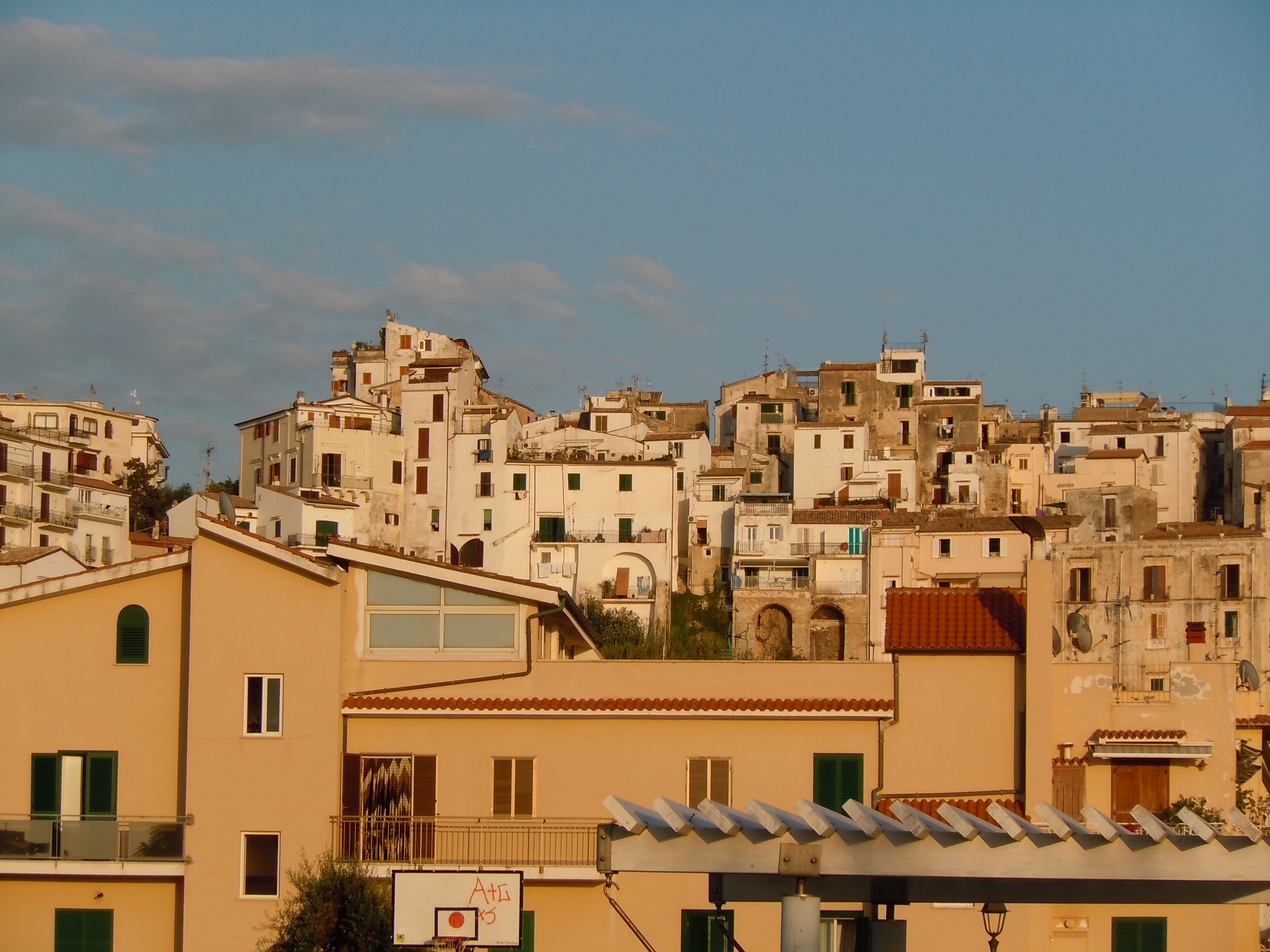
A White Town Above Two Golden Beaches
Sperlonga is a whitewashed coastal town in the province of Latina, in the Lazio region of central Italy, known for its sandy beaches, its dazzling old quarter and a Roman imperial grotto. It sits roughly halfway between Rome and Naples, on a rocky promontory that rises above the Tyrrhenian Sea. The old town, the centro storico, is a tangle of narrow stairways, arched passages and small piazzas, all in glowing white, with balconies hung with geraniums and views that open suddenly onto the water. Below, two long arcs of pale sand run either side of the headland, so there is always a sheltered beach whichever way the day turns.
History is close at hand. In the first century AD the Emperor Tiberius had a seaside villa here, built around a natural sea cave that served as a dining pavilion and was adorned with large sculptural groups drawn from the story of Odysseus. Those marble fragments, rediscovered in the 1950s, are now displayed in the Museo Archeologico Nazionale di Sperlonga, beside the ruins themselves. Above the town, the sixteenth-century Torre Truglia keeps watch over the coast. It is a rare combination: an imperial Roman site, a hill town and a seaside resort, all within a short stroll of one another.
Beach Days, Lanes and Tables by the Sea
Days here follow an easy rhythm. Mornings belong to the sand: the Spiaggia di Levante and Spiaggia di Ponente stretch for kilometres on either side of the promontory, with gently shelving shallows, beach clubs and open stretches in between. Afternoons are for wandering the old town's lanes, where small shops sell ceramics, local olive oil and linen, before an evening passeggiata along the seafront. The coast belongs to the Riviera di Ulisse, a name that recalls the legend linking Odysseus to this shoreline, and the regional park of the same name protects its hills and headlands just behind the town.
Tables are the other great pleasure. Restaurants along the lungomare and tucked into the old town serve whatever the boats have landed: grilled sea bream, spaghetti with clams, fried calamari, anchovies and prawns, alongside local olive oil and mozzarella from the surrounding plain. Sunset is the moment to be seated, ideally with a view across the bay. Neighbouring towns widen the menu: Gaeta, with its historic harbour and castle, and Terracina, with its Roman temple ruins and long beach, are both an easy drive. A hotel group could pair Sperlonga's beach days with those towns in one seamless coastal itinerary.
When to Go and How to Arrive
The beach season runs from late spring into early autumn, with June and September offering warm sea and softer crowds, and July and August bringing the full summer energy of the Italian coast. Spring and autumn are quieter and clear, ideal for walking the old town and visiting the Roman grotto without hurry. Romans treat Sperlonga as their weekend shore, so a midweek stay gives the town its calmest face. Beyond Lazio, the Campanian coast is close, and the Amalfi Coast and Positano make a natural next chapter further south.
Arriving is simple. Rome's Fiumicino airport is the usual gateway from the UK, with direct flights from several British airports, and Naples is also served by air. From Rome, Sperlonga is about an hour and a half by road along the coast, or you can take a train to Fondi-Sperlonga station followed by a short bus ride. A name such as VisitSperlonga.co.uk gives airlines and tourist boards a single home for this story, while the wider guide to Italy shows how Sperlonga fits between the capital and the south.
Where to Stay Between Old Town and Sea
Sperlonga offers three distinct ways to stay. The centro storico suits couples and culture seekers: small guesthouses and converted townhouses sit behind whitewashed arches, with terraces that look across the rooftops to the water, and every restaurant, bakery and viewpoint is a few steps away. The seafront along Spiaggia di Levante favours families, with beach-facing apartments and hotels where the sand is practically the front garden and the evening passeggiata begins at the door. Between the two, a short walk joins old and new, so a stay can move from hilltop to shoreline in minutes, with no need for a car on most days.
Beyond the town, the coast opens up more spacious choices. Villas and holiday homes line the road towards Gaeta and Terracina, ideal for larger family groups and friends who want a private garden, a long table and a pool within reach of the beach. Boutique and countryside stays in the hills behind give a quieter register, with olive groves and breakfasts of local ricotta and honey. A stay of four or five nights lets guests sample each style, perhaps starting in the old town and finishing by the sea. Planners comparing other coasts can browse the wider destination guides, then weigh Sperlonga against the Campania shoreline.
Seafood, Olives and Slow Summer Evenings
The cooking of this stretch of Lazio is generous and maritime. Gaeta, a short drive south, gives its name to the small, dark Gaeta olives, and its tiella, a double-crusted savoury pie filled with seafood or vegetables, is a local classic found in bakeries and trattorias along the coast. Fresh mozzarella from the plain behind the hills, tomatoes ripened in the sun and long pours of olive oil complete a table that rarely needs more than a view. Mornings begin with coffee and a cornetto in a piazza, and afternoons end with gelato carried down to the seafront at the hour when the light turns gold.
The year has a clear rhythm. Spring brings wild herbs on the hillsides and quiet lanes, early summer opens the beach clubs, and July and August fill the old town with music, village feasts and late dinners. September stays warm and unhurried, and autumn is olive harvest season, when presses along the coast turn out the first green oil of the year. Winter is calm and clear, a good moment for long lunches and the archaeological museum. Craft shops in the old town sell ceramics, linen and olive-wood pieces, and for a weekend escape from Rome the whole picture is only a short drive away.
Kayaks, Coastal Trails and Day Trip Ideas
Active days start on the water. Sea kayaks and small boats explore the rocky coastline between Sperlonga and Gaeta, slipping into coves and below cliffs that are invisible from the road, and a boat outing along the Riviera di Ulisse is an easy half-day. On land, walking paths climb through the regional park above the town, and flat coastal roads suit relaxed cycling in spring and autumn. Families can build days around the beach, the archaeological site and a gelato stop, while couples might prefer sunset on the old town ramparts and a late dinner in the lanes, with no schedule to follow.
Day trips add depth. Gaeta has a fortified old harbour district and a dramatic cliff-top sanctuary, Terracina is crowned by the remains of a Roman temple above a long beach, and Monte Circeo offers promontory walks within its national park. The Pontine Islands are reached by ferry from nearby ports for a full day on the water. Further afield, Lazio's abbeys and hill towns reward a rainy-day drive, while Naples and its museums lie within a morning's reach. A hotel could package these as themed stays, and Positano and the Amalfi Coast suit those who want to continue south.
Planning your stay
Sperlonga is a small seaside town in southern Lazio, with a whitewashed old centre on a headland and wide sandy beaches either side. Nearby is the villa associated with the Emperor Tiberius and the national archaeological museum that holds finds from the grotto. The town is far calmer than the Amalfi Coast, and mostly Italian in summer.
It makes a practical stop between Rome and Naples, and some visitors combine it with the cliff towns of the Amalfi Coast or the wider Campania region. Nearby Gaeta and the Pontine islands are reached from the same stretch of coast.
When to go
Sperlonga suits a relaxed beach stay rather than a packed itinerary. Days revolve around the sand, the old town's steps and lanes in the evening, and short trips to the Roman villa and museum, and the pace slows noticeably once the summer weekend crowds leave on Sunday evening.
For Sperlonga's beaches, June and September are the best months, with a warm sea and fewer crowds. July and August are busy, especially at weekends and around the August holiday, when beach clubs and car parks fill early. Many businesses close from late autumn to spring, so check before you book a winter trip.
In Sperlonga, heavy rain in winter can cause local flooding.
Getting there
Fly to Rome Fiumicino, about two hours 30 minutes from London, or Naples, then continue by train and bus or by hire car. The coast is roughly midway between the two cities, and a car is the simplest way to reach it, although summer traffic and parking are difficult.
Before you travel
Entry requirements and official travel guidance are updated regularly, so check the latest position with your government before booking. The sources we used are listed at the foot of this page.
Why Sperlonga matters to the industry
Sperlonga sits in the gap between the big names, where a smaller coastal town can win Rome and Naples travellers with the right information. VisitSperlonga.co.uk lets a tourist board, hotel group or airline publish clear answers on Rome transfers, beach seasons and parking, and our AI platform carries them to assistants.
See our destination guides for other coastal towns, or the OTA page.
Questions travellers ask about Sperlonga
How do I get to Sperlonga from Rome?
Fly to Rome Fiumicino and continue by hire car, or by train and bus. The coast lies roughly midway between Rome and Naples, and a car is the simplest option outside peak weekends.
When is the best time to visit Sperlonga?
June and September offer warm weather and fewer crowds than July and August. Many businesses close from late autumn to spring.
What is Sperlonga best known for?
Sperlonga is best known for its whitewashed old town on a rocky headland, two long sandy beaches and the ruins of the Emperor Tiberius's seaside villa and grotto, whose sculptures are displayed in the local archaeological museum. It is a favourite coastal escape between Rome and Naples.
When is the best time to visit Sperlonga?
June and September combine warm sea with calmer beaches, while July and August bring the liveliest summer atmosphere. Spring and autumn suit visitors who prefer walking the old town and exploring the Roman site and nearby Gaeta and Terracina at a slower pace.
Where is the best place to stay in Sperlonga for couples?
Couples usually choose the old town, where small guesthouses and converted houses have terraces over the rooftops and sea, with restaurants and viewpoints on the doorstep. Families often prefer the seafront near Spiaggia di Levante, close to the sand.
What are the best day trips from Sperlonga?
Gaeta, with its old harbour and clifftop sanctuary, and Terracina, with its Roman temple above the beach, are both an easy drive. Monte Circeo offers coastal walks, and ferries to the Pontine Islands leave from nearby ports for a day on the water.
In the Visit Travel Group portfolio: VisitSperlonga.co.uk.