Whitewashed Lanes Beneath the Sierra Blanca
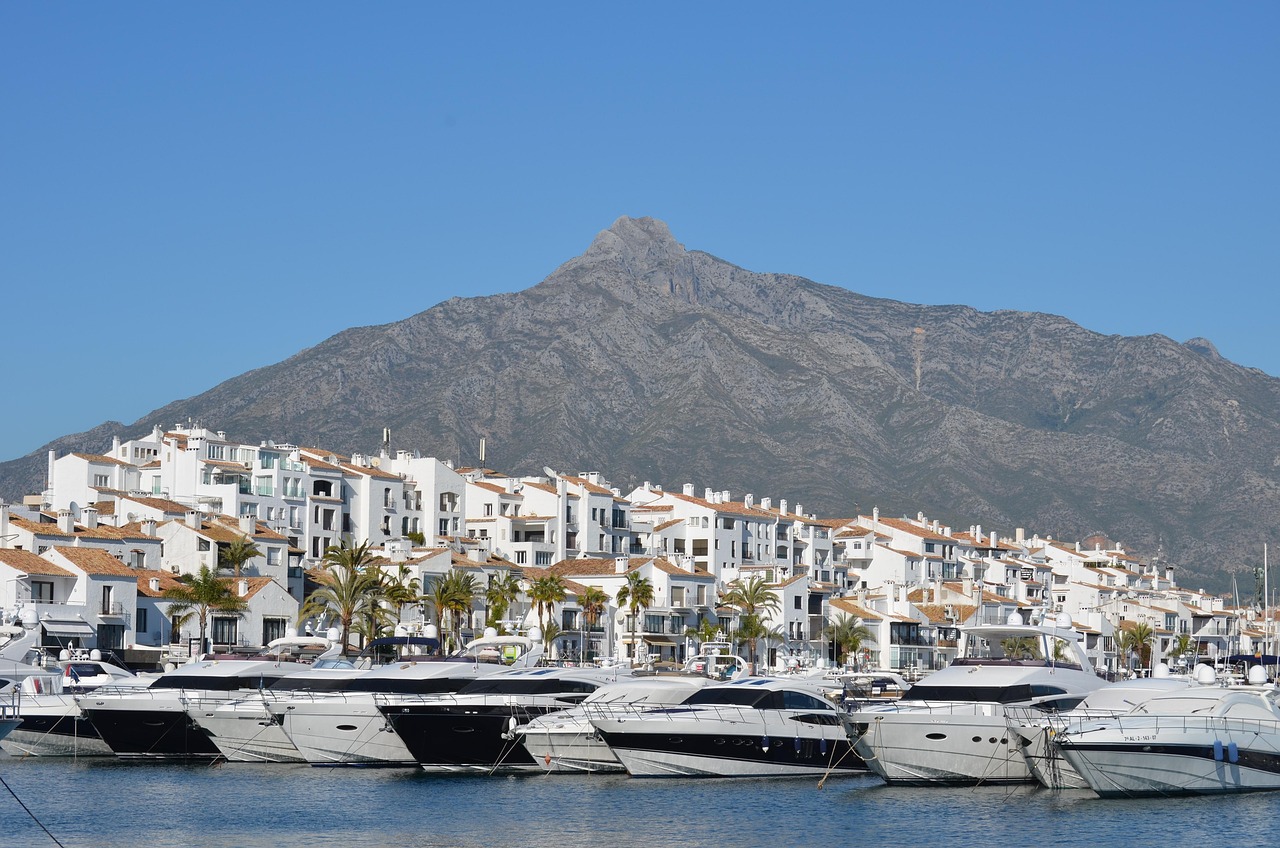
Marbella is a resort town on the Costa del Sol in the province of Málaga, southern Spain, known for its whitewashed old town, its long beaches, its golf and its glamorous marina at Puerto Banús. It lies on a narrow coastal plain between the Mediterranean and the Sierra Blanca, whose peak, La Concha, forms a distinctive backdrop. The sheltered position gives it a mild climate and plenty of sun throughout the year, which is a large part of why it became one of the most popular resorts in Europe.
The Casco Antiguo, the old town, is the heart of its charm. Narrow lanes lined with flower-filled balconies lead to the Plaza de los Naranjos, a small square planted with orange trees, around which sit the town hall, a Renaissance chapel and a handful of cafés. The old Moorish walls and the Alcazaba add history. Along the coast, Málaga offers a cultural contrast with its museums and Alcazaba, and the hill villages of Andalusia, such as Ronda and Mijas, offer day trips inland.
The Golden Mile, Puerto Banús and Golf Valley
Marbella's modern identity was shaped in the 1950s and 1960s, when visitors began to discover its mild winters and sandy coves. The Golden Mile, a stretch of coast road between Marbella and Puerto Banús, is lined with villas and beachfront hotels, and Puerto Banús, opened in 1970, is a marina of luxury yachts, boutiques and waterfront terraces. The beaches, with chiringuitos, or beach restaurants, serving grilled fish and espetos, are the beating heart of summer.
Golf is another pillar. The area around Nueva Andalucía is often called the Golf Valley, with a large concentration of courses within a short drive, and spa hotels, tennis clubs and polo add to the outdoor calendar. Dining runs from simple seafood to ambitious modern restaurants, with Michelin-starred chefs among the town's attractions. A hotel group or villa operator can find a ready audience here, and the island resorts of Ibiza and Mallorca make natural companions for a longer Spanish itinerary.
Year-Round Sunshine and Getting There
Marbella works in every season. Spring and autumn offer ideal conditions for golf and walking, summer is the peak beach season with lively evenings along the seafront, and winters are mild enough for outdoor lunches. The town's calendar includes the June Feria de San Bernabé and a range of music and sporting events, and the compact centre makes it easy to combine the beach with the old town.
Málaga airport is around forty-five minutes away by road, with direct flights from many UK airports taking around three hours, and the A-7 and AP-7 roads run along the coast. Buses and private transfers link the airport to the resort. VisitMarbella.co.uk gives airlines and hotels a single home for the whole route. Visitors extending a trip can explore the wider Spain guide, from the Balearics to the north coast.
Old Town Charm, Golden Mile Glamour and Golf Valley Retreats
Marbella's districts each offer a different holiday. The Casco Antiguo, the old town, is ideal for couples who like walking whitewashed lanes, small boutiques and cafés in the evening. The Golden Mile, between the town and Puerto Banús, has beachfront hotels with pools and spas, suited to those wanting beach clubs and sea views. Puerto Banús is the lively marina, popular with groups and yacht lovers, while Nueva Andalucía, the Golf Valley, offers resort hotels and villas close to many courses. Further west, San Pedro de Alcántara has a more local, relaxed feel, and Benahavís in the hills is a quiet village of good restaurants and gardens.
Styles of stay include beachfront resorts with spas, boutique hotels in the old town, golf resorts, tennis and padel clubs, and private villas with pools. Larger families and groups often choose villas in the hills with sea views, and long-stay visitors choose apartments close to the beach promenade. Wellness hotels offer thermal circuits and treatments. An booking platform can make it easy to compare these options, and the glamorous French Riviera and St Tropez offer natural comparisons for guests who enjoy a polished coastal scene.
Sherry Houses, Moorish Walls and Summer Concerts
Marbella's food scene runs well beyond the beach. Fresh Mediterranean fish, sopa de pescado, migas, a fried crumb dish, and chivo lechal, tender kid goat roasted in the hill villages, are local specialities, while almond cakes and honey desserts reflect the Moorish past. Chiringuitos serve grilled fish with a sea view, and top restaurants offer modern Andalusian menus. The Mercado Municipal in the old town sells fresh produce and picnic supplies, and cafés on the Plaza de los Naranjos offer coffee in the shade of orange trees on any morning.
The cultural side adds depth. The Museo del Grabado Español Contemporáneo displays prints by Picasso, Miró and Dalí, the Ralli Museum holds Latin American and European art, and the Bonsai Museum is a small garden of delicate trees. The Iglesia de la Encarnación and the old Moorish walls frame the historic quarter. The Starlite Festival brings concerts under the stars in summer, the Semana Santa processions in spring are atmospheric, and the Christmas lights in the old town are a seasonal pleasure. Spring and autumn also bring golf tournaments and sailing regattas.
Sailing, Hill Villages and Day Trips to Ronda
Marbella suits sporty holidays. Sailing and boat trips leave from Puerto Banús, paddleboarding and kayaking are easy along the coast, and diving trips run from nearby ports. The hike to La Concha, the pyramid-shaped peak above the town, gives sweeping views of the coast, while Benahavís has gorge walks and cycling routes. Golf, tennis and padel are everywhere, and spa days and thalassotherapy suit relaxed schedules. Families enjoy water parks, riding stables and wildlife reserves nearby, and the coast road makes it easy to hop between beaches.
Day trips are plentiful. Ronda, with its dramatic gorge and Puente Nuevo, is about an hour's drive, Mijas offers a white-village charm, Granada and Seville are reachable in a day, and Gibraltar is close for a change of scene. Ferries from the coast reach Tangier in Morocco, and Málaga and the wider Andalusia guide offer culture. Visitors can also continue west to the Algarve. A holiday here can balance beach mornings, golf afternoons and a hill-village lunch, giving a polished, easy rhythm to the week.
Planning your stay
The old town is a compact historic centre with squares and tapas bars, a short walk from the seafront. The Golden Mile links Marbella to Puerto Banús with luxury hotels and beach clubs, and Puerto Banús has a marina, designer shops and nightlife. Further west, Estepona and Sotogrande offer a quieter, more family feel, while the hills above have golf villas.
Marbella is about 40 minutes from Málaga airport, with direct flights from across the UK. A car is useful for the hills and nearby villages, but the coast has buses and taxis, so many visitors manage without one. See our Andalusia guide for day trips to Granada, Ronda and Seville.
When to go
Spring and autumn are warm, comfortable and good for golf and walking. Winter is mild and sunny by UK standards and popular with long-stay visitors.
Entry rules and the border
Spain's Schengen rules apply: your passport needs an issue date under 10 years before you arrive and an expiry date at least three months after you leave the Schengen area, and UK visitors get 90 days in any 180. On a first visit the Entry/Exit System may take fingerprints and a photo at Málaga.
Check the Gibraltar advice before a day trip.
Before you travel
Entry requirements and official travel guidance are updated regularly, so check the latest position with your government before booking. The sources we used are listed at the foot of this page.
Why Marbella matters to the industry
Marbella is one of the most recognised luxury resort names in Europe, which makes it valuable to hotel groups, golf operators and airlines. VisitMarbella.co.uk lets a hotel group or tourist board publish verified guidance, and our airline partnerships show how routes to Málaga can be explained.
Our wider Spain guide and destination guides show how Marbella compares with the rest of the market.
Questions travellers ask about Marbella
How far is Marbella from the airport?
The drive from Málaga airport takes around 40 minutes. Buses, taxis and transfers are available, and many visitors hire a car for the hills and villages.
Do I need a visa for Marbella?
No. A British passport allows 90 days in any 180 for tourism. It must be under 10 years old on arrival and have three months left after you depart.
What is Marbella best known for?
Marbella is best known for its whitewashed old town and Plaza de los Naranjos, the Golden Mile, the marina at Puerto Banús, its long beaches and golf courses, and its sunny climate on the Costa del Sol.
How do I get to Marbella from the UK?
Fly to Málaga, which has direct flights from many UK airports taking around three hours, then continue by road for about forty-five minutes. Buses and private transfers link the airport and the resort.
Where should I stay in Marbella?
The old town suits couples who like lanes and cafés, the Golden Mile has beachfront resorts, Puerto Banús is lively and marina-focused, and Nueva Andalucía is ideal for golfers. Hill villages such as Benahavís are peaceful.
What are the best day trips from Marbella?
Ronda's gorge and bridge, the white village of Mijas, Gibraltar, Granada and Seville are the favourite excursions, and ferries from nearby ports reach Tangier in Morocco for a more adventurous day.
In the Visit Travel Group portfolio: VisitMarbella.co.uk.