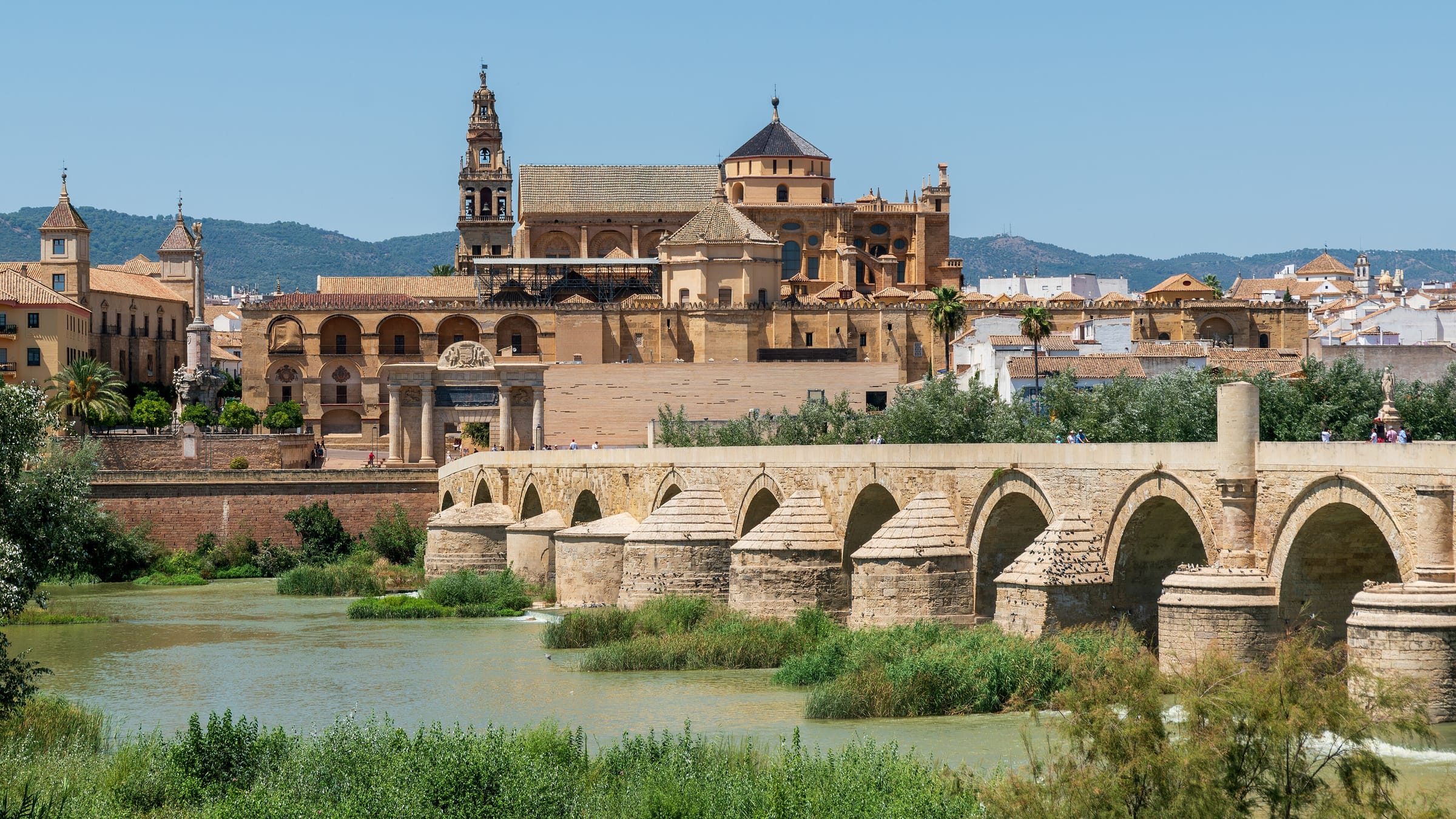
The Mezquita and a Caliphate's Great Capital
Córdoba is a city on the Guadalquivir river in Andalusia, southern Spain, known for the Mezquita-Catedral, a vast mosque-cathedral that is among the great buildings of Europe, and for its role as the capital of the Islamic caliphate of al-Andalus in the 10th century. Its historic centre is a UNESCO World Heritage Site, and the city once ranked among the largest and most learned in the western world. Roman origins are still visible in the long bridge over the river, and the Judería, the old Jewish quarter, adds another layer of history.
Inside the Mezquita, a forest of red-and-white striped arches stretches in every direction, with the mihrab and the later Renaissance cathedral nave rising in the middle. Just outside the city, the ruins of Medina Azahara, the palace-city of the caliphs, were inscribed by UNESCO in 2018. The Alcázar de los Reyes Cristianos, with its gardens and Roman mosaics, adds a royal chapter. Elsewhere in Andalusia, Granada and Seville complement Córdoba perfectly, and the coast at Málaga is under an hour by fast train.
Patios, Salmorejo and Slow Evenings
The city is as much about daily life as monuments. In May, the Festival of the Patios opens the private courtyards of old houses, filled with geraniums, jasmine and blue-painted pots, and the tradition has been recognised by UNESCO as intangible cultural heritage. The Calleja de las Flores, a narrow lane with a view of the Mezquita bell tower framed by flowers, is one of Spain's most photographed spots. The Roman Bridge and the Calahorra Tower make a beautiful evening walk.
Food is hearty and distinctive. Salmorejo, a thick cold tomato soup topped with ham and egg, is the city's signature, alongside flamenquín, a rolled pork or ham fritter, and rabo de toro, slow-braised oxtail. Taverns in the Judería and around the Plaza de la Corredera serve small plates with local Montilla-Moriles wines. A tourist board can offer a compelling cultural itinerary here, and Córdoba pairs naturally with Spain's wider heritage cities, from Toledo to Granada.
Spring Light and Fast Rail Links
Spring is the best season, with comfortable days, orange blossom and the Patios Festival in May, and autumn is also lovely, with softer light and quieter streets. The old town is compact and best explored on foot, with the Mezquita, the Judería, the Alcázar and the river all within a short walk of each other. Many travellers spend one or two nights here, long enough to see the main sights and enjoy the evenings.
Córdoba's station is on the AVE high-speed line, with Madrid reached in under two hours and Seville and Málaga each in under an hour. VisitCordoba.co.uk gives rail operators, airlines and hotels a single home for these connections. Many visitors combine the city with a coast stay at Marbella or an Atlantic extension towards Huelva, making Córdoba an easy cultural highlight in a wider southern Spain journey.
Patio Hotels and Quiet Lanes Near the Mezquita
Córdoba is a city where the place you stay is part of the experience. The Judería, around the Mezquita, is the most atmospheric base, with white lanes, flower-filled courtyards and hotels set in restored townhouses a few steps from the great mosque-cathedral. The Axerquía, the area around the Plaza de la Corredera and the Plaza del Potro, has a more local mood with lively cafés and markets, while San Basilio is known for its patios and quiet streets. The riverside by the Roman Bridge offers views at sunset, and Ciudad Jardín is a calm residential district with parks.
Styles of stay include patio hotels with fountains and orange trees, historic palaces turned into boutique hotels, riverside hotels, apartments in old houses and rural cortijos in the Subbética hills. Many hotels have rooftop terraces facing the Mezquita bell tower, and some have small spas or plunge pools. Guests who like to cook can find apartments with courtyard kitchens. A hotel group with a historic property can show how a night in a patio house is a highlight of a southern Spain trip, and Málaga provides a beach contrast within an hour by rail.
Aubergine with Honey, Guitars and Flamenco Nights
The city's food has a distinctive local style. Berenjenas con miel, fried aubergine with cane honey, pastel cordobés, a sweet pastry filled with pumpkin conserve, and the olive oils of Baena and Priego are among the local pleasures. The Mercado Victoria, a lively food hall, and the taverns around the Plaza de la Corredera serve small plates all day, and the Montilla-Moriles wines belong to the region's culinary heritage. Cordoban cafés are known for their pastries, and the city's leatherwork and silver filigree make good souvenirs that carry a local story.
Culture is varied. The synagogue in the Judería is one of the few medieval synagogues surviving in Spain, the Palacio de Viana has a dozen patios and a museum of period furnishings, and the Museo Julio Romero de Torres celebrates a local painter. The Cruces de Mayo and the Feria in late May fill the city with colour, the Noche Blanca del Flamenco in June brings music to the streets, and the International Guitar Festival in July draws players from around the world. Autumn and winter are quieter, with soft light on the old stones and fewer crowds.
Royal Stables, Subbética Villages and Easy Day Trips
Córdoba is a surprisingly active base. The Caballerizas Reales, the royal stables, host shows of Andalusian horses, and the Vía Verde del Aceite is a flat cycling route through olive country. The Sierra de Hornachuelos has walking and birdwatching, and the Subbética natural park holds white villages such as Zuheros and Priego de Córdoba, with fountains and baroque churches. The castle of Almodóvar del Río rises above the river, and the Medina Azahara site is a short drive out of town. Guests who enjoy gentle days can follow the patio route in spring.
Day trips are simple. Seville and Granada are each linked by rail or road, Carmona and Écija are historic towns with handsome plazas, and the olive oil estates of Baena offer tastings. The coast at Marbella is an easy rail-and-road extension, and the wider Andalusia and Spain guides place Córdoba within a larger journey. Travellers also continue to Huelva for Atlantic beaches or to the Algarve for golf. A two-night stay with a horse show, a patio walk and a day in the hills is a classic Córdoba formula.
Planning your stay
Córdoba's historic centre is small enough to explore on foot. The Mezquita-Catedral, a former mosque with a cathedral built inside it, is the main attraction, and the surrounding Jewish Quarter, the Roman Bridge over the Guadalquivir and the Alcázar of the Christian Monarchs are all within a short walk. Medina Azahara, the ruins of a palace city outside the town, is also on the UNESCO World Heritage list.
Córdoba is part of the wider Andalusia region and works well alongside Seville and Granada on a cultural route. Many visitors reach it from the coast, for example from Málaga or Marbella, either as a day trip or as an overnight stop on a longer circuit.
When to go
Spring is the most popular season. In May the city's courtyard festival opens private patios to visitors, and the weather is warm without the worst of the summer heat. Autumn is also comfortable, and winter days are mild, though evenings are cool.
Summer in the inland south is very hot. Sightsee early, rest in the afternoon, carry water and check local weather reports before long walks.
Getting there
Córdoba sits on Spain's high-speed rail network, with services to Madrid, Seville and Málaga, so it suits a rail-based itinerary. Most UK visitors fly to Málaga or Seville and continue by train or road. British Airways lists the London to Seville flight at 2 hours 45 minutes, the same as for Málaga.
In a historic centre of narrow streets, parking is awkward, so many visitors leave the car at a car park outside the old town.
Entry rules and the border
Córdoba sits inside Spain's Schengen rules. Because you will usually enter at Málaga, Seville or Madrid, the key checks are that your passport was issued less than 10 years before you arrive and has at least three months left after the day you plan to leave the Schengen area. UK visitors can stay up to 90 days in any 180, and overstaying can lead to a ban of up to three years.
The Entry/Exit System may take fingerprints and a photo on your first entry, at no cost, and can add time at the border.
Before you travel
Entry requirements and official travel guidance are updated regularly, so check the latest position with your government before booking. The sources we used are listed at the foot of this page.
Why Córdoba matters to the industry
Córdoba is a cultural destination that many visitors add to a coast holiday, which makes accurate planning information valuable. VisitCordoba.co.uk lets a tourist board or hotel group publish verified guidance on seasons, heat and rail links, and our AI platform helps that information reach searchers.
See the destination guides for other cultural cities and regions.
A practical point for planners: first-time visitors often underestimate how much a Córdoba day depends on timing. Timed entry to the main monuments, midday closures, the heat and the walk between sights all shape the visit, and the Costa del Sol is only a train ride or a drive away. Clear pages on tickets, opening patterns and getting between Marbella and the city answer the questions asked in the weeks before travel, and our Spain guide covers the national rules.
Questions travellers ask about Córdoba
How do you get to Córdoba from the UK?
Fly to Málaga or Seville and continue by high-speed train or road. Córdoba is also on the rail line from Madrid.
When is the best time to visit Córdoba?
Spring is the most popular, with warm weather and the May patio festival. Autumn is also comfortable. Summer is very hot.
Do I need a visa for Córdoba?
Not for a stay of up to 90 days in any 180. Check that your passport is under 10 years old and has three months left beyond the day you leave the Schengen area, because Spanish border staff apply both tests.
What is Córdoba best known for?
Córdoba is best known for the Mezquita-Catedral, its UNESCO-listed historic centre, the Judería quarter, the ruins of Medina Azahara and the Festival of the Patios each May. It was the capital of the Islamic caliphate of al-Andalus.
How do I reach Córdoba from the UK?
Most visitors fly to Málaga, Seville or Madrid and continue by AVE high-speed train, with Seville and Málaga each reached in under an hour and Madrid in under two hours. The station is close to the old town.
Where should I stay in Córdoba?
The Judería is the most atmospheric choice, close to the Mezquita and full of patio hotels. The Axerquía around the Plaza de la Corredera is livelier, while San Basilio offers quiet streets and flower-filled courtyards.
What food should I try in Córdoba?
Try salmorejo, flamenquín, berenjenas con miel, rabo de toro and pastel cordobés, with local olive oil from Baena and Priego. The Mercado Victoria and Plaza de la Corredera taverns are good places to taste them.
In the Visit Travel Group portfolio: VisitCordoba.co.uk.