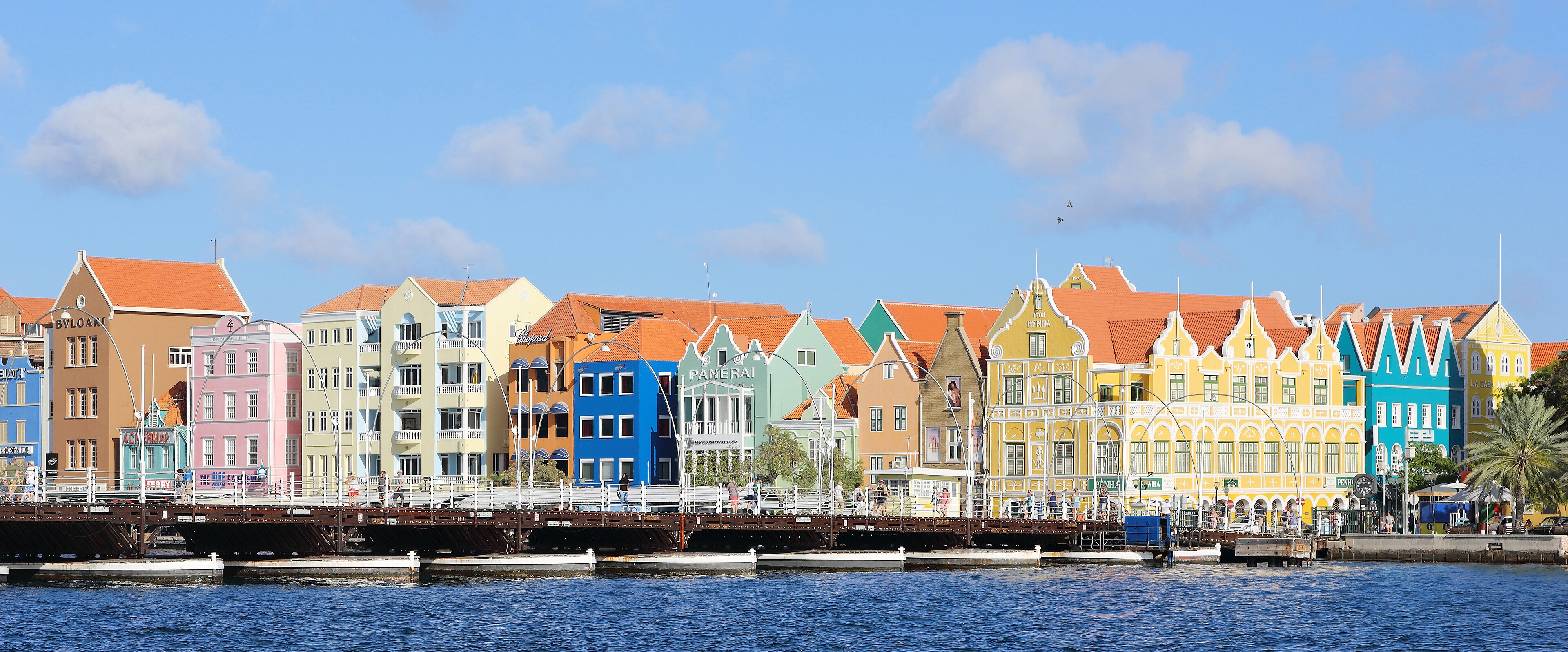
Willemstad's Pastel Waterfront and Island Spirit
Curaçao is a Caribbean island and a constituent country of the Kingdom of the Netherlands, lying in the southern Caribbean and known for the pastel-coloured waterfront of Willemstad, its beaches and its cultural mix. About 150,000 people live on the island, most near the capital, and speak Papiamentu, Dutch, English and Spanish. The historic centre of Willemstad, with its harbour and inner city, was inscribed as a UNESCO World Heritage Site in 1997, a rare Caribbean example of Dutch colonial town planning transplanted to the tropics.
Handelskade, the harbour front in Punda, is the postcard view, a row of gabled Dutch-style buildings painted in bright colours. The Queen Emma Bridge, a floating pontoon bridge, swings open for ships and links Punda with Otrobanda. The Mikvé Israel-Emanuel Synagogue, dating from 1732, has a sand floor and is among the oldest synagogues in continuous use in the Americas. Neighbouring Aruba and Bonaire complete the ABC islands, making a Dutch Caribbean trip an easy proposition.
Kenepa, Westpunt and Christoffel Park
Curaçao's coast is a series of small coves rather than long strands. Playa Kenepa Grandi, on the west side, has white sand and clear turquoise water below a cliff, and Cas Abao and Playa Lagun are favourite snorkelling stops. Westpunt, at the northern tip, has fishing boats and sunset views, while the offshore uninhabited islet of Klein Curaçao is a day trip for beach lovers. Divers find a gently sloping reef right off the shore, with sites accessible from the coast and by boat.
Inland, Christoffel National Park surrounds Mount Christoffel, the island's highest point at about 375 metres, with hiking trails among cacti, iguanas and birdlife. The Hato Caves reveal limestone chambers with ancient markings, and landhuizen, the old plantation houses, tell the island's layered history. Food draws on Dutch, African and Latin traditions: stobá, a stew, and keshi yena are local staples, while Willemstad's Floating Market sells fresh produce from Venezuelan boats. A hotel group has a clear story in design-led boutique stays around old Willemstad.
Carnival, Seasons and Getting There
Curaçao is sunny and dry for most of the year, with a steady breeze keeping the climate comfortable. December to April is the busiest period, though the island is welcoming all year, and the Dutch and North American school holidays bring a lively mood. Carnival, running from January until the Tuesday before Lent, is the main cultural event, with colourful parades in Willemstad. Other highlights are the Curaçao North Sea Jazz festival, held on the island, and the Seú harvest festival.
Curaçao International Airport, also known as Hato, links the island to Amsterdam, North America and the wider Caribbean, and short flights serve Aruba and Bonaire. Visitors often base themselves around Willemstad, Pietermaai or the beach resorts, and hire a car for the west coast. The island pairs well with Jamaica and the Caribbean circuit, and Curacao.co.uk offers boards and airlines a single home for the colour, culture and coves that define the island.
Where to Stay in Colourful Curaçao
Curaçao has a stay for every taste, starting in Willemstad. Pietermaai, a district of restored pastel townhouses, is the island's boutique-hotel quarter, with courtyards, rooftop pools and restaurants close by, ideal for couples and culture seekers. Punda and Otrobanda, either side of the Queen Emma Bridge, offer harbourfront guesthouses within a short walk of museums and markets. Scharloo, a district of grand merchants' houses, has small inns and design-led stays. The city is compact, so a central base puts most sights within a short stroll.
Resort areas are a short drive away. Piscadera Bay and Jan Thiel have beach resorts, apartments and villas, popular with families, while Mambo Beach adds a lively promenade of restaurants and water sports. Santa Barbara has golf and marina living, and the west coast around Westpunt, Playa Kenepa and Lagun has simple lodges, eco-villas and dive stays beside quiet coves. Historic landhuizen, former plantation houses, sometimes offer rooms or event spaces. Dive lodges suit those who arrive for the shore reefs, and villas serve larger groups, so the island offers as many styles of stay as it has coves.
Stobá, Laraha Oranges and the Tumba Festival
Curaçao's food has plenty of character. Keshi yena and stobá are classics, and funchi, pan bati, pastechi and fresh grilled fish fill out the table. Other favourites include kabritu (goat), sopi mondongo and local seafood with tropical fruit. Fresh juices, coffee and baked sweets appear at Willemstad's Floating Market and the open-air food stalls known as truk'i pan. The laraha, a bitter orange that grows on the island, has long been used in local flavourings and the famous blue liqueur produced at Landhuis Chobolobo, a heritage connected with the island's name worldwide.
The cultural calendar is rich. The Kura Hulanda Museum explores the history of the slave trade and African heritage, the Curaçao Museum and the Maritime Museum show Dutch colonial life, and Pietermaai's street art adds a modern edge. Tumba Festival, a competition of Carnival songs, builds anticipation before Carnival, and Flag Day on 2 July and Curaçao Day on 10 October celebrate local pride. In December, Sinterklaas arrives by boat, and Christmas brings a distinctive mix of Dutch and Caribbean customs. Dry weather and warm evenings make outdoor concerts and markets a pleasure throughout the year.
Blowholes, Blue Rooms and Colombia by Air
Active days begin on the coast. Shete Boka National Park has dramatic sea caves and blowholes on the north shore, while diving sites such as the Mushroom Forest, the Tugboat and the Blue Room cave reward divers with clear water and varied reefs. Kayakers explore Spanish Water, and kitesurfers and paddleboarders find easy conditions on the south coast. Walkers climb Christoffel's slopes at dawn, cyclists follow quiet roads, and families enjoy the Sea Aquarium and an ostrich farm. Snorkelling is possible from many coves, so a day can combine a hike, a swim and a late lunch on the shore.
Add-ons are easy. Klein Curaçao is a day-trip island, and short flights connect to Bonaire and Aruba, while Colombia, including Cartagena and Santa Marta, is within reach for a second culture. Longer itineraries can add Barbados or St Lucia. A booking platform could package a boutique Pietermaai stay, a dive day and a west-coast cove, and offer guests a ready-made week that mixes city, sea and nature on one compact island.
Planning your stay
Willemstad is the main reason many visitors choose Curaçao. Its historic inner city and harbour are a UNESCO World Heritage Site, with Dutch colonial buildings in bright colours around a harbour channel crossed by a floating pontoon bridge. The two sides of the channel, Punda and Otrobanda, are an easy walk apart and full of restaurants, shops and markets.
The coast is made up of small bays rather than long beaches, with a good number of calm swimming and snorkelling spots on the west side. Hotels range from city properties to beach resorts, and many visitors hire a car to explore.
Entry rules for UK passport holders
You must also complete it if you are travelling through Curaçao.
Weather and hurricane position
It adds that most hurricanes pass well to the north of Curaçao, which has no record of a recent major hurricane, although there are occasional tropical storms. It advises monitoring the local meteorological service and the US National Hurricane Center.
The island is relatively dry and sunny for most of the year, which makes it an option in the months when other destinations are more exposed.
Getting there
Curaçao's main airport is Hato International. There is no scheduled direct flight from the UK, and the usual route is a one-stop journey via Amsterdam, where KLM, TUI fly Netherlands and Corendon Dutch Airlines serve Curaçao. Check connection times, particularly if you are travelling with dive or sports equipment.
Airlines that serve the southern Caribbean can reach travellers while they are still choosing between islands, and our airline partner page explains how.
Where it fits in the Dutch Caribbean
Curaçao is often paired with its neighbours. Bonaire is smaller and built around diving, while Aruba is more resort-focused and has long white beaches. A short flight links all three, so a two-island trip is easy to plan. Allow time to cross the harbour channel on foot, visit the floating market and try local dishes in Punda, and keep a half day free for a boat trip or a snorkelling stop on the west coast. If you plan to dive, compare the shoreline with Bonaire's marine park, which is only a short hop away.
Our Caribbean overview compares Curaçao with the islands further north. Curaçao suits couples, city-break travellers and families who want culture and beaches in the same week. The island is small enough to see in a few days, so a longer trip works best when split with a neighbour. Hire a car for the west coast beaches, but keep an eye on parking and on valuables left in vehicles, as you would anywhere. Evenings in town are relaxed, with waterfront restaurants and live music on busy nights.
Before you travel
Entry requirements and official travel guidance are updated regularly, so check the latest position with your government before booking. The sources we used are listed at the foot of this page.
How the name supports partners
Curacao.co.uk gives the island a short, memorable name that matches how travellers search. Hotels can publish verified information through our hotel partner page, tourist boards can work with us on tourist board partnerships, and a conversational concierge can answer entry and transfer questions in plain language.
Questions travellers ask about Curaçao
What is Willemstad known for?
Its historic inner city and harbour are a UNESCO World Heritage Site, with Dutch colonial architecture in bright colours and a floating pontoon bridge across the harbour channel.
Can I combine Curaçao with other islands?
Yes. Bonaire and Aruba are both a short flight away, and the three are often combined in a single trip.
What is Curaçao best known for?
Curaçao is best known for Willemstad's pastel Dutch-style waterfront, a UNESCO World Heritage Site since 1997, clear coves such as Playa Kenepa, easy shore diving and a blend of Dutch, African and Latin culture.
When is the best time to visit Curaçao?
The island is sunny and dry for most of the year. December to April is the busiest period, and Carnival runs from January to the Tuesday before Lent, filling Willemstad with parades and music.
Where should I stay in Curaçao?
Pietermaai suits couples and culture seekers with boutique hotels in restored townhouses. Jan Thiel and Piscadera Bay suit families, Mambo Beach suits those wanting lively dining, and the west coast suits divers and quiet-cove lovers.
What are the best day trips from Willemstad?
Visit Shete Boka National Park, Christoffel National Park, Hato Caves, Playa Kenepa and Westpunt on the west coast, or take a boat to Klein Curaçao. The Kura Hulanda Museum and the Floating Market are good for rainy hours.
In the Visit Travel Group portfolio: Curacao.co.uk, Curacao.uk, VisitCuracao.co.uk.