Dutch Colour, Desert Light and Easy Sunshine
Aruba is a Caribbean island and a constituent country of the Kingdom of the Netherlands, lying in the southern Caribbean just off the coast of Venezuela and known for white-sand beaches, steady trade winds and dry, sunny weather. Oranjestad, the capital, has pastel-painted Dutch colonial buildings along its harbour, and the island is only about 20 miles long, so almost everything is within a short drive. Aruba is part of the ABC islands with Bonaire and Curaçao, and its landscape is more desert than jungle, with cactus, aloe and wind-bent divi-divi trees.
That dry light gives the island a character of its own. Papiamento, a Creole language, is spoken alongside Dutch, English and Spanish, and many residents move easily between all four. Local food mixes Caribbean, Dutch and South American influences: keshi yena, cheese stuffed with spiced meat, and pastechi, a savoury pastry, are staples. Neighbouring Bonaire and Curaçao share the Dutch heritage and are easy additions for those exploring the wider ABC group.
Eagle Beach, Palm Beach and Arikok's Wild Side
Beaches anchor the experience. Eagle Beach is wide and relaxed, known for its lone fofoti trees and a long run of low-rise hotels, while Palm Beach is livelier, with resorts, restaurants and water sports along its length. In the south-east, Baby Beach offers a sheltered lagoon of shallow water, and the windsurfing at Hadicurari, or Fisherman's Huts, draws sailors from around the world. Further inland, Arikok National Park occupies a large part of the island, with caves, rugged coastline and desert trails.
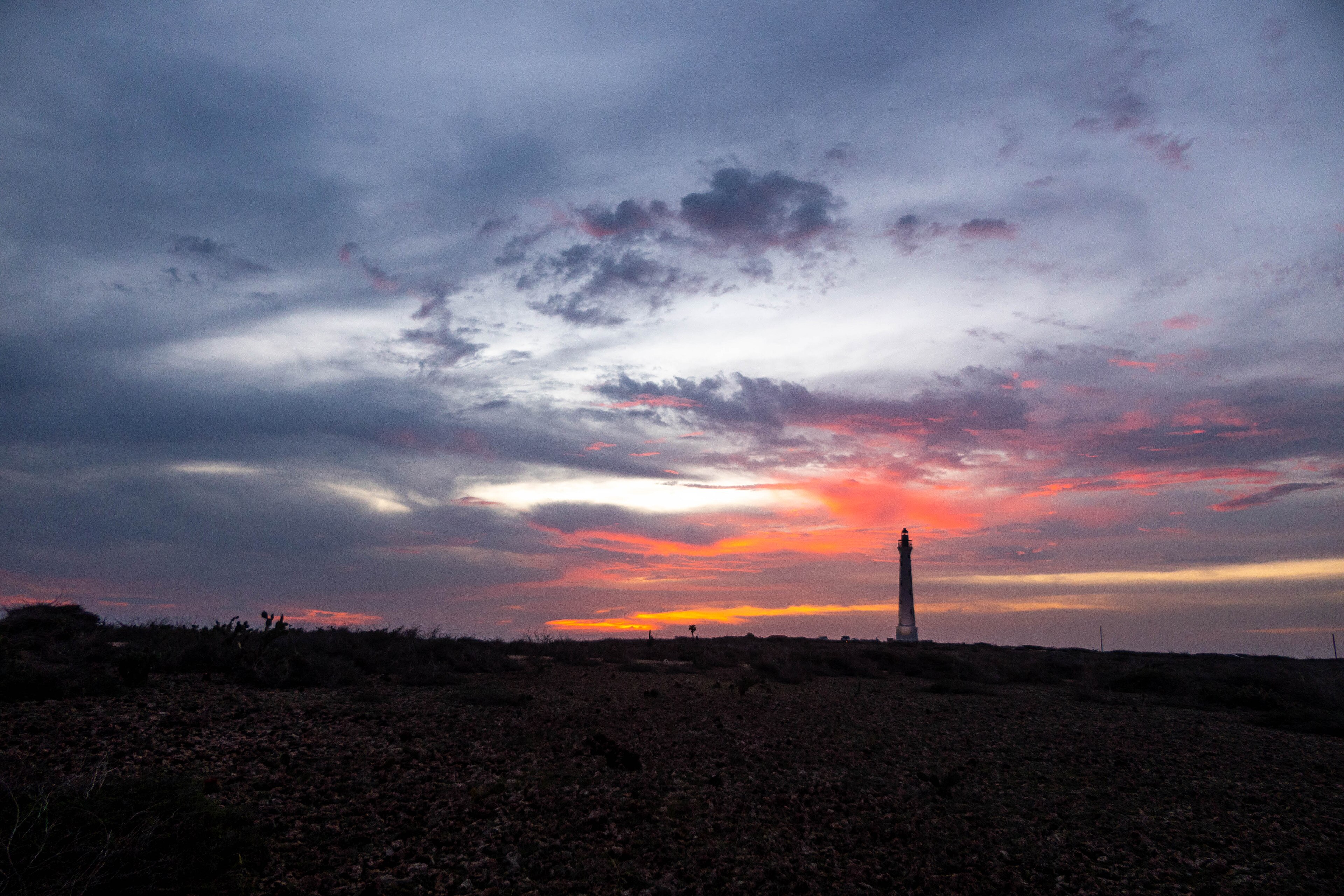
Natural landmarks are easy to reach by jeep or guided tour. The Natural Pool, a rocky pool sheltered from the open sea, Casibari's boulder formations, and the Ayo rock formations with ancient petroglyphs reveal a stranger, more rugged Aruba. The California Lighthouse, on the north-west tip, gives wide views at sunset. A tourist board can present a balanced offer of beach days, adventure and culture, and guests who want more reef can also take an easy flight to Curaçao.
Carnival, Seasons and How to Arrive
Aruba's dry climate means sunshine nearly every day of the year, with the busiest season from December to April and a steady, pleasant breeze that keeps temperatures comfortable. Carnival, running from January to Ash Wednesday, brings parades with elaborate costumes and music to Oranjestad and San Nicolas, and the island's calendar also includes the Dande New Year tradition of music and house-to-house serenades. Water sports, including kitesurfing, snorkelling and sailing, are popular all year.
Queen Beatrix International Airport in Oranjestad is the main gateway, with services from the United States, Canada, Europe and Latin America. The island is a quick hop from other Dutch Caribbean destinations and can be paired with Colombia's coast or other Caribbean islands. For hotels and airlines, VisitAruba.co.uk offers a place to bring together Aruba's sun, sea and cultural story, while Puerto Rico makes a natural northern partner for a longer holiday.
Where to Stay: Palm Beach, Eagle Beach and Beyond
Aruba's best stays follow the coast. Palm Beach, on the north-west shore, is the lively resort strip, with high-rise hotels, casinos, restaurants and watersports all within a short walk, suiting groups, families and first-time visitors. Eagle Beach, a little further south, has low-rise hotels and boutique properties along a broader, calmer beach, favoured by couples. Malmok and Noord have apartments and villas for longer stays, and Oranjestad has city hotels and harbourside apartments close to the Dutch-style waterfront, ideal for travellers who like shopping and dining on foot.
For a quieter experience, head south and east. Savaneta and Baby Beach have small guesthouses and holiday homes close to calm lagoons, and Arashi and Boca Catalina offer villas near good snorkelling. San Nicolas, the island's second town, is becoming an arts district with colourful murals and small inns. Windsurfers and kitesurfers favour apartments near Hadicurari and Boca Grandi, while all-inclusive packages suit families who want everything arranged. The island is small enough that any base is within about half an hour of any beach, which gives every traveller a wide choice.
Pan Bati, Dera Gai and Street Murals
Aruban cooking is a blend of Caribbean, Dutch and South American traditions. Pan bati, a thick, slightly sweet flatbread, accompanies grilled fish, goat stew and funchi, a cornmeal side dish, and cala, black-eyed pea fritters, are popular snacks. Fresh local seafood, including red snapper and lobster, is grilled to order, and ayaca, a banana-leaf parcel of meat and spices, is a Christmas speciality. Bakeries sell pastechi stuffed with cheese or meat, and the food trucks of Oranjestad serve fast, flavourful lunches. Tropical fruit juices, aloe and local coffee suit the dry, sunny climate.
Culture is equally colourful. Dera Gai, the midsummer harvest festival around 24 June, includes music, dance and bonfire-lit celebrations, and Carnival in January and February takes over Oranjestad and San Nicolas. The San Nicolas street-art festival has covered walls with murals, and the National Archaeological Museum and the old Fort Zoutman tell the island's history. The Alto Vista Chapel, painted yellow above the north coast, dates to the eighteenth century, and the Bushiribana gold mill ruins add a touch of industrial history. The Hi-Winds windsurfing event and dry-season concerts keep the calendar full all year.
Wrecks, Kitesurfing and a Chain of Dutch Islands
Aruba is made for active days. Divers explore the Antilla, a German freighter from the Second World War resting in shallow water off Palm Beach, and snorkellers enjoy Mangel Halto and Boca Catalina. Kitesurfers and windsurfers find steady trade winds at Boca Grandi and Fisherman's Huts, and guided jeep and quad-bike trips cross the rocky north coast. Families enjoy the Butterfly Farm and the Donkey Sanctuary, and golfers can play at Tierra del Sol. Catamaran trips, sunset sails and horse rides along the beach add easy outings, and cycling is popular on the quiet southern roads.
Day trips are short and varied. Boats run to Renaissance Island for a private beach day, and short flights reach Bonaire and Curaçao for a Dutch Caribbean trio. Many visitors continue to Colombia for Cartagena's old walled town or fly on to St Martin for a second island. A hotel group with properties on more than one of the ABC islands could shape a combined itinerary, mixing Aruba's beaches and wind sports with Bonaire's reef and Curaçao's colour, and offering guests one clear route through the southern Caribbean.
Planning your stay
Most Caribbean islands are green and rainy for part of the year. Aruba is arid, with cactus, rocky desert and constant trade winds, and it has a reputation for dry, sunny weather throughout the year. It also lies south of the main hurricane track, so autumn is less risky than on many islands, though you should still check forecasts.
The island is small, about 20 miles long, and the main resort strip runs along the sheltered south west coast. Water is calm and warm there, and the winds on the north east coast make that side better for watching waves than swimming.
Eagle Beach, Palm Beach and the rest
Palm Beach is the busiest area, with high-rise hotels, a casino, restaurants and water sports along a broad white beach. Eagle Beach is quieter and low-rise, with a wide beach and a reputation for being one of the best on the island. Both are close to Oranjestad, the colourful Dutch colonial capital with shops and a harbour.
Arikok National Park covers much of the rugged interior and north east, with caves, rock formations and desert scenery, and is best explored with a guide or a rugged vehicle. Snorkellers and divers visit the Antilla shipwreck and the reefs off the west coast.
When to go
December to April is the high season, with the highest prices around Christmas and New Year. The rest of the year stays warm and dry, which gives Aruba an edge over many islands for off-peak holidays, and rates can fall sharply from May. Winds are strongest from February to June, which kitesurfers and windsurfers value and sunbathers may find tiring.
Because the weather is predictable, Aruba suits trips booked at short notice, and it can work as a fall-back when other islands are affected by storms.
Entry rules and getting there
You must complete an embarkation card up to seven days before you arrive and show proof of approval to your airline before you can fly, so do this before you reach the airport.
There are no direct flights from the UK, so most travellers connect through a European or US hub, which adds hours to the journey and makes online travel agencies useful for comparing routes and total journey time. Plan connection times with care, and note that Aruba drives on the right.
Before you travel
Entry requirements and official travel guidance are updated regularly, so check the latest position with your government before booking. The sources we used are listed at the foot of this page.
Aruba and its neighbours
Aruba is one of the three ABC islands with Bonaire and Curaçao, which are close by and share Dutch heritage and Papiamento, the local language. Bonaire is the diving specialist, while Curaçao has a colourful capital and a wider choice of beaches. See our Caribbean guide for the region as a whole.
For businesses, an island with a predictable climate and a single clear entry process is simple to explain well. VisitAruba.co.uk gives a tourist board, airline or hotel group a trusted place to publish current guidance, and our destination guides show how that works across the network.
Questions travellers ask about Aruba
Do UK citizens need a visa for Aruba?
No. You can stay up to three months without a visa. Your passport must be valid for the duration of your stay, and you must complete an embarkation card up to seven days before you arrive. You will need to show proof of approval to your airline before you fly.
How do you get to Aruba from the UK?
There are no direct flights from the UK, so most travellers connect through a European or US hub. Allow generous connection times and complete the embarkation card before you fly.
Which side of Aruba is best for a beach holiday?
The south west coast, around Palm Beach and Eagle Beach, has calm water and most of the hotels. The north east is rugged and windy and better for scenery than swimming.
What is Aruba best known for?
Aruba is best known for white-sand beaches such as Eagle Beach and Palm Beach, dry sunny weather, Dutch colonial architecture in Oranjestad, windsurfing and the rugged Arikok National Park. It is one of the ABC islands with Bonaire and Curaçao.
When is the best time to visit Aruba?
Aruba enjoys sunshine throughout the year, with December to April the most popular period. Carnival runs from January to Ash Wednesday, and windsurfers favour the breezier months. Any month suits beach and island-touring holidays.
Where should couples stay in Aruba?
Eagle Beach is popular with couples, with low-rise hotels along a wide, calm beach. Palm Beach suits those who want nightlife and restaurants close by, and Malmok or Arashi offer quieter villas near good snorkelling.
What are the best day trips from Aruba?
Popular outings include Arikok National Park by jeep, a catamaran to Renaissance Island, snorkelling at Boca Catalina, the Butterfly Farm and the Donkey Sanctuary. Short flights can add Bonaire or Curaçao for a Dutch Caribbean trio.
In the Visit Travel Group portfolio: VisitAruba.co.uk.