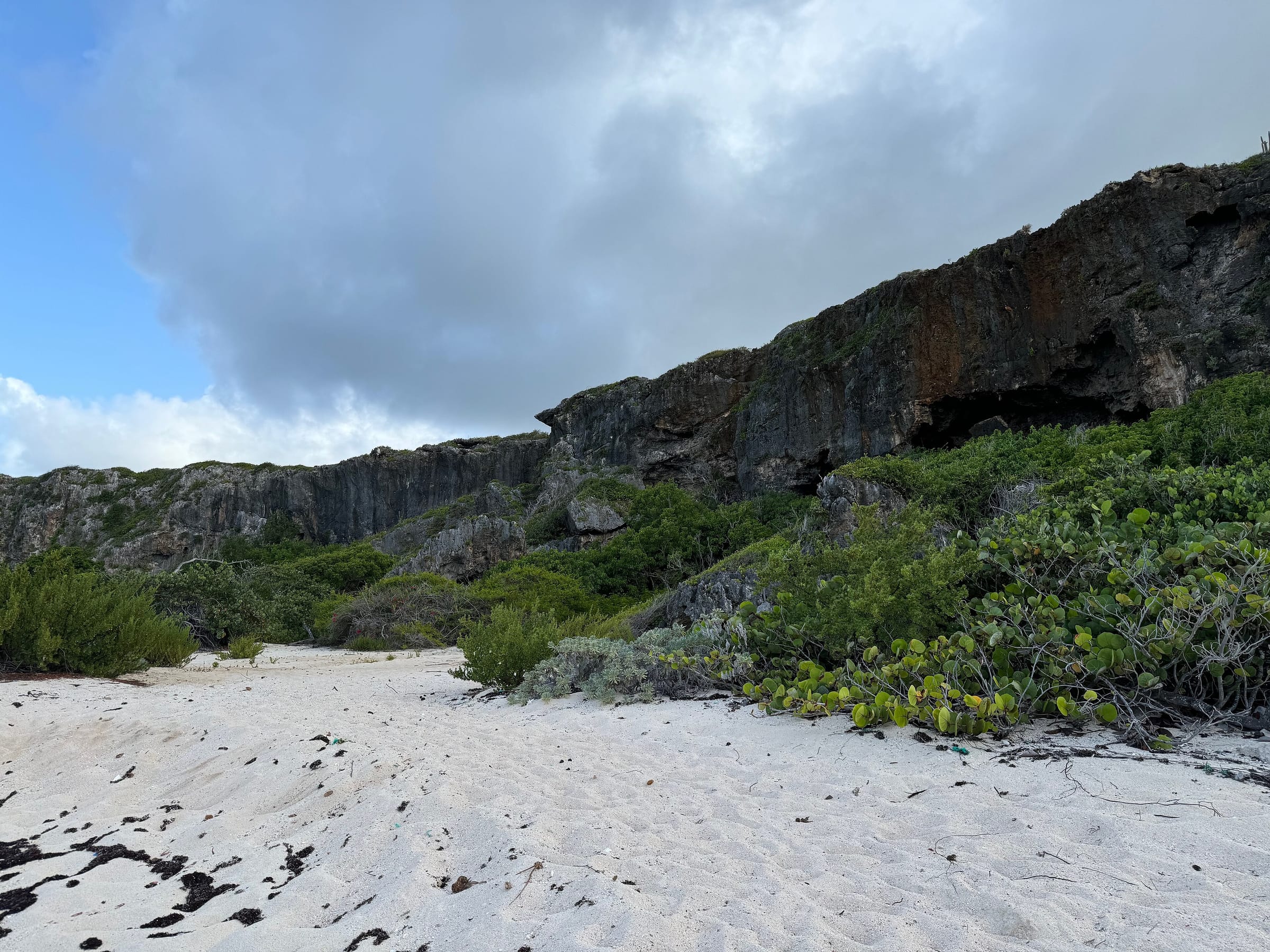
Barbuda, Antigua's Wild and Quiet Sister
Barbuda is a flat coral island in the Leeward Islands and the smaller partner in the twin-island nation of Antigua and Barbuda, known for its pink sand beach, a vast lagoon and a magnificent frigate bird colony. It covers about 161 square kilometres and had around 2,200 residents in 2025, most of them in the single village of Codrington. There are no crowds here, no skyline and very little traffic. What the island offers instead is space, with long empty beaches, open skies and an unmistakable sense of being somewhere genuinely unhurried.
Codrington Lagoon is the island's natural showpiece, one of the largest internal bodies of water in the Lesser Antilles. Its Magnificent Frigate Bird Sanctuary protects what is regarded as one of the most important breeding colonies for the species, and boats thread through the mangroves to reach nesting birds at close range. Local guides know the channels by heart. A morning on the lagoon and an afternoon on a beach with no other footprints is the classic Barbuda day, and it is one that guests remember.
Pink Sand, Caves and Island History
Barbuda's signature beach is Pink Sand Beach, a long ribbon of pale rose sand along the southern shore where the colour comes from crushed shell and coral. Inland, the island's limestone has shaped caves worth exploring: Indian Cave holds Arawak petroglyphs, while Darby Cave is a sinkhole about 70 feet deep, hung with stalactites and ringed by tropical greenery. Between them, they give a very different Barbuda from the beach-and-lagoon image, and add real depth to a short stay.
The human story is just as distinctive. The Codrington family controlled the island from 1685 to 1870, and the ruins of their 18th-century home at Highland House, known locally as Willybob, sit beside the Dividing Wall that once separated the family from the enslaved people who worked the land. Barbuda's economy still runs on fishing, and its lobster is prized, so a plate of freshly grilled lobster on the sand is both the simplest and the most authentic lunch on the island.
Getting to Barbuda and When to Go
Barbuda is served by Burton-Nibbs International Airport and has a ferry link to Antigua, so it fits easily into a wider trip through Antigua and Barbuda. Many travellers visit for a day, while others stay longer for the silence. For a hotel group or tourist board, the story is clear: a rare, uncrowded corner of the Caribbean, within easy reach of a major international gateway. An airline partnership could showcase the hop as part of a single, seamless itinerary.
The dry season from December to April brings the calmest seas and the clearest light for lagoon trips, though the island is welcoming throughout the year. Nearby, Montserrat offers a very different green-hilled character, Nevis a colonial elegance, and Anguilla a similarly flat, beach-led setting with a stronger restaurant scene. Together, they make a rewarding island-hopping circuit, and a name like Barbuda.co.uk gives the Barbuda chapter its own distinct home.
Where to Stay on a Wild, Quiet Island
Barbuda keeps its stays small, spaced out and close to the sea, which is exactly its appeal. Most of the island's accommodation is concentrated along the long southern and western shoreline, where intimate beach retreats and small cottages sit behind dunes and open directly onto the sand. Couples and honeymooners find privacy here, with days that need no plan beyond a walk along the water. Villas and guesthouses around Codrington suit travellers who want to meet the community and eat where fishermen eat. Luxury here means space, light and silence rather than a long list of amenities, and the sense of being nearly alone on a beach is the real indulgence.
A stay can run from a single night to a week. Day visitors from Antigua enjoy the lagoon and the pink sand, but guests who stay longer discover the quiet hours: sunrise on an empty beach, long afternoons under palms and starry skies with no glare from a city. Photographers, birdwatchers and walkers find the island rewarding, and fishing enthusiasts can arrange trips with local captains. Barbuda also suits those who want to balance a lively Antigua stay with a calmer chapter, which is why many itineraries split a week between the two islands. Boutique intimacy is the guiding idea, and every property feels personal.
Lobster, Local Craft and the Island Year
Food on Barbuda is the freshest on the chain. Lobster is the island's pride and appears grilled, in salads or in rich stews, alongside conch, snapper and fungie served in small village restaurants and beach kitchens. Barbudans are known for their independent spirit and strong community, and local craft includes boat building, net making and hand-carved details. The island's Codrington Lagoon is the working heart of this culture, with fishermen and guides who know the waterways from childhood. Evenings are often spent at simple tables outdoors, where the sea breeze and the sound of the surf do most of the talking.
The calendar is gentle and community-led. Barbuda's Caribana festival, held in early summer, is the best-known event, bringing music, food and visitors from across the region to celebrate island life. The dry season from December to April suits those who want the brightest beach days, while the green months bring fewer visitors and a more private feel. The frigate bird nesting season, from around September to the spring, is a draw for naturalists, with the colony at its most active. Because the island has no high season crowds, every month offers a sense of space that is rare in the Caribbean today.
Lagoon Trips, Caves and Island Hops
Active days on Barbuda are quiet and varied. Boats glide through Codrington Lagoon to the frigate bird colony, snorkellers explore shallow reefs, and kayakers paddle the sheltered mangrove channels. On land, Darby Cave and the cliffs at Highland make an easy afternoon, and long walks along the pink sand reach beaches with no other visitors. Anglers can fish for bonefish on the flats, and divers visit reefs where wrecks lie close to shore. Everything is arranged through local guides, which makes every trip feel personal and gives visitors a direct connection to the island's people and traditions.
Barbuda works beautifully as an add-on. From Antigua, a short flight or ferry brings guests here for a day or longer, and nearby Montserrat and St Kitts extend a circuit through the Leeward Islands. Travellers who love flat coral islands and wide beaches will also enjoy Anguilla and the Turks and Caicos, while a stay that begins in Antigua can end here with a slower pace. Our wider destination guides show how a quiet island like this adds contrast to a longer Caribbean itinerary built around different moods.
Planning your stay
Barbuda lies about 30 miles north of Antigua and is a fraction of the size, with a population of only about two thousand concentrated in Codrington. Its attractions are natural rather than built: long empty beaches, a lagoon that holds one of the largest frigatebird colonies in the region, and a coastline with reefs and shipwrecks that appeal to divers and anglers.
That is both its appeal and its constraint. There are very few hotels, little nightlife and limited shopping, so it suits travellers who want quiet, not entertainment. Many visitors come for the day from Antigua, and a few stay for a night or two in one of the small lodges.
Getting there
There is no direct international route, so you first travel to Antigua, the main gateway for the twin island nation, where British Airways and Virgin Atlantic fly non-stop from the UK in about 8 hours 30 minutes. From there you can take a short flight on a small aircraft with a local airline such as BMN Air, or arrange a boat day trip through a local operator. The crossing is not guaranteed in rough weather, so allow a buffer if you have a flight home the next day.
Our Antigua and Barbuda guide covers the main island, which is where you will start. If you want to pair Barbuda with another island, Montserrat is reached through Antigua too, and St Kitts is the next large island north west.
Entry rules for UK visitors
Barbuda is part of Antigua and Barbuda, so the national rules apply. British visitors can enter without a visa and are allowed to stay for a maximum of 90 days, and you must be able to show an onward or return ticket.
If you want to stay longer, you need to apply for an extension through the Immigration Department.
When to go
The dry season from December to April is the most comfortable and the busiest. The Atlantic hurricane season runs from June to November, with the highest risk generally from August to October. Barbuda was heavily damaged by Hurricane Irma in 2017, and the whole island was evacuated, which is a reminder that a small, low island has little protection.
Why Barbuda matters to the network
Barbuda shows the value of honest detail. It is not for everyone, and a guide that says so builds more trust than one that oversells. That kind of accuracy is what tourist boards and hotel partners gain when they work with us.
Our AI platform can explain the transfer from Antigua and the limits on facilities, and you can browse more places in the destination guides.
Before you travel
Entry requirements and official travel guidance are updated regularly, so check the latest position with your government before booking. The sources we used are listed at the foot of this page.
Practical notes for planning
Bring what you need, because shops are few and supplies are limited. Carry cash, reef safe sun protection and insect repellent, and check whether your lodge provides food or expects you to arrange it. Agree your return transfer before you cross, since a missed boat or flight can strand you overnight. Visitors who want a livelier second stop often continue to Anguilla or St Martin after returning to Antigua, and our airline partners page explains how we work with carriers on those connections.
Questions travellers ask about Barbuda
How do I get to Barbuda from the UK?
Fly non-stop to Antigua, which takes about 8 hours 30 minutes with British Airways, then take a short flight on a small aircraft or a boat. There is no direct international service to Barbuda, so plan the connection and allow for weather.
Is Barbuda good for a long stay?
It suits a short, quiet stay. There are very few hotels and limited facilities, so many visitors come for a day or a night or two from Antigua.
When is the best time to visit?
December to April is the driest and most comfortable. Hurricane season runs from June to November, with the highest risk generally from August to October, so travel flexibly if you go then.
What is Barbuda best known for?
Barbuda is best known for Pink Sand Beach, Codrington Lagoon and its Magnificent Frigate Bird Sanctuary, which protects a major breeding colony. It is also known for its caves, Highland House ruins, fresh lobster and a deeply uncrowded, unhurried atmosphere.
How do you get to Barbuda from Antigua?
Barbuda has its own airport, Burton-Nibbs International Airport, and a ferry service connects it with Antigua. Many visitors make it a day trip, though staying overnight allows time for the lagoon, the beaches and the island's quieter rhythm.
Where do you stay on Barbuda?
Accommodation is small and spread along the southern and western shoreline, with beach retreats, cottages and guesthouses, plus homes around Codrington. It suits couples and travellers who want privacy, space and direct access to long, empty beaches.
What is there to do on Barbuda beyond the beach?
Visitors take boat trips through Codrington Lagoon to the frigate bird colony, explore Darby Cave, snorkel shallow reefs, kayak the mangroves and walk the pink sand. Fishing trips with local guides and fresh lobster lunches make the day complete.
In the Visit Travel Group portfolio: Barbuda.co.uk, Barbuda.uk, VisitBarbuda.co.uk.