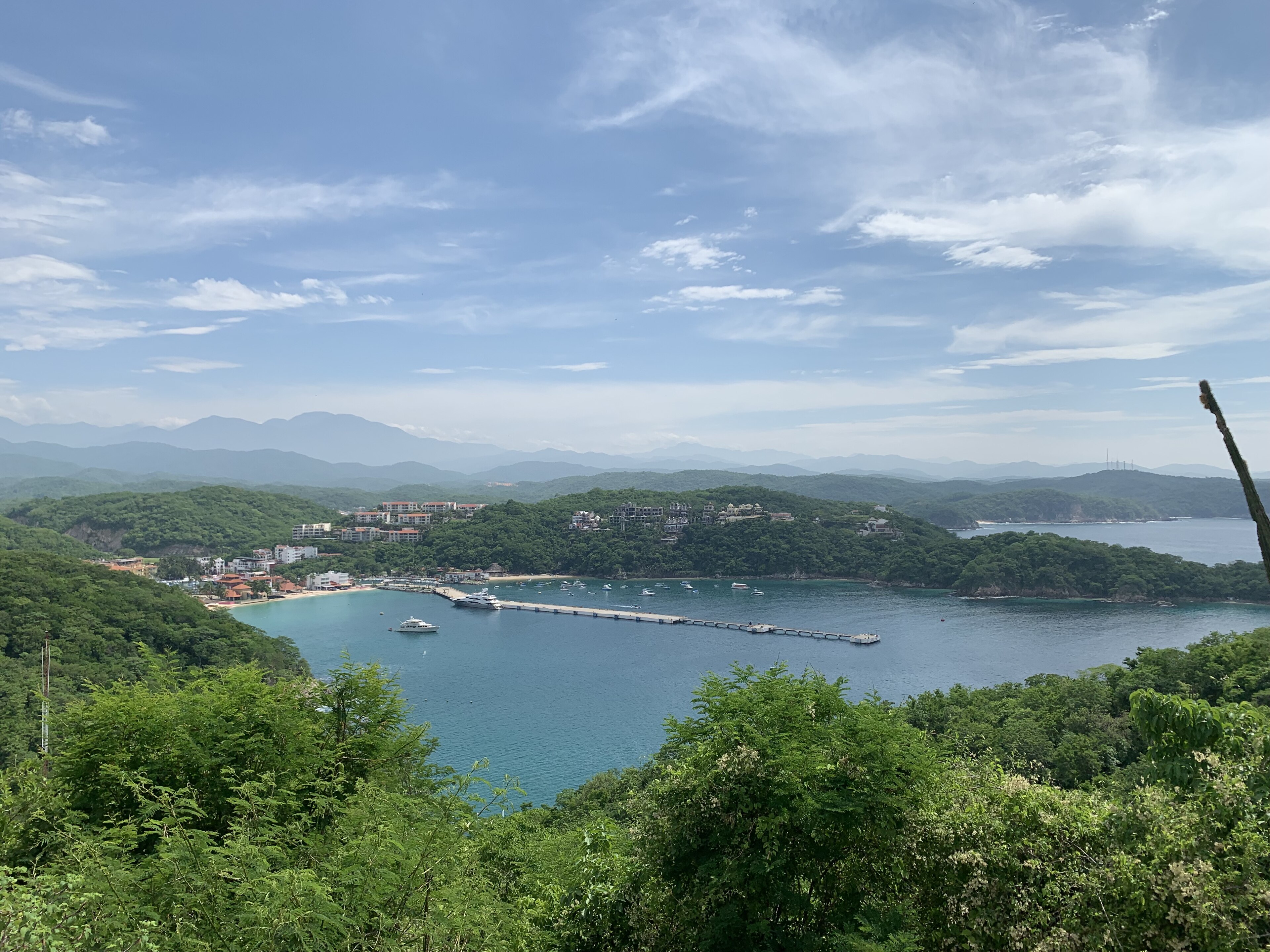
Nine Bays on Oaxaca's Pacific Shore
Huatulco is a resort region on the Pacific coast of Oaxaca, southern Mexico, known for its nine bays, 36 beaches and a coastline of rare calm and scale. Developed as a planned destination from the 1980s, it set aside a large share of its shoreline and hills as the Huatulco National Park, so that rainforest still meets the sea in most directions. The result feels more like a coastal journey than a single resort strip, with small bays reached by road, by boat or by short coastal paths.
Each bay has its own temperament. Santa Cruz is the lively marina village, with a harbour, a small chapel and restaurants facing the water. Tangolunda is the resort bay, home to hotels and a championship golf course. Chahué has a modern marina and a long, easy beach. Further along, La Entrega, Maguey and Órgano are the snorkelling beaches that boat captains love, with clear water and rocky headlands. Neighbouring Ixtapa shares the same Pacific coast, but Huatulco offers a gentler, more natural scale.
Mezcal, Mole and Mornings Among the Coffee Farms
Oaxacan culture is what makes Huatulco more than a beach. The cuisine of the state is among the most celebrated in Mexico: tlayudas with asiento and quesillo, black mole, tamales wrapped in banana leaf, and fresh Pacific fish served simply with lime. Mezcal, distilled from agave in the surrounding valleys, appears on tasting menus and in village palenques. Inland, the Sierra Sur hills grow coffee, and visits to plantations around the town of Santa María Huatulco combine a walk among the shade trees with a tasting at the source.
Active days come easily. Kayaks and paddleboards launch from Santa Cruz, boat trips thread the bays for snorkelling, and the Copalita Eco-Archaeological Park gives a window onto Zapotec heritage, with its ceremonial platforms, trails and river views. For a tourist board, Huatulco is a natural showcase for nature-led, culture-rich travel. Many guests add Oaxaca city, with its markets and colonial streets, and Mexico City is a straightforward onward connection for travellers continuing deeper into Mexico.
Best Months and the Route In
The dry season from about November to April brings sunny skies, warm sea and the calmest conditions for boat days, while the green months of the rainy season turn the hills lush and the beaches quiet. Huatulco has its own airport, Bahías de Huatulco, with domestic connections that make it simple to combine with a wider tour, and UK visitors typically connect through Mexico City. The bays are close together, so a rental car, taxi or boat reaches most of them within a short ride.
A name like VisitHuatulco.co.uk gives resorts and airlines a clear, single home for the whole story. Huatulco pairs naturally with the glamour of Los Cabos on the Pacific, the colonial charm of Mexico's highlands and the Caribbean energy of Cancun, so itineraries can move from Oaxaca's mountains to a very different coast. Slow-travel guests, couples and families all find a bay that suits them, which makes the destination easy to sell year-round.
Choosing Your Bay: Where to Stay in Huatulco
Huatulco rewards a considered choice of base. Tangolunda Bay is the address for the large beach resorts, with landscaped grounds, calm water, a championship golf course and room for families and big groups who like everything on one site. Santa Cruz Bay suits travellers who prefer a village rhythm, with small hotels and guesthouses a short stroll from the marina, the chapel and the harbourside restaurants, and with boats leaving each morning for the outlying beaches. Chahué, beside its own marina, is quieter and more residential, with a long, easy beach and relaxed cafés. Couples often favour adults-focused retreats on the headlands, where terraces look straight out over the Pacific.
Beyond the main bays, other styles of stay are possible. Boutique hotels and private villas on the hillsides give wide ocean views and real privacy, while eco-minded lodges in the green hills above Santa María Huatulco make a base for birdwatching and coffee-farm mornings. Divers and snorkellers often choose Santa Cruz or the lively town square of La Crucecita, a few minutes inland, where evening plazas fill with families. Golfers settle at Tangolunda, wellness seekers book spa-led resorts and honeymooners ask for a plunge-pool suite. Because the bays sit so close together, a stay in one never rules out an afternoon in another, much as at Puerto Vallarta up the coast.
Cacao, Corn and the Oaxacan Festival Calendar
Oaxaca is the land of chocolate, and the state's tables offer far more than the dishes already famous abroad. Hot chocolate is ground with cinnamon and almonds and whisked to a froth, tejate is a cool, foamy drink of maize and cacao, and memelas arrive crisp with beans and fresh cheese. On the coast, pescado a la talla, a fish rubbed with chilli paste and grilled over embers, is the signature plate, with ceviches and garlic prawns beside it. Markets in La Crucecita sell tropical fruit, local honey and roasted coffee, and beachside palapas serve the catch of the morning with warm tortillas and a squeeze of lime.
Craft traditions run deep. Look for alebrijes, the brightly painted carved figures of Oaxaca, hand-embroidered blouses, woven textiles and the burnished black pottery made in the valley villages. The calendar is generous: the dry season from November to April is peak beach time, Day of the Dead brings marigold altars in early November, and the Night of the Radishes on 23 December in Oaxaca city is a charming display of carved vegetables. In July the Guelaguetza, a celebration of regional dance and costume, fills the capital of the state. Spring and early summer suit travellers who want warm sea and fewer crowds.
Reefs, Rivers and Day Trips Into Oaxaca
Active days are easy to build. Sailing and catamaran trips glide between bays at sunset, sport-fishing boats head out for sailfish and tuna, and the Copalita River offers rafting and zip lines in the hills above the coast. Cyclists enjoy quiet roads around the resort zone, and horse riding on the beach suits all ages. From about December to March, boat trips sometimes meet humpback whales and playful dolphins offshore. For a different pace, Mazunte and Zipolite, a short drive along the coast, are laid-back beach villages with turtle conservation work, yoga studios and surf at Puerto Escondido beyond, so a stay can stretch into a coastal tour.
Inland, Oaxaca city is the great add-on, with its markets, ceramics and baroque churches, and day trips reach the hilltop ruins of Monte Albán, the weavers of Teotitlán del Valle and the dramatic rock pools of Hierve el Agua. An airline could easily frame Huatulco as the beach leg of a cultural itinerary, flying guests in via the capital and out again from the coast. Many travellers continue to Tulum or the Riviera Maya for a second sea, or to Isla Holbox for a barefoot finale, all within the wider story of Mexico.
Planning your stay
Huatulco is made up of a series of bays along the coast of Oaxaca, with beaches reached by road or by boat. The development is low-rise and deliberately limited, and part of the surrounding land is protected. It suits couples and families who want calm water, snorkelling and relaxed beaches rather than nightlife and large hotel towers.
Compared with Puerto Vallarta or Los Cabos, it has fewer restaurants, a smaller choice of hotels and a quieter evening scene, and it feels more like a cluster of small communities. Day trips can reach local coffee farms and the wider Oaxaca coast, where distances are long.
When to go
Oaxaca's coast is driest and busiest between November and May, when the bays are at their calmest. Summer is hot, humid and wet, with lower prices and greener surroundings. Check forecasts closely, because Pacific storms can bring heavy rain.
Know your hotel's exits and follow local civil protection advice.
Getting there and entry rules
Huatulco has its own airport, and most UK travellers connect through Mexico City or a US hub, so check current schedules. Distances across Oaxaca are large and mountain roads are slow, so flying in is usually the practical choice. Pre-arrange a hotel transfer or use an authorised pre-paid taxi from the airport rank.
A passport valid for your whole holiday is required, and the Mexican Embassy recommends 180 days of validity.
Pacific coast options
For a livelier base, compare Cabo San Lucas, and for a coastal town with an old centre, Puerto Vallarta. Each has different seasons and local advice, so read our Mexico guide before choosing.
A practical note for planners: because the bays are spread out, the location of your hotel matters more than its rating. Ask how far it is from the beach you want, whether there is a shuttle, and whether the nearest bays can be reached on foot.
Before you travel
Entry requirements and official travel guidance are updated regularly, so check the latest position with your government before booking. The sources we used are listed at the foot of this page.
Why this name matters to the industry
Huatulco is a less known name, which gives a partner room to define it. VisitHuatulco.co.uk lets a hotel group or tourist board publish honest detail on bays, access and seasons, an airline explain connections, and our AI platform answer questions from that source. See our destination guides for comparison.
Questions travellers ask about Huatulco
Where is Huatulco?
On the Pacific coast of the state of Oaxaca, around a series of bays. It has its own airport.
Do UK citizens need a visa?
No visa is needed for tourism. A stamp records the days you may stay, up to 180, and the passport must be valid until you leave Oaxaca.
When is the best time to visit?
November to May is dry and comfortable. Hurricane season runs from June to November.
What is Huatulco best known for?
Huatulco is best known for its nine bays and 36 beaches on the Pacific coast of Oaxaca, framed by a national park. Visitors come for calm water, snorkelling, coffee farms, Oaxacan food and mezcal, and the relaxed, nature-led scale of the resort area.
When is the best time to visit Huatulco?
The dry season from roughly November to April offers the most reliable sunshine and calm sea for boat trips. The rainy months are greener and quieter, which suits travellers who prefer empty beaches and lush hillsides.
Where should couples stay in Huatulco?
Couples often choose adults-focused resorts and boutique hotels on the headlands of Tangolunda and Santa Cruz, where terraces overlook the Pacific. Private villas on the hillsides add privacy, and Santa Cruz Bay is handy for sunset dinners and boat trips to quiet beaches.
What are the best day trips from Huatulco?
Oaxaca city, Monte Albán and the craft villages are the classic cultural days out, while Mazunte and Zipolite suit beach lovers and turtle enthusiasts. Closer to base, boat trips between the bays and a coffee-farm visit make easy half-days.
In the Visit Travel Group portfolio: VisitHuatulco.co.uk.