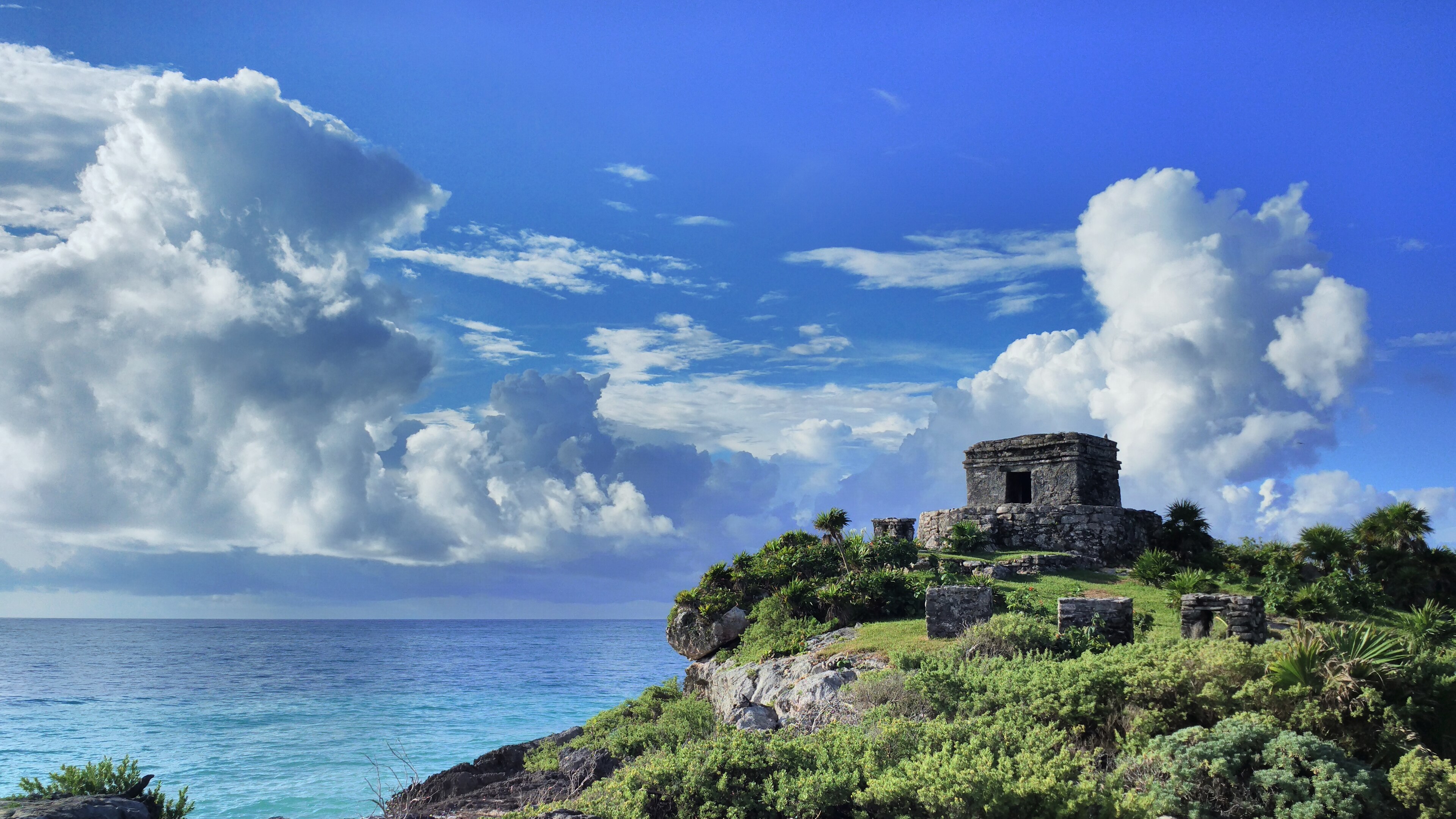
A Coastline of Beaches, Cenotes and Ruins
The Riviera Maya is a tourist corridor on the Caribbean coast of Mexico's Quintana Roo, running south from Cancun through Puerto Morelos and Playa del Carmen to Tulum, a distance of roughly 120 kilometres. It is known for its white sand beaches, warm turquoise water, cenotes and Maya ruins, all within easy reach of each other. Offshore, the Mesoamerican Barrier Reef runs parallel to the coast, giving snorkellers and divers easy access to coral gardens just a short boat ride from the sand.
The coast has a distinctive character, shaped by the Yucatan's flat limestone landscape. Inland, the jungle is dotted with cenotes, natural freshwater sinkholes that the Maya considered sacred and that today provide some of the most memorable swims and dives in the region. Along the shore, towns and resorts offer everything from all-inclusive family beach holidays to small eco-lodges and boutique hotels, so travellers can choose the pace that suits them.
Playa del Carmen, Akumal and the Eco-Parks
Playa del Carmen is the main hub, with its pedestrian Fifth Avenue, lined with restaurants, boutiques and live music, and ferries that cross to Cozumel. Further south, Akumal Bay is known for green turtles that graze on seagrass in the shallows, while Puerto Morelos keeps a quieter village feel with a reef close to shore. Family-friendly eco-parks such as Xcaret and Xel-Ha combine snorkelling, cenotes and cultural shows, and Xcaret's evening performance is a long-standing highlight.
Heritage rounds out the offer. Tulum is the best-known Maya site on the coast, with its temples above the sea, while Coba and Chichen Itza lie within a day's reach inland. The wider Mexico story is easy to extend by combining a beach week here with a few days in Mexico City. For a booking platform, the Riviera Maya's range of resorts and activities makes it a strong, flexible product.
When to Go and How to Arrive
The dry season from about November to April is the most popular, with sunshine, calm water and comfortable evenings. Summer is warmer and greener, with turtle nesting and whale shark season offshore, and rates often ease on many resorts. Most visitors arrive via Cancun International Airport, with direct flights from the UK and many other countries, and then transfer south by road in a short journey to the main resort areas.
Tulum also has its own international airport, which offers another way into the southern end of the coast, and ferries link Playa del Carmen with Cozumel. Because the region is long and narrow, guests often split a stay between two areas, perhaps starting in Cancun before moving to a quieter resort or boutique hotel. VisitRivieraMaya.co.uk helps airlines, hotels and boards present those combinations with clarity.
From Quiet Puerto Morelos to Marina-Side Mayakoba
The Riviera Maya offers a series of distinct bases, each with its own temperament. Puerto Morelos, close to Cancun, is a laid-back village with a lighthouse, a plaza and a reef right off the beach, and it suits couples and families who enjoy a relaxed pace. Playa del Carmen is the liveliest hub, with Fifth Avenue, Playacar's large resorts and a choice of boutique hotels and apartments. Playa Paraiso and Puerto Aventuras, with its marina, are well suited to families, golfers and boat lovers, and Akumal and Xpu-Ha add calmer bays and small villas.
Mayakoba, a well-known resort development near Playa del Carmen, weaves hotels through mangrove canals and lagoons and is home to the El Camaleon golf course, designed by Greg Norman. Further south, Soliman Bay and Tankah feel secluded, with beach houses and eco-lodges, and the southern end of the coast joins Tulum. All-inclusive resorts, adults-only retreats, wellness hideaways and private villas are all represented, so travellers can match their stay to their group. Many families choose a large resort with children's clubs, while honeymooners often pick a quiet bay with a boutique hotel close to a cenote.
Cochinita Pibil, Cenote Cafes and Festivals of Life
Food on the Riviera Maya brings the Yucatan to the table. Cochinita pibil, pork marinated in sour orange and achiote and slow-roasted until tender, is served in tacos and on plates across the coast, and fresh seafood, ceviche and grilled fish appear on beachfront menus. Playa del Carmen's international restaurants add Italian, Argentine and Asian flavours, while small cafes serve strong coffee, pastries and fresh juices. Several cenotes and gardens now have restaurants and cafes close to the water, which makes lunch part of the adventure, and many hotels offer chef-led tasting menus based on local produce.
Culture and celebration run through the year. Xcaret's Festival of Life and Death, held in late October and early November, brings performances, altars and traditional food together, and towns across the coast celebrate Day of the Dead with flowers and candles. Winter is the high season for sunshine, spring brings warm seas and Easter holidays, summer is the time of nesting turtles and green jungle, and autumn is the quiet season for travellers who like space. Live music, craft markets and open-air theatre can be found in Playa del Carmen all year, and the evening walk along Fifth Avenue is a natural ritual.
Reef Snorkelling, Spider Monkeys and Cenote Circuits
The coast is made for variety. Snorkelling over the reef at Puerto Morelos is possible from a short boat ride, cenotes near Playa del Carmen such as Cristalino and Azul invite a cool swim among rock formations, and zip lines and underground river rafts add adventure for families. Golfers can play at several courses, sailors can charter catamarans from the marinas, and cyclists will find forest trails inland. Punta Laguna, near Coba, offers a chance to see spider monkeys, and wellness travellers can book spa days, yoga and massages tucked into jungle gardens.
Day trips and extensions are easy to arrange. Chichen Itza and Valladolid are the classic cultural excursions, Cozumel is a short ferry away for reef diving, and Tulum offers ruins and lagoons just down the road. Heading north, Cancun and Isla Mujeres provide additional beaches and island days. A stay of seven to ten nights allows a split between two bases, with a beach week and a few nights nearer the cenotes. Hotels and hotel groups can design programmes around these loops, so guests move easily from coast to jungle to colonial town.
Planning your stay
The Riviera Maya runs south from Cancún to Tulum, and its character changes along the way. Playa del Carmen is the busiest town, with a pedestrian main street, restaurants and ferries to Cozumel. Puerto Morelos is a quieter fishing town, and Akumal is known for turtles and snorkelling. Between them sit large resorts with beaches, pools and several restaurants.
Choosing the right base matters more than the star rating. Resorts near Playa del Carmen put you close to nightlife and independent restaurants, while those further out offer space and quiet, and can mean a long taxi for anything outside the grounds.
When to go
The dry, sunny months of December to April are also the costliest along the Playa del Carmen coast. The summer months are hotter, more humid and cheaper, with afternoon storms. Sargassum can affect beaches in spring and summer, and conditions vary between resorts depending on the shoreline, so ask your hotel before you book.
Flexible fares are worth the extra cost in autumn.
Getting there and entry rules
Most visitors fly into Cancún, which British Airways reaches non-stop from Gatwick in about 10 hours 35 minutes, and transfer south by road.
A passport valid for your whole holiday is required, and the Mexican Embassy suggests 180 days. Passing through a US airport on the way requires an ESTA or the correct visa. Tourists cannot do paid or voluntary work.
Excursions and neighbours
Popular outings include cenotes, eco parks, Mayan sites and snorkelling with turtles. Isla Mujeres and Costa Mujeres lie to the north, and Isla Holbox is a longer excursion for quiet. Our Mexico guide shows where the Mayan coast sits among the country's other holiday regions.
A practical note for planners: distances along this coast are longer than they look on a map, and the road between resorts can be busy at the start and end of the day. Ask your hotel for the real transfer time from the airport, check whether a resort has direct beach access or a shuttle, and confirm which restaurants and excursions need to be booked before you arrive. Families should also check minimum ages for adults-only resorts and for activities.
Before you travel
Entry requirements and official travel guidance are updated regularly, so check the latest position with your government before booking. The sources we used are listed at the foot of this page.
Why this name matters to the industry
The Riviera Maya is a volume market where trust and clarity win bookings. VisitRivieraMaya.co.uk lets a hotel group or tourist board publish honest detail on resorts, seasons and logistics, and airlines and online agencies can show routes and packages. Our AI platform repeats it accurately, and every destination guide shows how.
Questions travellers ask about Riviera Maya
Where is the Riviera Maya?
The Caribbean coast of the Yucatán Peninsula south of Cancún, running to Tulum and including Playa del Carmen, Puerto Morelos and Akumal.
Do UK citizens need a visa?
No visa is needed for tourism. A stamp records how many days you may stay, up to 180, and the passport has to be valid throughout your Riviera Maya trip.
What is the best time to go?
December to April is driest and busiest on the Playa del Carmen coast. The storm season runs from June to November, and sargassum levels vary between resorts in spring and summer.
What is the Riviera Maya known for?
The Riviera Maya is known for its long Caribbean coastline of white sand beaches, cenotes, Maya ruins such as Tulum and Coba, eco-parks like Xcaret and Xel-Ha, and the Mesoamerican Barrier Reef offshore, which supports snorkelling, diving and turtle encounters.
How far is the Riviera Maya from Cancun?
The Riviera Maya begins just south of Cancun, and its main resort areas lie along roughly 120 kilometres of coast to Tulum. Transfers from Cancun International Airport to Playa del Carmen are generally a short drive, making it easy to combine areas.
Where is the best place to stay on the Riviera Maya?
Playa del Carmen suits those who want restaurants and nightlife, Puerto Morelos is relaxed and reef-fronted, Mayakoba offers lagoon-side luxury and golf, Akumal and Xpu-Ha provide quieter bays, and Tulum is ideal for boutique and wellness stays. Families often choose Playacar or Puerto Aventuras.
What are the best cenotes near Playa del Carmen?
Cenote Cristalino, Cenote Azul and Jardin del Eden are popular near Playa del Carmen, with clear water for snorkelling and swimming. Further south, Dos Ojos and Gran Cenote near Tulum are well known, and many tours combine two or three cenotes in a single day.
In the Visit Travel Group portfolio: VisitRivieraMaya.co.uk, VisitGrandCostaMaya.com.