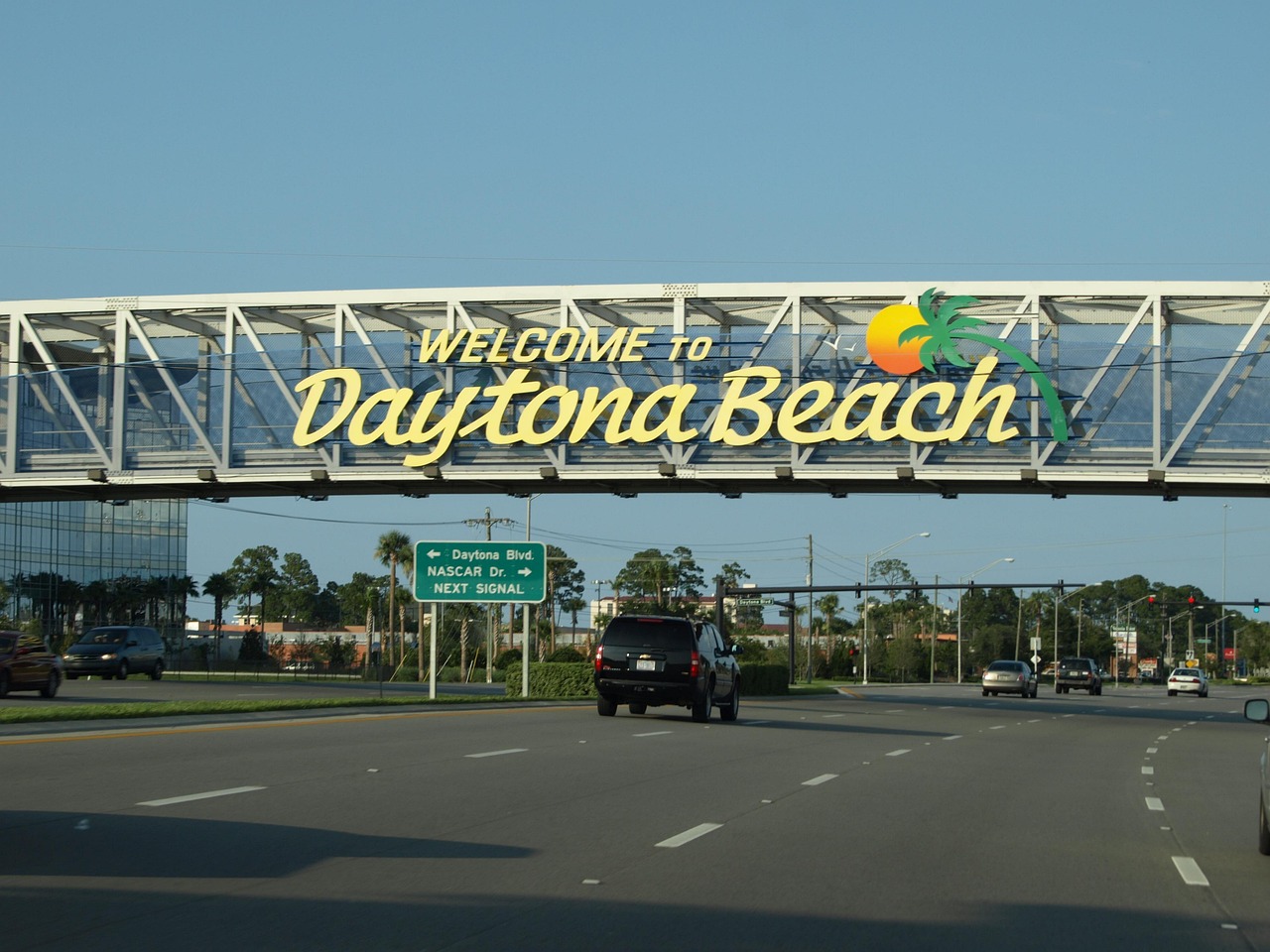
The World Centre of Racing on Hard Sand
Daytona Beach is a coastal city on Florida's Atlantic shore, known as the birthplace of American motor racing and for a broad, hard-packed beach that stretches for miles. In the early twentieth century, drivers raced cars along its sand and set land-speed records, and that heritage lives on at Daytona International Speedway, home to the Daytona 500 each February and to Bike Week in March. The beach is among the few places in the state where vehicles are permitted on parts of the sand.
The seafront has its own rhythm. The Boardwalk, with its clock tower, arcades and amusement rides, has been a family favourite for generations, and Main Street Pier extends out over the ocean, with fishing, sea views and casual restaurants at its end. A little to the south, Ponce Inlet Lighthouse, the tallest in Florida, rewards a climb with a sweeping view of the coast. Daytona Beach is a place where speed, sand and old-school seaside fun meet.
Sand, Sea and Easy Day Trips
Beyond racing, Daytona Beach is a destination for relaxed seaside days. Surf schools, kayaking on the Halifax River and dolphin-watching cruises give visitors a break from the shore, while the coastal Atlantic breezes bring a refreshing quality to even the sunniest days. Seafood shacks serve shrimp, mahi-mahi and fried clams, and local breweries add casual evening options. The beachfront hotels line the shore, so a stay often means stepping out directly onto the sand.
Daytona Beach is also a natural base for exploring. Orlando and the theme parks are about an hour inland, the Kennedy Space Center lies to the south, and historic St Augustine is a short drive north. An airline can promote it as a fly-drive hub, while Central Florida and the wider Florida coast offer further stops. Many travellers combine a week in Orlando with a few days here, the perfect pairing of attractions and seaside relaxation.
Race Weeks, Seasons and Getting There
The calendar is anchored by the Daytona 500 in February and Bike Week in March, when the city fills with energy. Spring and autumn are comfortable and bright, and summer brings warm sea and long days on the beach. The mild period from November to April is the most popular with visitors from the UK, who typically fly into Orlando in around nine hours before driving to the coast, or use the local Daytona Beach International Airport for domestic connections.
Daytona's appeal lies in its straightforward charm. It is easy to understand, easy to drive and easy to enjoy, and it fits neatly into a journey that might also include Fort Lauderdale or the Florida Keys. A name like VisitDaytonaBeach.co.uk gives boards and hotels a single home for the speed-and-sand story, from the Speedway grandstands to a quiet early walk on the shoreline.
Oceanfront Stays From Ormond to Ponce Inlet
Daytona Beach has an unusual range of places to stay along one beautiful coastline. Oceanfront hotels and condo resorts line the main beach along Atlantic Avenue, many with balconies, pools and direct sand access, and are perfect for families who want the sea at the door. Daytona Beach Shores, to the south, is a calmer stretch of high-rise condominiums with generous suites. Ormond Beach, to the north, offers a quieter, tree-shaded setting with historic character, golf and wide, uncrowded sand. Racing fans naturally favour hotels close to the Speedway, where the grandstands are within a short drive and race-week energy fills the lobbies.
Ponce Inlet is the choice for those who want peace, with small inns, a working harbour and the lighthouse on the skyline. New Smyrna Beach, a short drive south, has a relaxed surf-town feel, with cottages, a lively Flagler Avenue and a quieter shore that couples and surfers love. Flagler Beach, to the north, is a classic old Florida village with a long pier and low-rise motels. Campers and caravanners enjoy Tomoka State Park, with its riverside pitches, and groups of friends choose beach houses with large decks. Whatever the style, the beach is rarely more than a few steps away, just as at Fort Lauderdale further south.
Seafood Shacks, Speedweeks and Seaside Traditions
The local table is built on the sea. Calabash-style seafood baskets, shrimp, grouper sandwiches and oysters feature at waterside restaurants, and Ponce Inlet's riverside docks serve the day's catch within sight of the fishing boats. On the Boardwalk, funnel cake, salt-water taffy and ice cream belong to a long family tradition, while the cafés of Beach Street, the historic downtown, offer coffee, pastries and live music. Key lime pie, Cuban sandwiches and Southern comfort dishes add variety, and fresh fruit stands along the roads make easy picnic stops. A sunrise breakfast on the pier is a local favourite.
The year is full of notable events. Speedweeks in February builds up to the Daytona 500, Bike Week in March fills the avenues with motorcycles, and the summer calendar includes a July night race and fireworks over the beach. Biketoberfest, in October, brings riders back, and the Turkey Run in November is a vast gathering of classic cars. Between these peaks, the Museum of Arts and Sciences and the Halifax Historical Museum offer quieter days. Sea turtles nest on the beach from late spring, giving summer visitors a seasonal wildlife highlight, while winter days are mild, sunny and wonderfully uncrowded.
Surf, Springs and Day Trips Along the Coast
There is more to do here than racing. Surf schools run lessons for beginners, kayakers paddle through the mangrove-fringed Halifax River, and dolphin-watching cruises set out from Ponce Inlet. Deep-sea fishing charters head to the Gulf Stream, and the fishing pier is popular with casual anglers. Golfers can choose from many courses in Daytona and Ormond Beach, and cyclists enjoy the Tomoka and Halifax River trails. Walkers love the long, flat sand, where, on sections of the beach, visitors can drive slowly along the shore, a Daytona tradition that dates back to the earliest racing days. Evenings are for sunsets, boardwalk walks and live music.
The coast also makes a strong base for excursions. Blue Spring State Park, a short drive west, welcomes manatees in winter, and Canaveral National Seashore and Kennedy Space Center lie to the south. St Augustine, the oldest European-founded city in the continental United States, is about an hour north, and Orlando is easy for a theme-park day. An airline or fly-drive operator can pair Daytona with the Florida Keys for a full Atlantic-to-Caribbean sweep, or link it to the inland attractions of Central Florida as part of a complete Florida itinerary.
Planning your stay
Daytona Beach is best known for the Daytona International Speedway, home to the Daytona 500 in February, and for the long beach, where sand is firm enough to drive on in designated areas at low speed. The city also has a boardwalk, pier and plenty of family hotels along the seafront, and the Ponce Inlet lighthouse is a short drive south.
The beach suits families who want a cheaper, simpler alternative to the south coast, and many UK visitors add a few days here after the parks. Orlando and Central Florida are about an hour inland, while Fort Lauderdale lies further south and Florida as a whole covers the wider options.
When to go
Spring and early summer are the most popular times for the beach, though large events such as the February motorsport weekend and spring bike rallies raise prices and fill hotels, so check the calendar before you book. Summer is hot and humid, with afternoon thunderstorms, and autumn is quieter but sits in hurricane season.
For Daytona Beach, bear in mind that the Atlantic hurricane season normally runs from June to November.
Getting there and entry rules
Most UK visitors fly to Orlando, which takes about nine hours direct from London, and drive east for around an hour. Daytona's own airport has connecting services, and shuttles run from the larger airport. A hire car is the easiest way to travel between the beach, the speedway and the parks.
Apply before you book anything non-refundable.
Costs, law and healthcare
Beach parking, event weekends and hotel taxes add to the price, so compare the total cost.
Before you travel
Entry requirements and official travel guidance are updated regularly, so check the latest position with your government before booking. The sources we used are listed at the foot of this page.
Why Daytona Beach matters to the industry
Daytona Beach combines a beach and a global motorsport calendar, so clear event, parking and transfer detail helps hotels, airlines and tourist boards win bookings. VisitDaytonaBeach.co.uk lets a hotel group, tourist board or airline publish current answers on racing, the beach and storms for Daytona Beach, and our AI platform carries them to searchers.
Browse our other destination guides for comparison.
Questions travellers ask about Daytona Beach
How far is Daytona Beach from Orlando?
About an hour by road, so it works as a beach add-on to a theme park trip. Most UK visitors fly into Orlando and drive.
Can you drive on Daytona Beach?
In designated zones and at low speed, with a fee in some areas. Follow local signs, as pedestrians and wildlife share the sand.
When is the best time to visit Daytona Beach?
Spring and early summer for the beach, but check the events calendar because motorsport weekends raise prices. Hurricane season runs from June to November.
What is Daytona Beach best known for?
Daytona Beach is best known for Daytona International Speedway and the Daytona 500, its broad, hard-packed Atlantic beach, the Boardwalk and Main Street Pier. Its early land-speed racing on the sand made it the birthplace of American stock-car racing.
How far is Daytona Beach from Orlando?
Daytona Beach is about an hour by road from Orlando, which makes it easy to combine theme parks with a few days by the sea. Many UK visitors fly into Orlando and drive east to the coast.
Where should I stay in Daytona Beach?
Oceanfront hotels along Atlantic Avenue put families on the sand, while Ormond Beach and Ponce Inlet are quieter. New Smyrna Beach suits surfers and couples, and hotels near the Speedway are handy for race weeks.
What are the best events in Daytona Beach?
The Daytona 500 in February and Bike Week in March are the headline events, followed by a July night race, Biketoberfest in October and the Turkey Run classic-car gathering in November. Fireworks and beach festivals add summer colour.
In the Visit Travel Group portfolio: VisitDaytonaBeach.co.uk.